London couple lose boundary fight over 48cm of land after neighbours' kitchen found to have 'squatters' rights'

A business power couple have lost a four-year boundary battle over a 48cm "sliver" of land after trying to force their neighbours to demolish the kitchen wall of their £600,000 house.
Cambridge-educated tax company boss Susannah James bought a £600,000 semi-detached house in the London suburb of Surbiton in 2021 and the following year began a legal fight with the couple who own the house next door after insisting their kitchen extension had been built 48cm over the boundary between their two properties.
The fight ended up before a judge this year, with Mrs James and her husband and business partner Chris James lining up against next-door couple Mina Sharma and Neil Deeley, who have owned their house since 2012.
Mr and Mrs James, who run an insurance tax business, asked Judge Ewan Paton in the property arm of the First-tier Tribunal for a declaration that a slice of the kitchen of Ms Sharma and Mr Deeley's house is "trespassing" on their land and an order that it be demolished and "removed".
But the judge handed victory to the kitchen owners, allowing their claim for adverse possession - sometimes known as squatters' rights - over the 48cm strip of their neighbours' land.
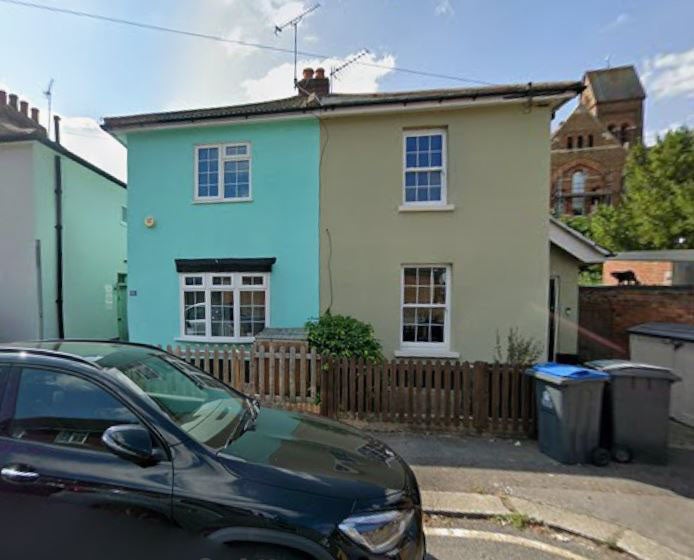
He said the kitchen extension was built in the early 1980s, well before the current owners bought the house and that neither they nor the previous owners had any idea that it strayed over the boundary when they bought the property, and for years after.
Ms Sharma and Mr Deeley had been in actual possession of the strip of land and had held a "reasonable belief" that it was theirs as their kitchen was built on it, as did the previous owners, said the judge, adding:
"The Ordnance Survey and Land Registry index map will not actually be dead straight lines. Almost every property will have some kinks, curves, 'steps' or similar features along its boundaries.
"This being so, the average purchaser cannot reasonably be expected to be put on notice of some discrepancy or legal boundary issue just because part of their physical boundary with their neighbour is 'stepped' or slightly less than straight.
"Even if they come across such a step or a kink, I consider that they are nevertheless entitled initially to assume that 'what they see is what they get' – they are buying a house whose boundaries are 'as seen' on the ground.
"This case might serve as an example of the importance of long established physical boundaries in resolving boundary disputes.... [the] extension had likely been in its current location for well over 22 years before any issue was raised over it.
"It was entirely reasonable for successive owners of that property to assume and believe that they owned everything within its walls."

The trial of the case heard that the disputed boundary in Cottage Grove, Surbiton, lies between two semi-detached houses which had once formed a single Victorian property.
Both have single storey kitchen extensions, but whilst the boundary between the two kitchens is in line with the garden fences of the properties, a comparison with the dividing line of the two roofs of the houses shows that the kitchen of Ms Sharma and Mr Deeley's property is "stepped" across the boundary by 48cm into next door's land.
The judge was told that nobody had noticed this was the case for 40 years - including Mrs James when she first bought her property - due to thick vegetation at the back of the houses masking the border.
When Mrs James began sending lawyers' letters in 2022, rather than dispute the boundary line itself, Ms Sharma and Mr Deeley - whose daughter now lives in the house - instead chose to assert that the land was theirs now via adverse possession.

In his ruling handing them victory, the judge said: "These proceedings concern what might be called, without diminishing its importance to the parties, a 'sliver' of land some 480mm wide which currently forms part of number 26's kitchen.
"Mrs James believes and has asserted that this portion of land, notwithstanding its enclosure within number 26, forms part of her registered title to number 25.
"Ms Sharma and Mr Deeley's case is that they thought that all of the land constituting their kitchen and bathroom 'belonged' to them, and that this is what they had bought in 2012.
"They claim that the extension comprising their kitchen and bathroom has been in situ in its present configuration and location since they purchased number 26 in 2012.
"They also obtained, and relied on, evidence from one of the previous joint owners to the effect that it was also in this location at the date of his purchase in 2000, and at all times thereafter. They therefore relied on this as evidence of sufficient adverse possession."
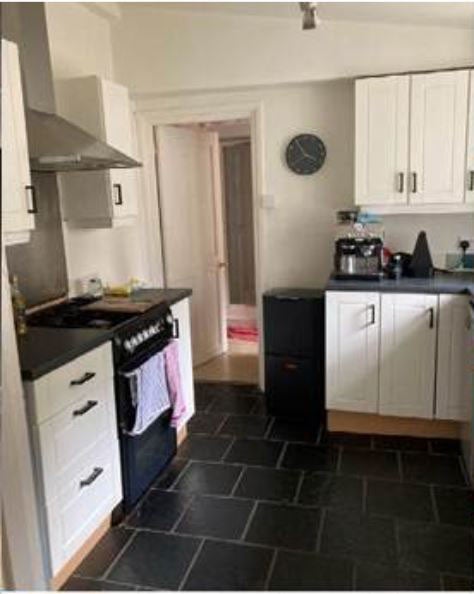
Finding that the evidence was "overwhelming" that the kitchen extension had been in the same location since, at the latest, just before 2000, the judge said "the construction and enjoyment of part of a house on neighbouring land is possibly the plainest example of factual possession with intention to possess.
"To the extent, therefore, that any parts of number 26's kitchen encroach across the boundary line assumed for the purposes of this application, there can be no doubt that the successive owners of that property have been in adverse possession of such additional land since at least 30th October 2000.
"I likewise have little hesitation in finding that such a belief was entirely reasonable.
"All of the hundreds of apparent 'straight line' boundaries shown in this vicinity in Surbiton on the Ordnance Survey and Land Registry index map will not actually be dead straight lines. Almost every property will have some kinks, curves, 'steps' or similar features along its boundaries.
"This being so, the average purchaser cannot reasonably be expected to be put on notice of some discrepancy or legal boundary issue just because part of their physical boundary with their neighbour is 'stepped" or slightly less than straight.
"Even if they come across such a step or a kink, I consider that they are nevertheless entitled initially to assume that 'what they see is what they get' – they are buying a house whose boundaries are 'as seen' on the ground.
"A reasonable purchaser and owner, even if they had studied the title plans in detail, could assume that the approximately straight line depicted corresponded to the fence line, and so took in the full physical extent of the extension.
"At the very least, it would not be clear precisely where the exact boundary 'shifted' so as to run along the house centre lines, assuming that it did so. A reasonable purchaser, seeing what they had seen inside, could still assume that all of the kitchen was theirs, and that the boundary did not run right through it.
"I consider that it is, and was in 2000, an utterly conventional and commonplace case of a property with an undetermined general boundary, with nothing to put even a solicitor - and certainly not a lay purchaser - on alert as to there being a potential boundary issue in the kitchen area. I consider it was reasonable to assume here, as in millions of similar purchases, that what you see is what you get.
"I therefore find that the applicants did in fact believe, as had [the previous owners], that they owned the full physical extent of the house and garden."

In her evidence, Mrs James had told the judge she did not notice that the kitchen extension was over the line when she bought the house and did not think she was acquiring a slice of her neighbour's kitchen.
"She was then perfectly content with what she did think she had bought," the judge continued.
"She too referred to the fact that view from the rear was 'obscured by vegetation', so that any difference between the extensions' boundary and the roof line was not obvious.
"These proceedings have followed since then. I consider it unfortunate that Mrs James, supported by Mr James, took the stance which she did.
"This case might serve as an example of the importance of long established physical boundaries in resolving boundary disputes.... [the] extension had likely been in its current location for well over 22 years before any issue was raised over it.
"As I have also found, it was entirely reasonable for successive owners of that property to assume and believe that they owned everything within its walls."
The judge approved Ms Sharma and Mr Deeley's application for adverse possession of the strip of land.
Although Mrs James was the original buyer of the house, she has recently transferred it into joint names with her husband, the tribunal heard.
KioskNews shows a cleaned-up reading view extracted from the publisher’s page — the original always lives on their site, not ours.