SBI fails to prove woman authorised Rs 55,000 UPI transaction, told to pay Rs 85,000
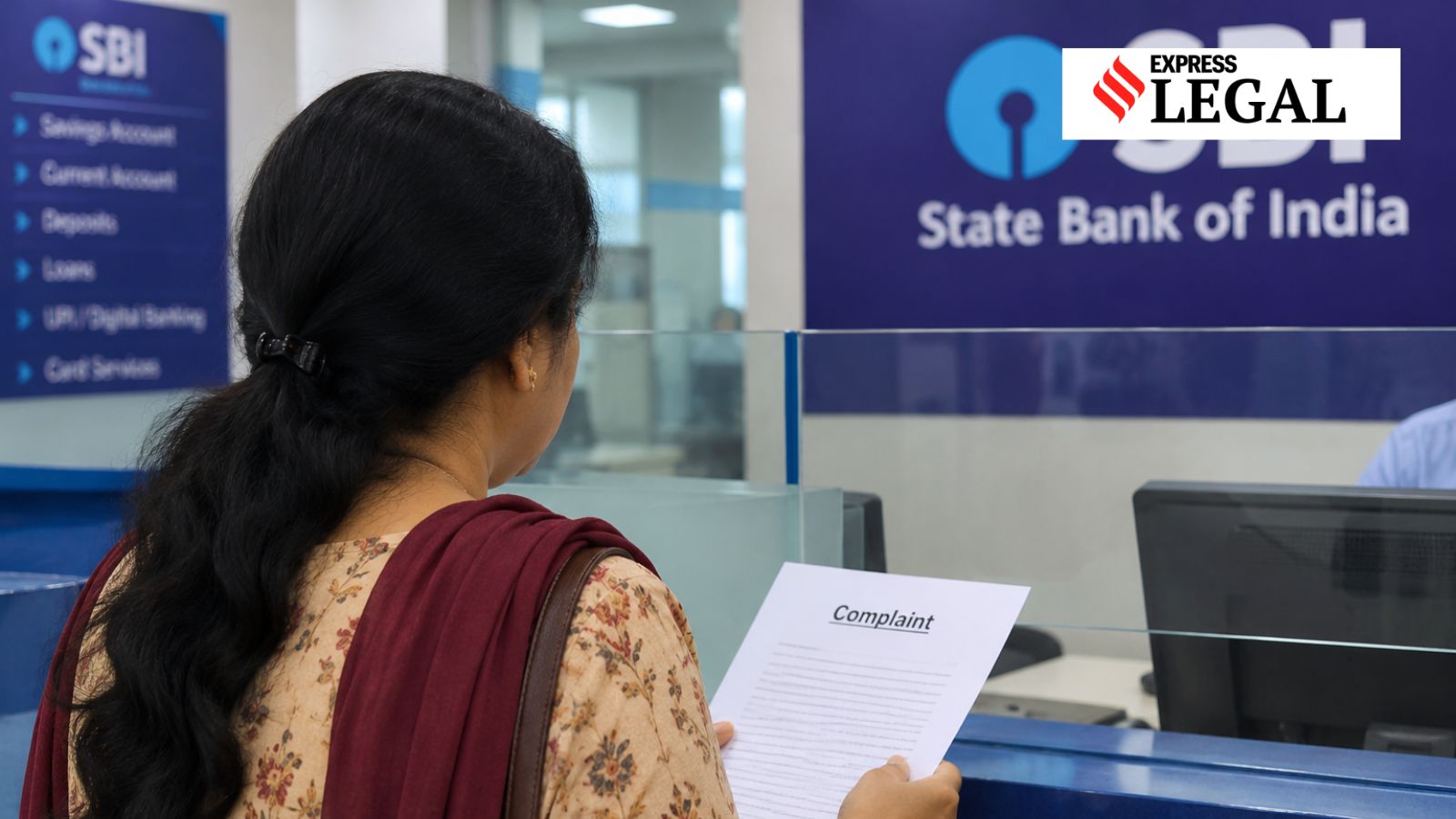
A 44-year -old woman claimed that Rs 55,000 was debited from her SBI account through an unauthorised UPI transaction in November 2022. The bank claimed that the transaction had been authenticated using her UPI PIN and that she may have authorised it or negligently shared her credentials. A Telangana consumer commission has now directed the State Bank of India to pay Rs 85,000 to that woman.
President Mamidi Christopher, along with members S Sandhya Rani and K Venkateshwarlu, while hearing the woman’s complaint, held that the mere use of a UPI PIN or authentication mechanism does not prove that the account holder “authorised” the transaction or was “negligent”.
“The mere fact that a UPI PIN or authentication mechanism was used does not, by itself, conclusively establish that the account holder personally authorised the transaction or that she was negligent. The bank must establish the factual basis for attributing the transaction to the customer,” the November 10 order read.
Transaction without authorisation
The woman claimed that an amount of Rs 55,000 was debited from her SBI account through a UPI transaction on November 3, 2022, without her knowledge, consent or authorisation. She pointed out that she neither initiated the transaction nor shared her confidential banking credentials with anybody to authorise it. She said that immediately upon noticing the disputed debit entry in her account, she reported the cyber fraud through the National Cyber Crime Reporting Portal on November 6, 2022.
The following day, she submitted a written representation to the SBI branch concerned, which acknowledged it on the same date. The woman claimed that despite reporting the incident and approaching the bank, the disputed amount was not restored to her account. She later approached the police authorities, following which an FIR was registered on December 31, 2024.
Alleging that the bank failed to protect her account and resolve her grievance in accordance with the applicable banking instructions, the woman moved the commission. She was represented by advocate N Purnachandar.
SBI’s defence
The SBI, through advocate G Krishna Reddy, submitted that the said transaction was carried out through the UPI facility after authentication by using the UPI PIN and the mobile/SIM-binding mechanism. The bank argued that the transaction could not have been completed without the required authentication and that the complainant was responsible for maintaining the confidentiality of her credentials.
Story continues below this ad
It was also submitted that the woman failed to report the said transaction to the bank within the prescribed period. The bank denied negligence or deficiency in service on its part and submitted that the bank cannot be held liable for a transaction allegedly facilitated by the complainant’s own negligence or disclosure of confidential credentials.
‘Reported matter within time’
The commission pointed out that the relationship between the bank and its account holder is one of service provider and consumer of banking services. It noted that the woman had reported the cyber fraud through the online portal on November 6, 2022, and submitted a written complaint to SBI on November 7, 2022.
The commission held that she had reported the unauthorised transaction within the prescribed period of three working days. In arriving at this conclusion, it excluded Sunday, November 6, from its calculation and treated November 7 as the third working day.
The commission further noted that the bank had failed to prove that it had taken effective steps to investigate the complaint, diligently pursue the matter with the beneficiary bank, ensure the effective blocking or recovery of the disputed amount, or communicate a proper resolution to the complainant
Story continues below this ad
“Such failure, despite timely reporting by the complainant, constitutes deficiency in banking service on the part of opposite party 1 and opposite party 2,” it added.
The commission also concluded that there was insufficient evidence to prove that the woman had authorised the transaction or shared her confidential banking credentials.
Accordingly, the commission directed the bank to pay Rs 55,000 to the complainant along with Rs 20,000 towards compensation for deficiency in service and Rs 10,000 towards costs of complaint.
Takeaway
This ruling highlights that a bank cannot deny restoring money debited without authorisation unless it can prove the customer authorised the transaction or shared her confidential banking credentials.
Story continues below this ad
Don’t miss out on these stories:
Railway ‘fails to extend’ season ticket despite train disruption, Haryana man wins Rs 5,000
Paid Rs 1.3 lakh for son’s speech therapy but ‘got no results’, father wins Rs 2 lakh payout
Charged Rs 125 ‘express fare’ on passenger train, man wins Rs 5,300 from railways
KioskNews shows a cleaned-up reading view extracted from the publisher’s page — the original always lives on their site, not ours.