The Complete Evolution Of Joker's Live-Action On-Screen Appearances
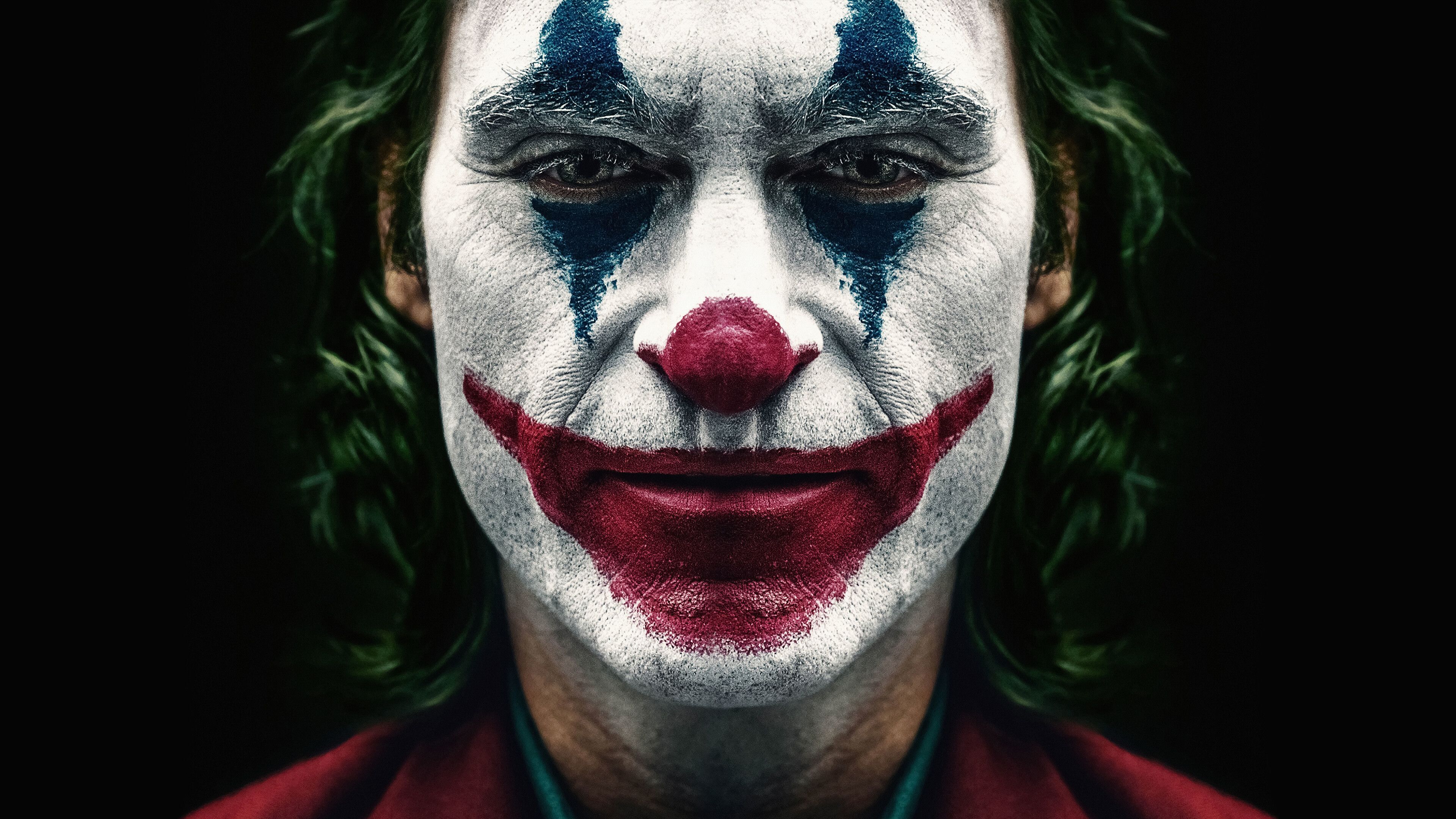
The Joker has changed dramatically every time he has stepped into live action, evolving from a flamboyant prankster into one of cinema’s most disturbing villains. Few comic-book characters have been reinvented quite so aggressively across DC television and film, with each version reflecting the Batman he inhabits.
Cesar Romero’s Joker belonged to the brightly colored, deliberately absurd world of 1960s Batman, while Jack Nicholson’s criminal mastermind helped bring the character into Tim Burton’s gothic Gotham. Heath Ledger then stripped away much of the comic-book fantasy to create a terrorist whose greatest weapon was psychological warfare.
Television has also experimented with the character in unusual ways. Birds of Prey used him sparingly, while Gotham built two different characters from pieces of the Joker mythology without actually allowing either to use the name. Titans went in the opposite direction, presenting a more traditional Joker largely through the consequences of his violence.
The movies have continued moving away from a single definitive interpretation. Jared Leto emphasized the Joker as a criminal celebrity, Joaquin Phoenix reimagined him as Arthur Fleck, and Barry Keoghan presented perhaps the most physically grotesque version yet. Together, these performances demonstrate just how elastic Batman’s greatest enemy can be.
Cesar Romero's Joker

Cesar Romero was the first actor to play the Joker in live action, appearing in the 1966 Batman television series and its theatrical movie spin-off. He belonged to Adam West’s deliberately campy version of Gotham, where Batman could solve crimes with elaborate gadgets one week and fight a shark with repellent the next.
Romero’s Joker was a flamboyant master criminal, but he was considerably less homicidal than his comic-book counterpart. His crimes revolved around elaborate schemes, gadgets, disguises, and puns, including weapons decorated with his own face in a playful contrast to Batman’s bat-emblazoned equipment.
The costume was unmistakably comic-book-inspired: a pinkish-purple tailcoat and matching waistcoat, pinstriped trousers, green shirt and black cravat. His hair was muddy green, his face plain white, and his lips were only slightly pointed in red. Romero famously refused to shave his trademark mustache, so makeup was simply applied over it.
Roger Stoneburne's Joker

Roger Stoneburner’s Joker appeared in Birds of Prey in 2002, with Mark Hamill providing his voice. Unlike Romero’s mischievous criminal, this Joker was genuinely terrifying. His appearance occurs in a flashback showing him arriving at Barbara Gordon’s apartment and shooting her, leaving her permanently paralyzed and eventually leading to her becoming Oracle.
The scene clearly draws from Batman: The Killing Joke, although this version knows Barbara is Batgirl when he attacks her. The costume moves closer to the modern comic Joker, featuring a darker purple suit, orange shirt, and classic green hair. His brief appearance means there is little opportunity to establish a personality, but his actions immediately establish him as substantially more violent.
Jack Nicholson's Joker
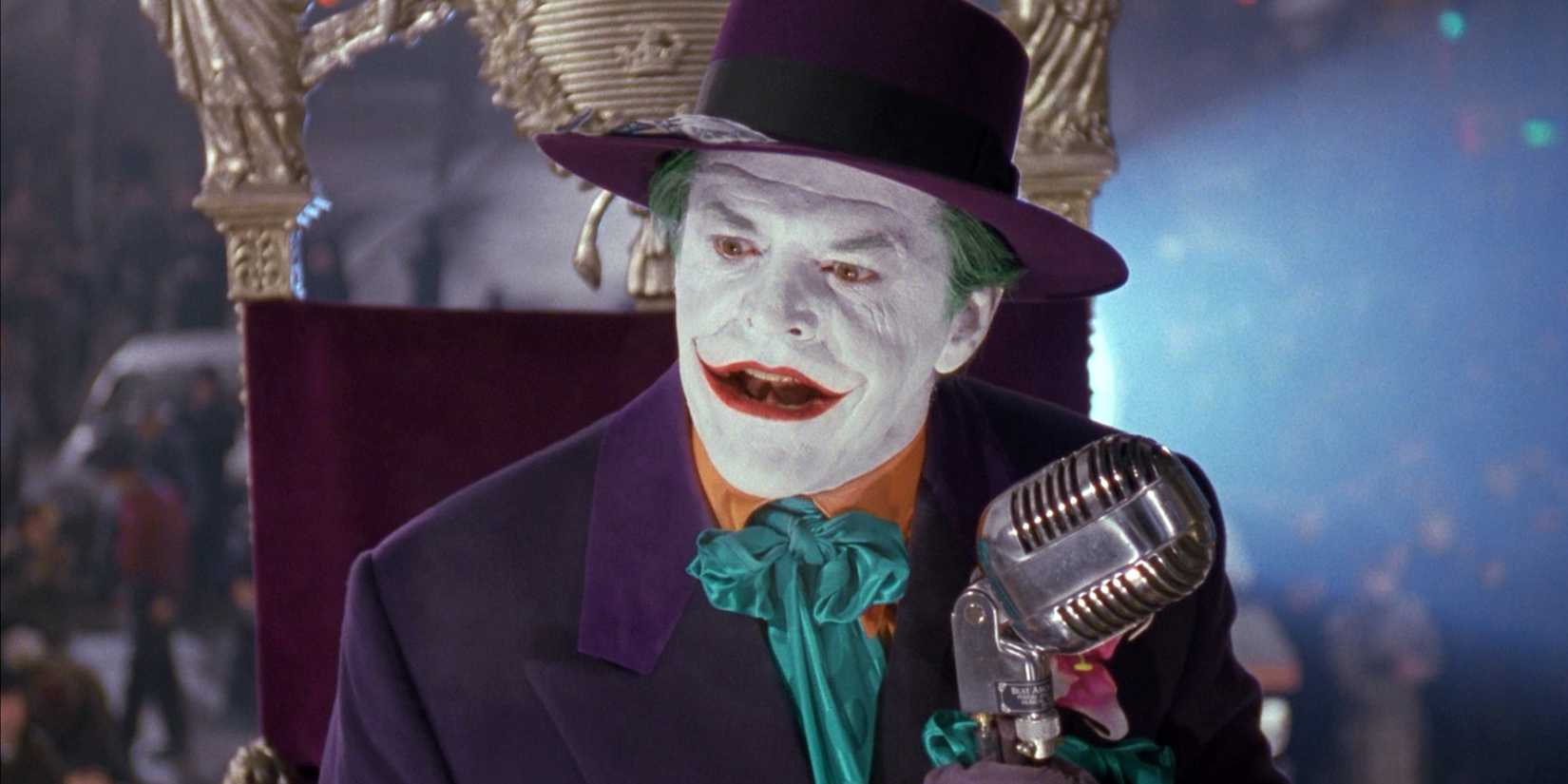
Jack Nicholson’s Joker transformed the character for Tim Burton’s Batman (1989). Unlike the comics, this Joker was a sophisticated gangster before his transformation, making him directly connected to Gotham’s organized crime. Burton also made a major alteration to Batman mythology by revealing that Napier was responsible for murdering Thomas and Martha Wayne before becoming the Joker.
Napier falls into a vat of chemicals, with the resulting transformation inspired partly by The Killing Joke. However, unlike Alan Moore’s comic, Napier was not a failed comedian who became the Red Hood before his transformation. Nicholson’s Joker is theatrical but considerably more dangerous than Romero’s. He has a fixed grin created through makeup and reconstructive surgery, rather than simply painting a smile over his mouth.
His personality combines gangster arrogance, celebrity showmanship and homicidal insanity. His wardrobe uses the traditional purple, green and orange palette but with extravagant 1930s-inspired styling. His enormous purple coats, waistcoats and distinctive round hats make him visually flamboyant without resembling Romero’s television clown.
Heath Ledger's Joker

Heath Ledger’s Joker in The Dark Knight (2008) marked the biggest tonal shift yet. Christopher Nolan’s Batman exists in a comparatively realistic world, so the Joker is presented not as a chemically transformed clown but as an unidentified criminal whose history is deliberately left uncertain.
The Dark Knight offers contradictory stories about his scars, preventing audiences from establishing a definitive origin. His Glasgow smile is the physical foundation of his trademark grin, while his white face and red lips come from deliberately messy makeup rather than chemically bleached skin. His green hair, purple coat, green waistcoat and purple trousers retain the comic-book color scheme, but everything looks dirty, damaged and improvised.
Ledger’s Joker is an anarchist, terrorist, and manipulator who turns Gotham’s institutions against themselves. He does not need a criminal empire because his greatest weapon is the ability to make other people participate in his chaos. The performance also established the modern benchmark for live-action Joker characterization against which all others would be compared.
Cameron Monaghan's Joker

Cameron Monaghan’s Gotham performance is technically not a single Joker, because the series was initially prevented from explicitly turning its characters into Batman’s famous nemesis. Instead, Monaghan played twin brothers Jerome and Jeremiah Valeska, each incorporating different pieces of Joker mythology.
Jerome is the more immediately recognizable Joker prototype: a psychotic nihilist who enjoys spectacle, murder, and chaos. Jeremiah is the colder counterpart, a calculating psychopath obsessed with Bruce Wayne. Gotham effectively divided the Joker into two personalities and let Monaghan explore both.
Jerome favors increasingly theatrical clothing and a manic physicality, while Jeremiah’s later appearance becomes much closer to the traditional Joker after being exposed to chemicals. His damaged skin and green hair eventually create an unmistakable connection to the comics. Neither becomes the Joker by name, but Gotham builds a composite mythology around them.
Mustafa Bulut's Joker

Mustafa Bulut portrayed the Joker in Titans, a version tied specifically to the Batman history of that series. Unlike Gotham, Titans does not need to invent a substitute for the character: this Joker is explicitly Batman’s archenemy and is responsible for one of the most infamous events in the show’s mythology.
The character is primarily depicted through references and flashbacks, including Dick Grayson’s discussion of Batman’s former partner Jason Todd. Titans presents him as a genuinely psychopathic killer who murders because he can, making him considerably closer to the modern comics than Romero’s prankster.
Nick Creegan's Joker

Nick Creegan’s Marquis Jet is one of the strangest live-action interpretations because he does not begin as the Joker at all. Introduced in Batwoman as Ryan Wilder’s half-brother, Marquis is initially a wealthy, arrogant playboy whose personality is shaped by privilege and family dysfunction.
His connection to the Joker comes from childhood. Marquis was traumatized after encountering Gotham’s Joker, and that experience left him with violent tendencies. After escaping his mother’s attempt to cryogenically freeze him, he embraces the Joker identity himself and unveils a new appearance featuring purple dreadlocks, an orange suit, and a pronounced grin.
Creegan’s performance is flamboyant and charismatic rather than Ledger’s coldly threatening interpretation. His status as a Black Joker was historically significant; Creegan specifically discussed approaching the role as something that had never previously been portrayed by a person of color in live action.
Jared Leto's Joker

Jared Leto’s Joker in Suicide Squad (2016) represented another radical reinvention. This time, the character was a modern criminal kingpin rather than a traditional comic-book clown. He wore expensive purple suits, possessed an arsenal of customized weapons, and surrounded himself with the trappings of a gangster celebrity.
The most controversial part of his appearance was the extensive tattoo work. “Damaged” was written across his forehead, while other tattoos covered his torso, face, and hands. Several referenced Joker iconography from the comics, including the “HA HA HA” imagery associated with The Killing Joke.
Leto’s Joker is the first to fully explore the abusive relationship with Harley Quinn. He is also less interested in proving a philosophical point than Ledger’s Joker and less traditionally theatrical than Nicholson’s. Instead, he feels like a crime boss who has turned himself into a brand.
Joaquin Phoenix's Joker

Joaquin Phoenix’s Arthur Fleck is arguably the biggest departure from the comics. Joker (2019) begins with Arthur, a struggling clown-for-hire and aspiring stand-up comedian living in a deeply fractured Gotham. Arthur gradually becomes the Joker after years of humiliation, isolation, and institutional failure. Unlike the comic Joker, whose origins traditionally remain mysterious, Phoenix’s character is defined by his backstory.
His costume reflects that gradual transformation. Arthur initially wears shabby everyday clothing and clown outfits, but his eventual Joker appearance consists of a red suit, orange vest, green shirt or tie, green hair, and white clown makeup with red features. The red suit becomes especially important because it transforms from an ordinary costume into the visual symbol of his new identity.
Joker: Folie à Deux (2024) complicates the character further by placing Arthur in Arkham State Hospital and exploring the consequences of his celebrity. The sequel deliberately refuses to turn him into a straightforward comic-book supervillain, instead focusing on Arthur's fractured identity and the people who project their own fantasies onto him.
Barry Keoghan's Joker
Barry Keoghan’s Joker in The Batman (2022) is yet another attempt to strip the character down to his most disturbing physical qualities. Robert Pattinson’s Batman encounters him in Arkham, where he is already imprisoned and apparently has an established history with Gotham's Dark Knight.
The character's appearance is grotesque. His face is covered with extensive scarring, his mouth and teeth are visibly distorted, and his green hair is messy and unnatural. It resembles the heavily scarred Joker from Scott Snyder and Greg Capullo’s Batman comics. His most substantial scene was ultimately deleted from the theatrical cut, leaving only a brief appearance in the finished movie.
The extended sequence has Batman visiting him in Arkham to gain insight into the Riddler, establishing a chilling relationship that echoes The Silence of the Lambs. After more than five decades of live-action interpretations, Keoghan’s Joker demonstrates how far the character has traveled from Romero's prank-loving criminal. The purple suit and green hair remain, but almost everything else has changed.
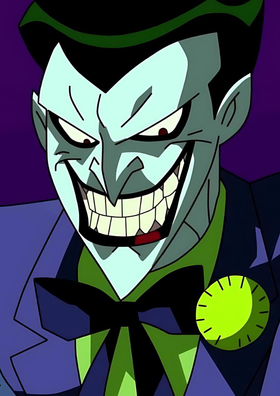
- Created By
- Bill Finger, Bob Kane, Jerry Robinson
- Cast
- Cesar Romero, Jack Nicholson, Mark Hamill, Heath Ledger, Jared Leto, Joaquin Phoenix, Barry Keoghan
- First Appearance
- Batman (1940)
- Alias
- Red Hood, Clown Prince of Crime, Ace of Knaves
- RELATIONSHIPS
- Batman (archenemy), Harley Quinn (former psychiatrist, on-and-off girlfriend), Penguin (frequent collaborator), Two-Face (frequent collaborator)
- Alliance
- Injustice League, Legion of Doom, Injustice Gang
KioskNews shows a cleaned-up reading view extracted from the publisher’s page — the original always lives on their site, not ours.