10 '90s Books That Are Perfect From Cover to Cover


Luc Haasbroek is a writer and videographer from Durban, South Africa. He has been writing professionally about pop culture for eight years. Luc's areas of interest are broad: he's just as passionate about psychology and history as he is about movies and TV. He's especially drawn to the places where these topics overlap.
Luc is also an avid producer of video essays and looks forward to expanding his writing career. When not writing, he can be found hiking, playing Dungeons & Dragons, hanging out with his cats, and doing deep dives on whatever topic happens to have captured his interest that week.
Sign in to your Collider account
The 1990s produced an almost ridiculous number of books that have since become modern classics. It was a diverse decade, capable of accommodating enormous postmodern experiments and compulsively readable thrillers, groundbreaking fantasy and intimate literary fiction.
Some of these titles became worldwide phenomena almost immediately, while others built their reputations gradually. All are compelling, whether they're transporting you to Westerns or Vietnam, a dinosaur-filled theme park or an elite New England college.
10 'The Things They Carried' (1990)
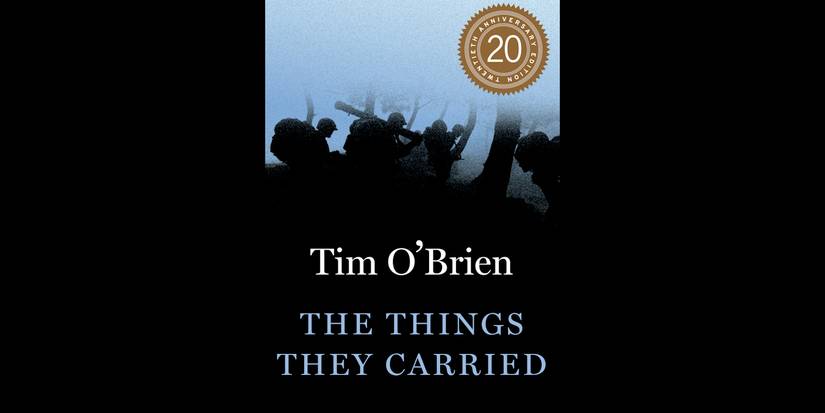
“They carried all they could bear, and then some, including a silent awe for the terrible power of the things they carried.” A collection of short stories about a platoon of American soldiers in Vietnam, The Things They Carried blurs practically every line separating fiction, memoir, and autobiography. Tim O'Brien draws upon his own experiences serving in the war, but he isn't interested in simply recording what happened. Instead, he repeatedly questions whether factual accuracy is even capable of expressing the emotional reality of war.
For instance, the book returns to the same characters and events from different perspectives, sometimes contradicting itself or revealing that a seemingly autobiographical story was invented. Ultimately, The Things They Carried transcends the Vietnam War, becoming a universal statement on the power of storytelling as a tool for survival and healing.
9 'The Virgin Suicides' (1993)

“We knew the girls were really women in disguise, that they understood love and even death..." The Virgin Suicides was the debut novel by the great Jeffrey Eugenides, later adapted into a stellar movie by Sofia Coppola. Set in 1970s Michigan, it's about the strange deaths of five teenage sisters, reconstructed years later by a collective group of neighborhood boys who remain obsessed with understanding people they never truly knew.
After the first girl takes her own life, the parents become increasingly restrictive, gradually sealing their remaining daughters away from the outside world. Trying to piece together some kind of explanation, the boys collect fragments of evidence, like photos, records, and diary entries, but they can never fully enter the Lisbon girls' lives. That all may sound very grim, and it often is, but the novel is also frequently funny and observant, with a lot to say about adolescence, suburbia, desire, and nostalgia.
8 'A Game of Thrones' (1996)
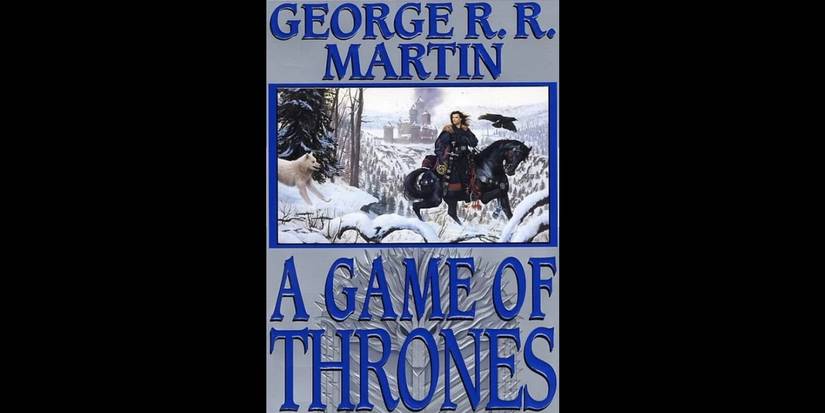
“When you play the game of thrones, you win or you die.” This book upended a lot of fantasy expectations and kicked off a world-conquering franchise. Here, GRRM took familiar ingredients like castles, knights, royal dynasties, and hints of ancient magic, but encased them within a dirty political world where pretty much everyone is morally gray, and no one wears plot armor. That immediately made GoT more suspenseful than most of its peers.
At the same time, he still gives readers compelling, larger-than-life characters, many of whom have since gone on to become iconic. Here, the honest Ned Stark attempts to solve a mystery in King's Landing; across the Narrow Sea, Daenerys begins an extraordinary transformation, and far to the north, Jon Snow discovers that the squabbling of nobles may be insignificant compared with what lies beyond the Wall. Martin makes each storyline compelling individually while steadily revealing how closely they're connected.
7 'The Ghost Road' (1995)

“It's the ordinary deaths that are the worst.” The Ghost Road concludes Pat Barker's Regeneration trilogy, and it's one of the finest British novels about the First World War. The novel again follows Billy Prior and the real-life psychiatrist W.H.R. Rivers, dividing its attention between the final months of the war and Rivers' memories of his anthropological work in Melanesia. That unusual structure allows the author to consider a collection of weighty themes, including death, ritual, masculinity, sexuality, and the different ways societies attempt to give suffering meaning.
Here, Barker is interested in the psychological damage surrounding war: what prolonged violence does to soldiers, doctors, families, and entire nations trying to make sense of mass death. He's also brutally honest about how pointless conflict and sacrifice can be. Reflecting this, the prose is economical and unsentimental, stripping away all romanticism.
6 'Bridget Jones’s Diary' (1996)

“It is a truth universally acknowledged that when one part of your life starts going okay, another falls spectacularly to pieces.” This book was a sensation in the mid-90s, eventually selling over 15 million copies. Structured through the protagonist's diary entries, it charts a year of disastrous dates, workplace embarrassments, family drama, friendships, cigarettes, alcohol units, calorie counting, and repeated promises that tomorrow Bridget will finally become the composed adult she imagines everyone else already is.
Of course, she never quite gets there, and that's what makes her so appealing. Bridget can be insecure, self-absorbed, impulsive, and spectacularly bad at following her own advice, but the book never treats those flaws as reasons readers shouldn't love her. Her voice is unique and often hilarious, too, hugely influencing so much of the so-called "chick lit" that followed.
5 'Jurassic Park' (1990)

“Life breaks free. Life expands to new territories. Painfully, perhaps even dangerously. But life finds a way.” While not quite as breathtaking as the movie adaptation, the original Jurassic Park novel is still incredibly entertaining, turning a juicy premise into a page-turning thriller. The setup is simple and now world-famous: scientists use genetic engineering to resurrect dinosaurs, a billionaire puts them in a theme park and, unsurprisingly, they break loose.
Michael Crichton keeps us hooked with one suspenseful set-piece after another: collapsing security systems, velociraptor attacks, escaped Tyrannosaurs, a Dilophosaurus spitting venom, and some genuinely frightening sequences involving children trying not to become prehistoric lunch. Plus, in the tradition of all great sci-fi, he also throws in some cautionary tales about scientific hubris and the illusion that humanity can always keep dangerous forces under control.
4 'Infinite Jest' (1996)
“Everybody is identical in their secret unspoken belief that way deep down they are different from everyone else.” Set largely around the Enfield Tennis Academy and Ennet House Drug and Alcohol Recovery House, David Foster Wallace's magnum opus moves between an enormous collection of characters while circling subjects including addiction, entertainment, depression, ambition, loneliness, and the desperate human desire to escape consciousness for a while.
At the center of its convoluted plot is a film supposedly so entertaining that anyone who watches it loses interest in doing anything except watching it again, an idea that rings uncomfortably prophetic in our current attention economy of doomscrolling and smartphone addiction. Overall, the book is digressive, difficult, super-long (over 1,000 pages!), and stuffed with hundreds of endnotes. Yet those excesses are part of what makes it special.
3 'The God of Small Things' (1997)

“Things can change in a day.” The defining book by Arundhati Roy, The God of Small Things moves back and forth in time, revealing fragments of what happened to twins Estha and Rahel during their childhood in Kerala, as well as how those events continue shaping them as adults. The arrival of the twins' English cousin Sophie Mol becomes entangled with their mother Ammu's forbidden relationship with Velutha, a man whose caste places their love outside what society will tolerate.
Roy tells readers about major outcomes before fully explaining their causes, replacing conventional suspense with something closer to dread. At the same time, she gets layered with the themes, looking at the ways individual lives are affected by the bigger forces of history. There's a political edge to the story, too, particularly in how it critiques India's historic caste system and traditional taboos.
2 'Harry Potter and the Prisoner of Azkaban' (1999)

“Happiness can be found, even in the darkest of times, if one only remembers to turn on the light.” With Prisoner of Azkaban, the series finds the ideal balance between the wonder of its early installments and the darkness to follow. Here, Hogwarts remains a place of wonder and adventure, but danger circles outside its walls. Indeed, Harry begins the novel believing that Sirius Black is a mass murderer who betrayed his parents and has escaped from Azkaban specifically to kill him.
The rest of the book is jam-packed with memorable characters and creatures. Lupin is a terrific teacher and calming presence for Harry, while the Dementors are genuinely scary. The final act then pulls together the Marauder's Map, Scabbers, the Whomping Willow, Lupin's monthly disappearances, Sirius' history, and Hermione's Time-Turner into one of the most entertaining climaxes in children's fantasy.
1 'The Secret History' (1992)

“Beauty is terror. Whatever we call beautiful, we quiver before it.” Richard Papen arrives at Hampden College desperate to reinvent himself and becomes fascinated by an exclusive group of classics students studying under the charismatic Julian Morrow. Henry, Francis, Charles, Camilla, and Bunny seem to inhabit a more sophisticated world than everyone around them, filled with ancient Greek, expensive clothes, country houses, and intellectual seriousness. However, that attractive exterior masks moral decay.
The Secret History tells readers about Bunny's death almost immediately, eliminating the question that would ordinarily drive a murder mystery. Author Donna Tartt is really interested in why a group of intelligent, privileged college students would decide to kill one of their closest friends, and how they continue living after they've done it. It becomes a Gothic ensemble character study, a pioneering work of 'dark academia'.
Collider Exclusive · Game of Thrones Personality Quiz Which Game of Thrones House Do You Belong To? Stark · Lannister · Targaryen · Baratheon · Tyrell
Five great houses. Five completely different answers to the same question: how do you hold power in a world that will take it from you the moment you stop paying attention? Eight questions will determine where your loyalties — and your nature — truly lie.
🐺Stark
🦁Lannister
🐉Targaryen
🦌Baratheon
🌹Tyrell
01
Someone powerful is acting dishonourably and everyone knows it. What do you do? In Westeros, the answer to this question has ended more than one great house.
02
What is the source of your power? Every house endures because of something. What is it for yours?
03
Who do you truly fight for? Strip away the banners and the words. The honest answer tells you everything.
04
How do you deal with your enemies? A house's method reveals its character as clearly as its words ever could.
05
What kind of ruler do you believe in? Westeros is full of answers to this question. Most of them end badly.
06
You suffer a devastating loss. How does your house respond? How a house handles defeat tells you more about it than how it handles victory.
07
Which of these truths about Westeros do you most believe? Every house has a philosophy. This is yours.
08
The Iron Throne is within reach. What do you do? The answer reveals not just your ambition — but your character.
The Maester Has Spoken Your House Is…
Your answers point to the great house whose words, values, and way of surviving in Westeros match your own. Bend the knee — or don't. That's very much up to you.
🐺 House Stark
Winter is Coming — and you have always known it. You prepare not out of fear but out of duty, because the people who depend on you deserve someone who takes the long view.
- You lead with honour even when it costs you, because you understand that a reputation built on integrity is the only one worth having.
- Your loyalty to family and people runs deep — not as sentiment but as a code that doesn't bend when things get difficult.
- The North endures because Starks endure — not by being the cleverest players in the game, but by being the kind of people others are willing to follow into the cold.
- You are that kind of person. The pack survives. The lone wolf dies. You already know which one you are.
🦁 House Lannister
You understand the game — its rules, its exceptions, and exactly when the rules become the exception. You play it without illusions and without apology.
- You are sharper than most people realise, and you have learned to use that gap to your advantage.
- A Lannister always pays their debts — and you always keep your word, because your word is an instrument of power, and instruments must be kept in working order.
- You love your family with a ferocity that sometimes blinds you, and you know it, and you do it anyway.
- The lion doesn't concern itself with the opinion of sheep. Neither, in the end, do you.
🐉 House Targaryen
You carry a sense of destiny that is difficult to explain and impossible to ignore — the feeling that you are not simply participating in the world but meant to reshape it.
- You are capable of extraordinary things, and you know it, and that knowledge is both your greatest strength and your most dangerous quality.
- Fire and blood are not just words to you — they are a philosophy about what change requires and what it costs.
- The Targaryens at their best were transformative rulers who broke chains and defied the limits of what anyone thought possible.
- At your best, so are you. The dragon has three heads. You are one of them.
🦌 House Baratheon
You are a force — direct, powerful, and difficult to ignore when you enter a room or a conflict. You do not negotiate with challenges. You meet them.
- Ours is the fury — and yours is a kind of intensity that commands attention, respect, and occasionally fear from those who underestimate what's behind it.
- You value strength and straight dealing. You'd rather know where you stand in a fight than navigate a web of courtly whispers.
- The Baratheons built their house on the back of one of the greatest military victories in Westerosi history — and then struggled with what came after.
- The lesson of your house is that winning is not the end of the story. Governing is. You are learning that too.
🌹 House Tyrell
You understand that power does not always announce itself — that sometimes it arrives with flowers, good wine, and a smile that doesn't quite reach the eyes.
- Growing strong is your house's motto, and you live it: patiently, strategically, always investing in the relationships and resources that will matter most when it counts.
- You are charming by choice and calculating by nature — a combination that makes you one of the most effective players in any room you enter.
- The Tyrells fed King's Landing and shaped its politics without ever sitting on the Iron Throne — and they were arguably more powerful for it.
- You know that the person who controls the food controls the kingdom. And you always know where the food is.
KioskNews shows a cleaned-up reading view extracted from the publisher’s page — the original always lives on their site, not ours.