New Jersey girl, 11, builds moss filter designed to remove 95% of lead from water
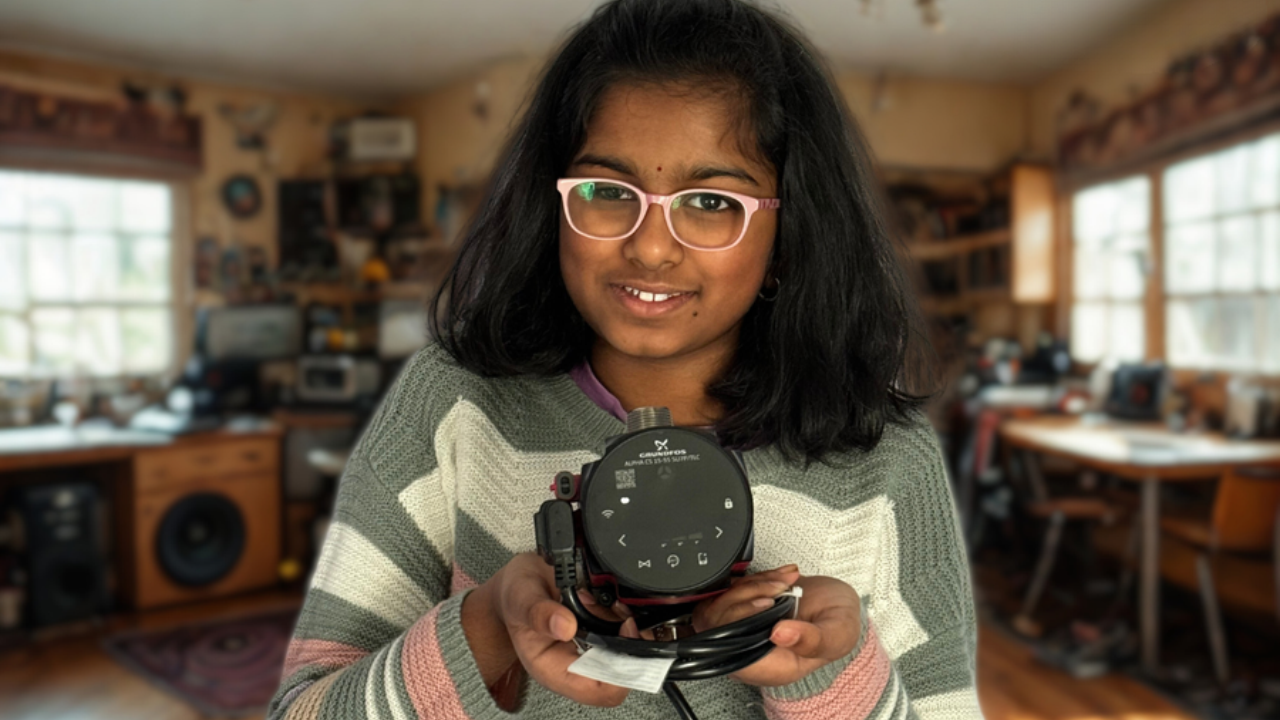
The 11-year-old designed a nature-inspired filter to remove lead from school drinking water.
At nine, Nithya Tammana noticed something happening in her own home that many people might have overlooked: clean drinking water was going down the drain while the shower water was being heated.
Two years later, the girl from Monroe Township, New Jersey, has built a youth-led water conservation network, developed a nature-inspired filter designed to remove lead from school drinking water, and taken her campaign for water sustainability to policymakers.Her initiative, Save Drop, began in February 2024 with a simple idea - that small, everyday habits and larger infrastructure changes both matter when it comes to protecting water.
Today, according to environmental organisation Action For Nature, Nithya leads a growing coalition of more than 450 young people known as “Water Warriors”, conducts weekly environmental leadership sessions and has helped students launch more than 100 local conservation clubs.Her work brings together three strands: preventing water wastage, encouraging communities to change everyday practices, and using innovation to address water quality.
“When I realized how much infrastructure, public investment, and energy goes into treating the water that reaches our homes, I knew we had a responsibility to protect it,” Nithya says, in her profile published by Action For Nature.“I want young people to know that environmental protection is connected to fairness, and that clean water belongs to everyone. When we stay consistent and speak clearly, our age doesn't limit our impact- any one of us can change the system.”
From a household observation to Save Drop
Nithya’s journey began with a familiar household routine. Before a shower, water often runs until it becomes warm enough to use. During that wait, the cold water can be wasted even though it has already been treated for drinking.For Nithya, this was not simply about a tap being left open. It was about the resources required to make water safe and available in the first place.Save Drop was her response to that observation. One of its central ideas is encouraging the adoption of hot-water recirculation systems, which redirect cold water instead of allowing it to run down the drain while people wait for the shower to warm up.But Nithya did not limit her efforts to asking individual households to be more careful. She also sought policy changes that could make water-saving infrastructure more widely available.According to Action For Nature, she launched a petition calling for such pumps to be mandated in new housing developments. She also wrote advocacy letters to all 50 US governors.The approach reflects a recurring theme in her work: conservation should not depend entirely on an individual remembering to turn off a tap.
Changes in infrastructure, public awareness and policy can also influence how water is used.
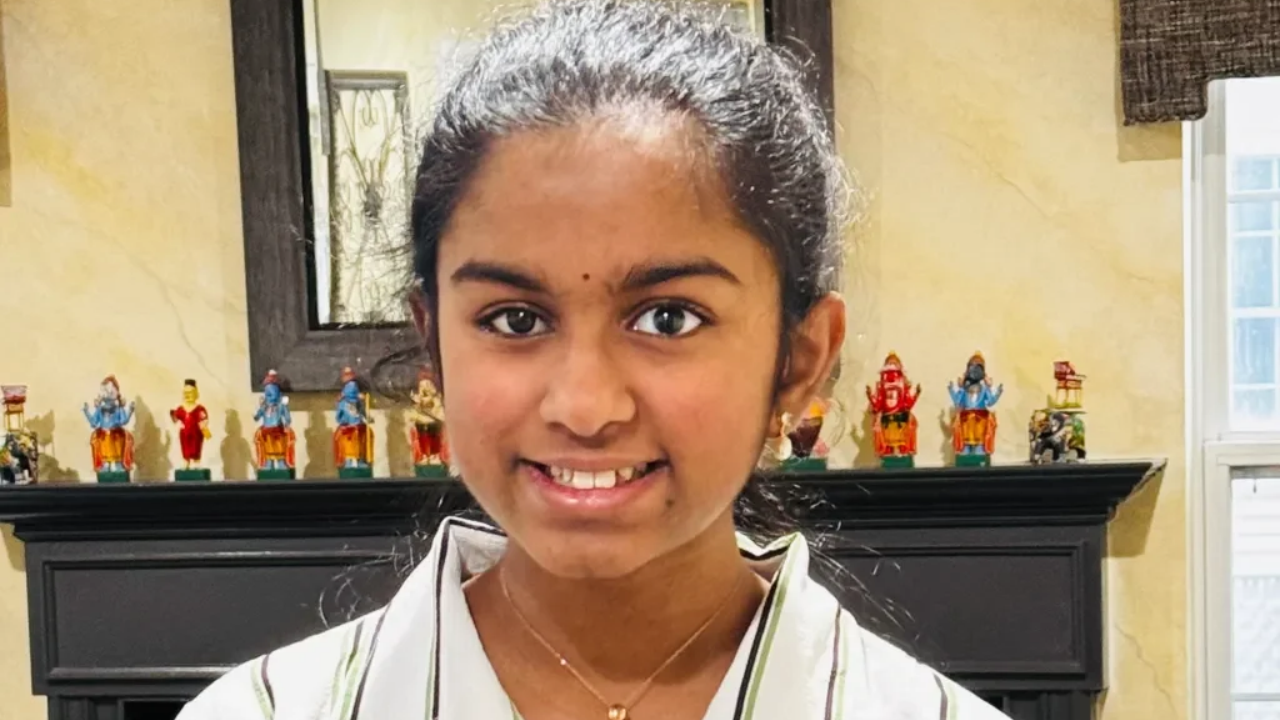
Nithya did not limit her efforts to asking individual households to be more careful. She also sought policy changes.
The half-glass idea that asks restaurants to rethink a habit
Another part of Save Drop focuses on a different everyday setting - restaurants.Through her #ServeHalfGlass campaign, Nithya encourages restaurants to serve customers half-filled glasses of water initially and refill them when requested, rather than automatically filling glasses to the brim.The idea is straightforward. When customers are served more water than they need, some of it may remain untouched and be discarded.
Offering a smaller quantity first gives customers the option of asking for more, potentially reducing unnecessary waste.Action For Nature reports that the campaign has already persuaded local establishments in New Jersey to adopt the practice. The organisation also estimates that the approach has the potential to save up to two billion gallons of water annually across the United States.That figure is a projected potential, not a measurement of water already saved by the campaign.
Nevertheless, the principle behind the initiative is easy to understand: a small adjustment in how a service is delivered can influence resource consumption across many customers.For Nithya, the campaign is another way to make water conservation part of ordinary life, rather than something people think about only during a shortage.
BioLayer: a moss-based approach to lead in drinking water
While Save Drop works to reduce water wastage, Nithya has also explored the challenge of water quality.Her innovation, called BioLayer, is a nature-inspired, plastic-free filter made using living Sphagnum moss. According to Action For Nature, the filter is designed to remove up to 95% of lead from school drinking water and costs less than $38.Lead contamination is a different problem from water wastage. Saving water helps conserve a resource, while removing contaminants addresses whether that water is safe to drink.
BioLayer represents Nithya’s attempt to apply an environmentally inspired design to the second challenge.The use of living moss is central to the concept. Rather than relying on a conventional plastic-based design, the filter uses a natural material as the basis of its approach to lead removal.The stated performance figure is significant, but it needs to be understood precisely: Action For Nature describes BioLayer as being designed to remove up to 95% of lead.
Its profile does not provide further details about the testing conditions, the amount of water treated or the independent validation of the filter’s performance. The figure, therefore, should not be taken as a guarantee that the filter will achieve the same result in every setting.Nithya has also made the BioLayer design open-source. This means the design is freely accessible, allowing schools and other interested groups around the world to explore it without having to obtain exclusive permission to access the design.That decision broadens the ambition behind the project. A solution intended to address a public resource problem can have a wider reach when its design is shared rather than kept proprietary.The reported price of under $38 is another part of the idea: making the design accessible is as important to its stated purpose as developing the technology itself.
Turning young people into Water Warriors
Nithya’s work extends beyond her own campaigns and invention.
A major part of Save Drop involves getting other young people to take up environmental action in their communities.Action For Nature says she mentors more than 450 young changemakers, collectively called Water Warriors, and runs weekly environmental leadership sessions for them. She has also helped students establish more than 100 local conservation clubs.Her educational campaigns, multimedia videos and media appearances have reached an estimated one million people globally, according to the organisation.These figures point to a model of youth engagement in which participants are encouraged not merely to learn about environmental problems but to organise around them. A conservation club can provide a local platform for students to discuss water use, share ideas and pursue campaigns in their own communities.For a young person, the challenge of water conservation can otherwise feel distant or too large to influence.
Save Drop’s projects offer several possible entry points: a household routine, a restaurant’s serving practice, a school’s drinking-water quality or a conversation with policymakers.The projects also show why Nithya’s work is not limited to a single invention. The moss filter addresses water quality, while the recirculation and half-glass campaigns address wastage. The network of young people helps carry those ideas beyond one individual.Action For Nature describes Nithya as someone who combines engineering curiosity, grassroots mobilisation and policy advocacy in her efforts to protect water as a public resource.
Recognition for a young environmental advocate
Nithya’s work has also brought recognition. Action For Nature named her a 2026 Eco-Hero and listed her as the recipient of the Dr Mary Griffin-Jones Special Award.She has received the New Jersey Governor’s Environmental Stewardship Award and spoken on a TEDx stage.
The organisation also identifies her as the youngest-ever delegate in the 70-year history of the United Nations Commission on the Status of Women.More recently, she was named the national winner of the Mott Million Dollar Challenge, a youth entrepreneurship competition. According to Action For Nature, she won at the live finals in Flint, Michigan, after competing against more than 5,300 submissions from across the United States.Her former elementary school principal, Nicole Cirillo, has also commented on the initiative behind her work. As quoted in the Action For Nature profile, Cirillo notes that Nithya did not need a teacher to assign her a project or an adult to suggest a cause. Instead, she noticed a problem, researched it and worked towards a solution.That observation captures an important part of the story. Nithya’s projects began not with a large organisation or a complicated brief, but with questions about how water is used, wasted and protected.She hopes to continue expanding Save Drop globally. Action For Nature reports that she aspires to a future career combining environmental engineering and pediatric ophthalmology.For now, her work offers a clear message about environmental action: protecting water can involve changing a routine at home, rethinking a practice in a restaurant, developing a new design or helping other young people organise around a shared concern. As Nithya puts it, “our age doesn't limit our impact”.
KioskNews shows a cleaned-up reading view extracted from the publisher’s page — the original always lives on their site, not ours.