UK Author M. John Harrison Wins 2026 Booker Prize For 'The End Of Everything'
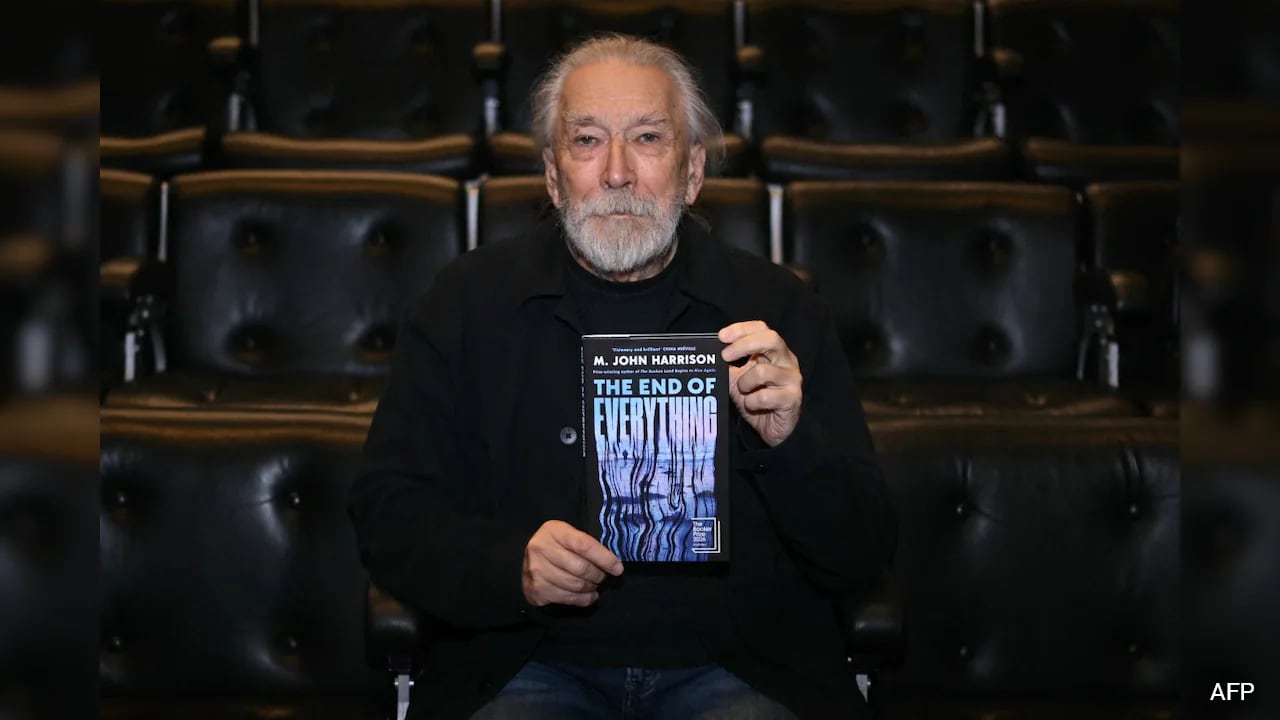
UK author M. John Harrison won the Booker Prize on Monday for his enigmatic novel "The End of Everything", which echoes concerns about artificial intelligence in a darkly satirical depiction of post-apocalyptic Britain.
Harrison, 81, became the oldest winner of the award, which comes with a £50,000 ($67,000) prize and a boost in sales and profile for the winner.
A veteran of the British science fiction literary scene, it was Harrison's first time being shortlisted for the coveted prize, which critics have said was long overdue.
He beat shortlisted authors Marlon James, Douglas Stuart, Elizabeth Strout, Luke Kennard and Rebecca Perry, whose entries ranged from a queer epic unfolding in 1980s Kingston to a campus satire set in modern-day London.
"The End of Everything" came out "ahead in terms of both its extraordinary expert writing, but also huge ambition," chair of the judges Mary Beard told a press conference.
Harrison's 13th novel follows the beachcomber Phillip Tennent and his dementia-stricken, free-spirited aunt Marnie, set in the near-future on the windswept English coast invaded by mysterious objects known as the iGhetti.
An unnamed catastrophe plunges the characters into a murky post-apocalyptic world where the European continent seems to have disappeared and the arrival of the iGhetti, which can imitate humans, evoke interactions with artificial intelligence.
"One main point of the book is that if, or when, such an apocalypse comes it will be incomprehensible," Beard said, adding the book spoke to the present "moment".
"This is the politics of now seen through the lens of the future," Beard said in a statement.
In dream-like episodes this tight, 198-page novel alludes to Brexit, the Covid-19 pandemic and the invasion of technology into daily life.
As is often the case with Harrison's writing, which has been described as genre-bending and singular, the plot counts less than the atmosphere, and the author's elliptical and poetic style heightens the feeling of gradual collapse.
- AI concerns -
"Current affairs provided the themes and the satire," Harrison said of his book. "What happens when all of our expectations and explanations of the world become an ongoing disaster, but we still have to make a life?"
The author previously said he was inspired by the 2008 financial crisis, and wanted to write a novel about the "failure of explanation in society".
Born in Rugby, England, in 1945, Harrison, is the author of numerous science fiction books, including the Viriconium saga (1971-1984) and "Light" (2002), the first volume of a trilogy known as The Kefahuchi Tract, renowned as major works of the genre.
Little known to the general public beyond circles of science fiction enthusiasts, when he was shortlisted, The Telegraph newspaper wrote: "Finally, he's getting his due."
The theme of artificial intelligence has been on the judges' minds through the year-long selection process, which saw them whittle down 163 entries to a shortlist of six novels.
Beard pointed out concerns surrounding AI were "pretty high on this book".
"Phillip has got this object, this artefact, and it's not clear how sentient it is. It's not clear what it is," Beard said in a press conference to announce the winner.
In an earlier interview with AFP, Beard said the prize-awarding panel would have to think about the role of AI in publishing and writing in the coming years.
"I think for the future it's inevitable that that will be on the agenda. You can't bury your head in the sand about that," she said.
The other judges have talked about wanting to create a shortlist of books that were distinctly human, and could not be replicated by AI.
The prize, which celebrates the best work of long-form fiction by writers of any nationality, written in English and published in the last year, was awarded on Monday at a London ceremony.
Last year, British-Hungarian author David Szalay won the prize for "Flesh", his tortured tale of a Hungarian emigre in London.
(Except for the headline, this story has not been edited by NDTV staff and is published from a syndicated feed.)
KioskNews shows a cleaned-up reading view extracted from the publisher’s page — the original always lives on their site, not ours.