OBITUARY: Environmental justice warrior Desmond D’Sa returns to Mother Earth
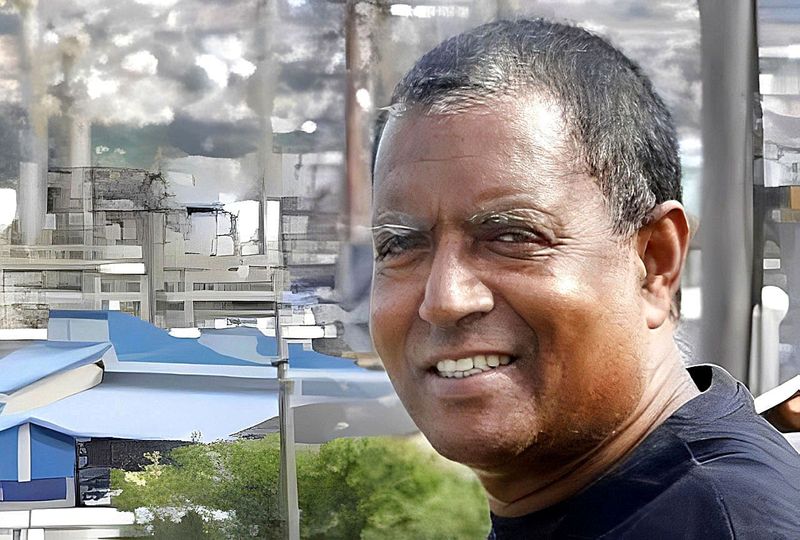
Shortly before six on the morning last Thursday, Desmond D’Sa left his home in Umzinto, on the KwaZulu-Natal south coast, for the Wentworth offices of the South Durban Community Environmental Alliance (SDCEA). It was a drive he made regularly.
He had moved down the coast after having a leg amputated, and the road now took him out of the township he had defended for half a century and back into it each working day. His stepson, Rodney Stuart, and his sister-in-law, Patsy Bishop, were in the vehicle, with a granddaughter. IOL, the news site, reported that he was due to lead a protest at Eskom’s Durban offices that day.
Near Umzinto the vehicle collided with a tractor and trailer. Reports differ on the sequence: some say it drove into the trailer and struck a crash barrier, others that the trailer came loose from the tractor and hit the vehicle. Stuart and Bishop died with him. His granddaughter was taken to hospital.
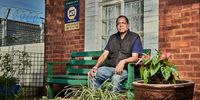
Desmond D’Sa, community organiser and winner of the 2014 Goldman Environmental Prize, was born in Cato Manor, Durban, on 13 June 1956. He died in the collision on 29 October 2026, at the age of 70. He was never elected to anything, by choice. The bulldozers came for his family’s house and much of what he did afterwards was in defiance of that pain and humiliation.
He was the 11th of 13 children. Cato Manor, as he remembered it, was green, with clean water, soil that grew food and room for a diverse community to live side by side. His parents kept an open door. “My mother and father were always about service. If anyone knocked on the door and asked for anything they would give it. We never hoarded money. We were taught to be providers. As long as we work hard, things will work out,” he told Daily Maverick in 2023.
The Group Areas Act, the law that assigned residential areas by race, ended that. Municipal police, the “blackjacks”, arrived with trucks. “They were sjambokking people and throwing our furniture into trucks. That was very heartsore for me. It taught me never to be quiet again,” he once told the Mail & Guardian.
The family was moved to Wentworth, a new township in the south Durban basin. “We came to red sand and concrete blocks,” he said. “We had to rebuild what we left behind: lovely gardens, fruit trees, water, toilets, space.”
The Goldman Prize writes that the forced removal was in 1971, when he was 15, and describes a 10-room house exchanged for a two-bedroom flat. Later he lived apart from his family because of the threats against him.

Wentworth sits in a basin that contains almost 70% of Durban’s industry. More than 300 industrial-scale facilities, among them oil and gas refineries, paper mills and agrochemical plants, stand beside about 300,000 residents, mostly low-income and working-class, many of whom were moved there under the National Party to supply cheap labour. High rates of cancer, asthma and bronchitis gave the area its nickname, “cancer valley”.
D’Sa went to work in the industry around him. At an acrylic fibre plant, as reported in Daily Maverick, he watched colleagues fall ill from acrylonitrile, a toxic liquid used to make the fibre, and saw the factory clinic send them away without treatment. At night he took home whatever company paperwork he could find and read about the risks. When he started asking questions at work, he was dismissed.
“In 1998 I lost my job at Sasol, the oil-from-coal company created by the previous regime. I’d been outspoken about the environment, so they offered me a raise and a car to keep me quiet,” he told the Mail & Guardian. He showed them the middle finger.
In 1995 he met Nelson Mandela, then president, during a protest against a refinery that the community blamed for leukaemia and asthma among its children. Mandela, D’Sa said, summoned more than 600 industry representatives in Durban to agree a plan for measuring pollution in the surrounding neighbourhoods. The lesson was about evidence. “You have to have facts and figures because that’s what counts at the end of the day,” he told the Goldman Prize.
Unity in Wentworth
He began his activism as an unpaid volunteer. Bobby Peek, executive director of groundWork, an environmental justice organisation, wrote in a tribute that D’Sa drew ratepayers’ associations, churches, mosques, unions, academics, health workers and the unemployed under one banner.
D’Sa, “Skiddo” Josephs and Patrick Mkhize were three “big men” of Wentworth who lived within walking distance of one another and often stood at opposite ends of politics. Guided by Jerome Schoonberg, they formed the Wentworth Development Forum, which “irked government officials, silenced politicians and brought a newfound unity to Wentworth”, Peek wrote.
Peek recalled the craziest of their early expeditions together. In April 2000 they left Durban at 4am for Sasolburg, to meet people they had only spoken to by telephone and help start local resistance to Sasol. “We did a toxic tour of Sasolburg with locals, ducked into a tavern at 2pm, had lunch and a beer, and then drove all the way back to Durban and got back at 11pm. The rest is history.”
The methods were deliberately plain. D’Sa devised a smell chart so residents could name the chemicals they were breathing, and trained them in “bucket brigade” sampling, which measures air quality without sophisticated equipment.
Once, five casual workers from Engen, the oil company, came to his door. About 8,000 workers were not receiving danger pay or allowances. D’Sa led a strike that spent two years in court. “I had seven interdicts against me,” he said.
He was arrested with 12 workers, including the writer and academic Ashwin Desai. Engen eventually paid back-pay, nine months of danger pay and bonuses, but the labour brokers were removed so that the workers were employed directly. “Engen tried to convince the community to get rid of me, but people refused and stood by me,” he said.
His house was petrol-bombed during the dispute. “They came around midnight. My family was traumatised. My daughter ended up in the hospital. So did I, but I walked out of there the same morning,” he said. He told the Mail & Guardian that labour brokers and the company sent the attackers; the Goldman Prize describes them only as unknown. He was left with burns and scars.
The campaign that made his name abroad began with a request for help. Wasteman Holdings, a waste management company, opened the Bulbul Drive landfill in Chatsworth in 1990, without consulting residents, to take hazardous waste from nearby plants, shipyards, factory farms and medical facilities. Lorries drove through residential streets spilling debris that leached into the soil and groundwater, and fumes from paint thinner, solvents and pesticides fouled the air. In 2009, with the site close to capacity, Wasteman applied to extend its lease to 2021.
D’Sa was called in to help with negotiations. Much of the evidence was gathered at night, at the landfill itself, in samples of the chemicals leaching into soil and air. He helped residents pick apart Wasteman’s plans during the public comment period, put them in touch with lawyers and supplied reporters with people who lived beside the dump.
Demonstrations on major highways drew attention to the illegal trucking. “We sat in meetings on nights and weekends, convincing Wasteman that it was in their best interest, and the interest of the community, to shut down the landfill,” he said. Wasteman withdrew its application and the landfill closed.
In April 2014 he received the Goldman Environmental Prize for Africa, worth $175,000, at the San Francisco Opera House, one of six winners that year. He told The Witness, the Pietermaritzburg newspaper, that “it was a first-time experience for me to know what this award means”.
At the ceremony he said: “We are not responsible for the climate crises we are facing the world over. It’s the greedy and corrupt people who don’t give a damn about the wellbeing of the poor and the marginalised.”
He used the trip to lobby a Japanese government delegation about funding the Durban port expansion. “We have made it clear to them that they should not be pumping in funds to a project that will see displacement of people with no alternative homes and with no jobs,” he said.
Years later he described what the prize money had done. “Everything is in trust, so this means the work we have done will continue, that the resources are there. It hasn’t made me stop working. It’s made me more relentless,” he told the Mail & Guardian.
He was courted by politics and refused. “Once you join a political party, you then have to toe their line. They manage you; they control your mind. When you are free, you owe nobody any favours,” he said. He would work with any councillor or MP willing to listen, he added, but could not see one in the city council “committed, with passion and heart, to fight for poor people”.
What he built instead were coalitions such as the KZN Subsistence Fisherfolk Forum, the KZN Environmental Alliance and the Coalition of the Poor. His model was the United Democratic Front. “An active citizenry on the streets can force change, and with hundreds of thousands of people nobody will be able to stop us.”
During lockdown, a ban on subsistence fishing locked about 80,000 people out of their livelihood. D’Sa moved the campaign online. “Eventually, Barbara Creecy didn’t have a choice and had to open up fishing because we were able to prove that it was essential for people’s survival,” he said. Creecy was the environment minister at the time. He had once regarded social media as a hindrance. “I’d always seen it as a hindrance, but I’ve come to see how useful it is. I could be at my daughter’s house or the farm and still talk to people anywhere,” he said.
Short on swagger
To the world outside he was the man who challenged corporate impunity, from his own neighbourhood to the boardrooms of Shell and the halls of the United Nations. In Wentworth he was something plainer. “Desmond was the person you came to when something was wrong in your neighbourhood,” Peek wrote. When a social grant stopped, when officials moved against a family’s public housing, when a school would not listen to a mother, people knocked on his door. When bullets flew between gangs, Peek said, D’Sa stepped into the middle and led clergy from many congregations to push for peace.
Friends remembered a man short on swagger. Mike Kantey, an editor and activist who worked with him in the national coalition against nuclear power stations, knew D’Sa mostly by reputation, “a fierce defender of environmental rights”, but on the few occasions they spoke found him “good-humoured and lacking in any type of arrogance or aloof behaviour”.
Robin Sewlal, an author and editor, asked him to write a chapter for Reflections of the South African Media: 1994-2019, and found him coy. D’Sa wrote a piece called “Caring for the environment”, and when the book appeared on 18 July 2021 with Mandela on the cover, Sewlal said, he was in awe. “His easygoing disposition belied Desmond’s steely determination to fight tooth and nail for environmental justice,” Sewlal said.
He could be a stern ally. Peek, who said D’Sa treated him as a son, wrote that D’Sa tried to pull him into line whenever he thought Peek or groundWork was going astray. At 64 he had told the Mail & Guardian that he might cut back. “I’ll cut down, but I don’t think I can stop entirely. I’d have to find something else to do,” he said.
A day before the crash, groundWork and SDCEA met to plan their strategy for 2027, which Peek expected to be a brutal year, with the fossil fuel lobby and a “weak and compromised state” pressing for gas plants, a dug-out port, bigger petrochemical storage and more pipelines under the community. “These struggles without Desmond are going to be so much more difficult,” Peek said.
Tributes came from officials and from far outside the basin. Narend Singh, the deputy minister, called it “a great loss for the entire environmental movement”. The Durban University of Technology conferred an honorary doctorate in health sciences on D’Sa in 2015.
Alan Khan, who introduced him on stage that day, said: “He was never afraid to challenge injustice or speak out on behalf of those whose voices were not always heard.” The Ukrainian Association of South Africa said he “could never remain indifferent to injustice against people or nature”, and recalled that he stood with Ukrainians after Russia’s invasion and advocated the return of children deported from Ukraine.
On the day he died, Peek sat in the SDCEA office where D’Sa had spent his last decades, and the mothers of Wentworth came in one at a time and sat down in silence.
D’Sa is survived by his wife, Beatrice, and his family, among them a daughter and grandchildren. “Heartbroken beyond words” was how they described themselves on 31 October.
Now and then, Peek wrote, a parcel of fish would arrive at his own house, sent by D’Sa from his friends among the fishermen. They knew him not for the corporations he had confronted or the politicians he had challenged, but for the person he was when the cameras were gone. DM
KioskNews shows a cleaned-up reading view extracted from the publisher’s page — the original always lives on their site, not ours.