More districts, more councils but will Ladakh get political autonomy?
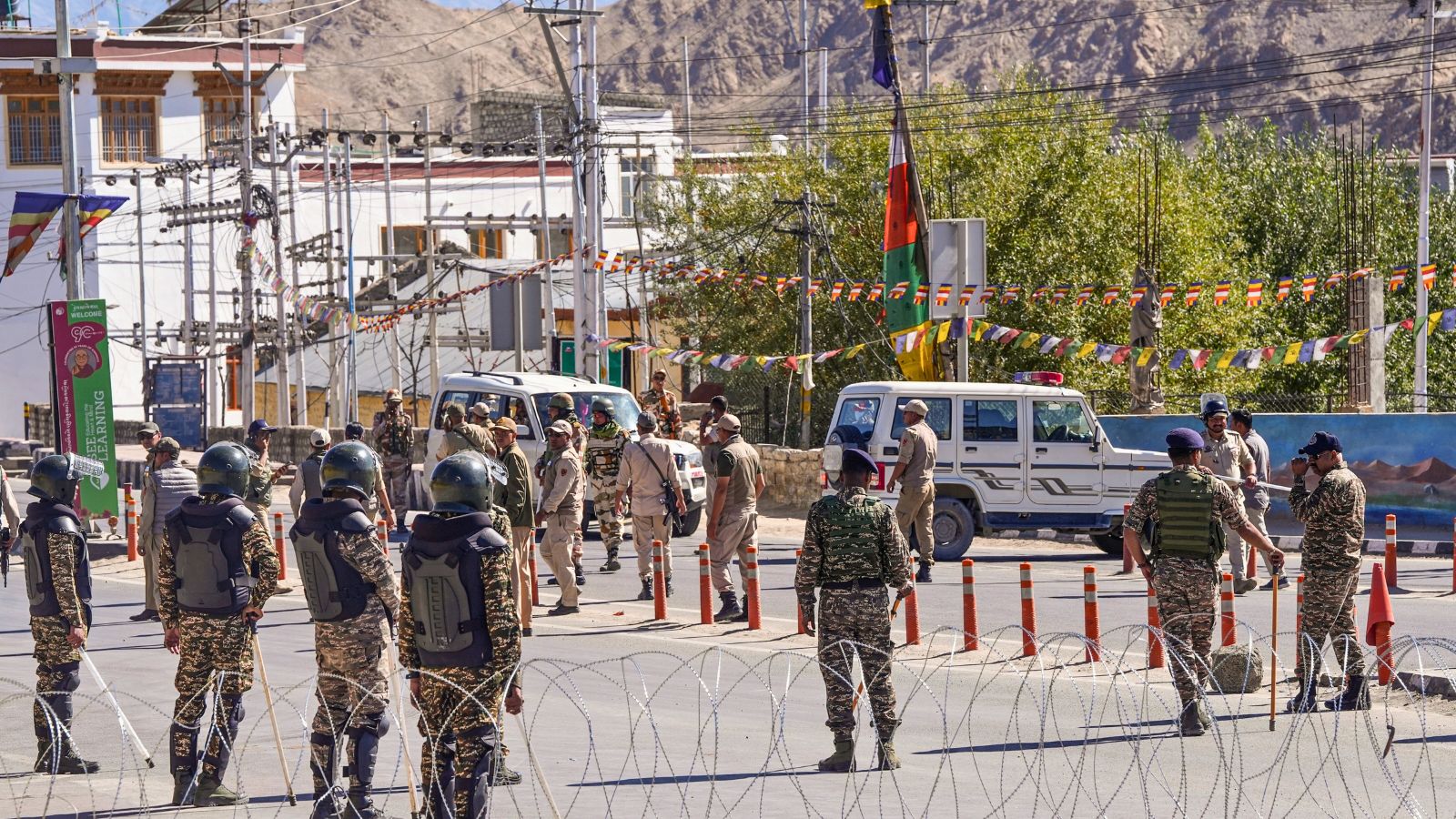
Kargil has a relatively small population but has traditionally had multiple tiers of political representation. That changed on Wednesday when the administration dissolved the Ladakh Autonomous Hill Development Council (LAHDC) in Kargil, leaving the region with only its MP as an elected political representative.
The move came days after talks between Ladakhi leaders and the Centre ended in a stalemate on October 15, and months after the Centre approved the creation of five new districts in the Union Territory. Last month, Ladakh Lieutenant Governor V K Saxena approved a proposal to establish a separate LAHDC in each of the seven districts.
In August 2019, Ladakh was carved out as a Union Territory without a legislature from the erstwhile state of Jammu and Kashmir following the abrogation of Article 370.
Mixed response
Wednesday’s decision has raised questions about whether creating more district-level elected bodies can adequately address Ladakh’s demand for a legislature and greater political autonomy. It has also drawn mixed reactions from political leaders. While Kargil Democratic Alliance (KDA) co-chairman Sajjad Kargili questioned the rationale behind the move, former Chushul councillor Konchok Stanzin, from Eastern Ladakh, said it could bring governance closer to remote areas.
Pointing to what he described as “the failure of the District Development Councils (DDCs) in Jammu and Kashmir”, Kargili argued against the changes. “The model of having elected bodies in each district has been tried in Kashmir with the DDCs, which didn’t prove functional,” he said.
Stanzin, meanwhile, said the reorganisation of districts could make it easier for residents to influence local development priorities. “Changthang (one of the five new districts) has an approximate population of about 16,000, while the area spreads over 20,000 sq km,” he pointed out.
Before the creation of the new districts, Leh DISTRICT had a population density of around 3 people per sq km, while Kargil had 10. Large parts of the cold desert remain uninhabited because of the region’s high altitude and difficult terrain.
Stanzin also highlighted the lack of accountability under bureaucratic rule, arguing that the new councils could strengthen local participation. However, their effectiveness will depend on how soon elections are held.
How dissolution came about?
Elections to the LAHDC, Kargil, were last held in October 2023, with opposition to bureaucratic rule emerging as a common theme. The issue also prompted a rare show of unity between Leh and Kargil as political leaders from both regions pressed for their demands.
The National Conference (NC)-Congress alliance emerged victorious in the polls and agreed to share the post of Chief Executive Councillor (CEC), the head of the elected body, with each party holding the position for two-and-a-half years.
In November 2023, a High Powered Committee was constituted, followed by talks with the Centre on Ladakh’s four-point agenda, which included the demand for inclusion under the Sixth Schedule of the Constitution providing special protection.
The power-sharing arrangement, however, ran into trouble this year after CEC Mohammad Jaffer Akhoon refused to resign and make way for the Congress to take its turn. The NC subsequently expelled him from the party’s primary membership, accusing him of anti-party activities and of “causing indiscipline”.
Following the resignations of councillors from the NC, Congress and BJP in recent weeks, Akhoon stepped down earlier this week, paving the way for the council’s dissolution.
On Wednesday, the government notified the Ladakh Autonomous Hill Development Councils (Amendment) Regulation, 2026, specifying the number of seats to be filled through direct elections in each of the new hill councils. This will increase the number of elected representatives across the region from 52 to 100.
On Thursday, the administration also announced panchayat elections in the Union Territory – the first since the abrogation of Article 370. According to the Ladakh state election commission, polls will be held on November 21 for 193 panchayat halqas across Ladakh.
KioskNews shows a cleaned-up reading view extracted from the publisher’s page — the original always lives on their site, not ours.