Tycoons campaign on the streets as Hong Kong Election Committee vote nears
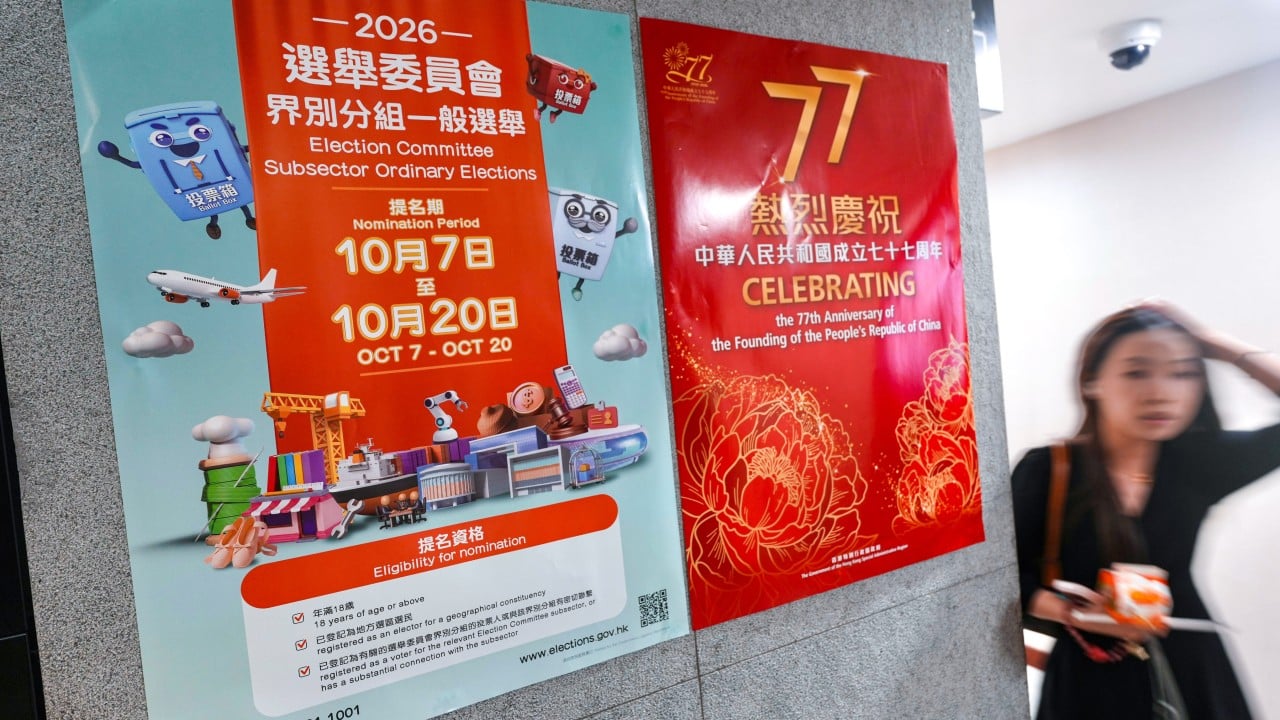
Mobilisation and campaigning have been ramped up ahead of Hong Kong’s Election Committee poll as Beijing expects turnout to surpass the 2021 level – a push observers say is aimed at closing the distance between the body that selects the city’s next leader and the public while enhancing its legitimacy.
Sunday’s poll is set to be markedly more competitive than the 2021 ballot, with 31 of the 36 elective subsectors contested, up from just 13 five years ago, and 856 candidates vying for 723 seats on the powerful electoral college.
With this heightened competition, Beijing expects turnout to be “the higher the better”, aiming to exceed the 2021 figure of 89.77 per cent and surpass 90 per cent, sources familiar with the election told the South China Morning Post.
However, no rigid target has been set, as conditions varied across subsectors, such as differences in the size and composition of the electorate, they added.
Several eligible voters said they had received repeated reminders from the government, political parties and community groups to encourage them to vote, with some describing themselves as being “bombarded”.
A voter in the district representatives subsector said messages circulated encouraging electors to vote in the morning, making it easier to track remaining voters and facilitate “get-out-the-vote” logistics.
“All eligible voters belong to the pro-establishment camp; therefore, the turnout is naturally expected to be high,” they added. “Only a strong turnout rate can demonstrate the practicality and popular support of the new electoral system.”
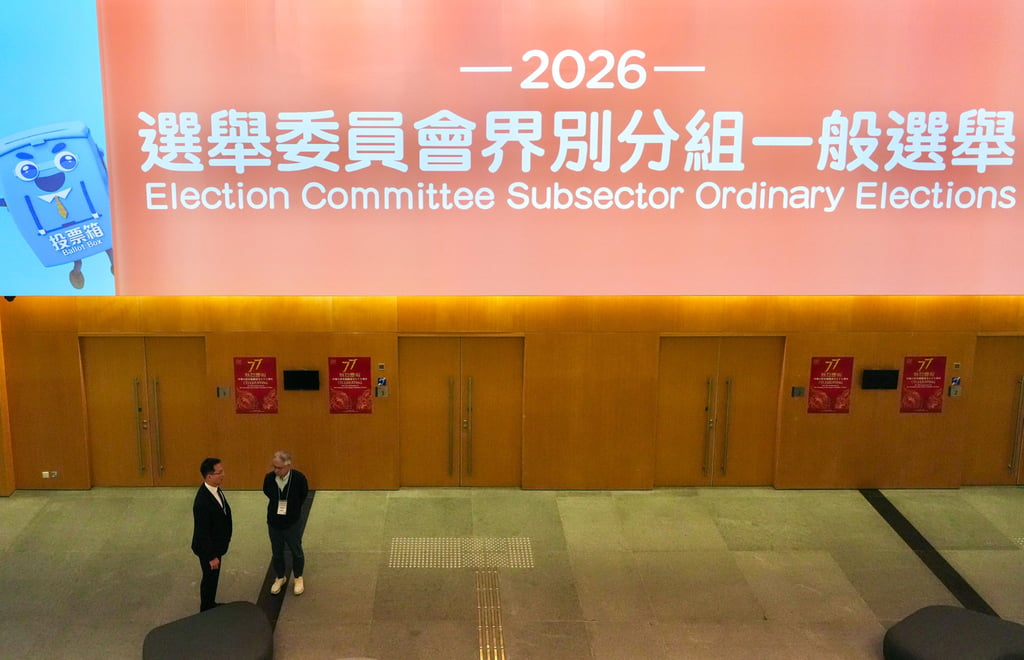
Sunday’s is the second Election Committee poll after Beijing’s electoral overhaul in 2021 to ensure only patriots hold power. That year, the electoral college expanded from 1,200 to 1,500 seats to include city representatives to national bodies, and the voter base was slashed by replacing individual votes with corporate votes in most subsectors.
Excluding uncontested subsectors, only a narrow pool of 5,757 voters is eligible to cast ballots on Sunday, including government-appointed district representatives, corporate bodies named by authorities, and government-subsidised NGOs.
In 2021, 4,389 of the 4,889 registered voters voted. The legal, the technology and innovation, and the architectural, surveying, planning and landscape subsectors recorded 100 per cent turnout.
The elected members will join the 259 uncontested members, 362 ex officio members and 156 members nominated by designated bodies to nominate and vote in next year’s Chief Executive election, and to nominate candidates and elect 40 of the 90 lawmakers in the 2029 Legislative Council election.
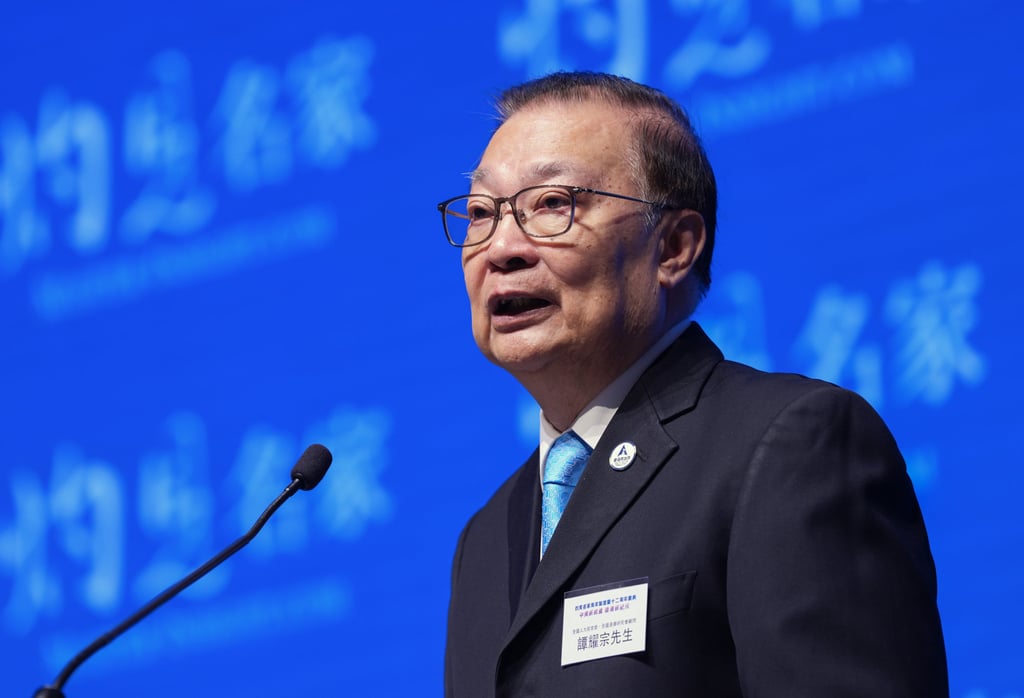
Tam Yiu-chung, a former Hong Kong member of the National People’s Congress Standing Committee, the mainland’s top legislative body, said he anticipated the more competitive field would drive the turnout rate to more than 90 per cent.
“Publicity and mobilisation efforts have been carried out more thoroughly this time,” Tam said. “It would be ideal if the turnout rate could exceed 90 per cent; it shows that everyone attaches importance to the election … I believe Beijing will be pleased to see that.”
Veteran political commentator Sonny Lo Shiu-hing said pushing for higher voter turnout aligned with Beijing’s goal of enhancing the Election Committee’s legitimacy by fostering competition and drawing more heavyweight candidates into the race.
“[The campaigning] reflects Beijing’s emphasis on mobilisation, hoping to boost voter turnout to at least match the previous election,” Lo said. “A higher voter turnout means the elected Election Committee members will carry greater legitimacy.”
Unlike the 2021 poll, most subsectors have not been handed a “blessing list”, the SCMP has learned, signalling that hopefuls were allowed to engage in a genuine contest and a “free fight”.
The shift spurred more street-level campaigning as polling day approached, particularly among heavyweight candidates who could no longer win by walkover.
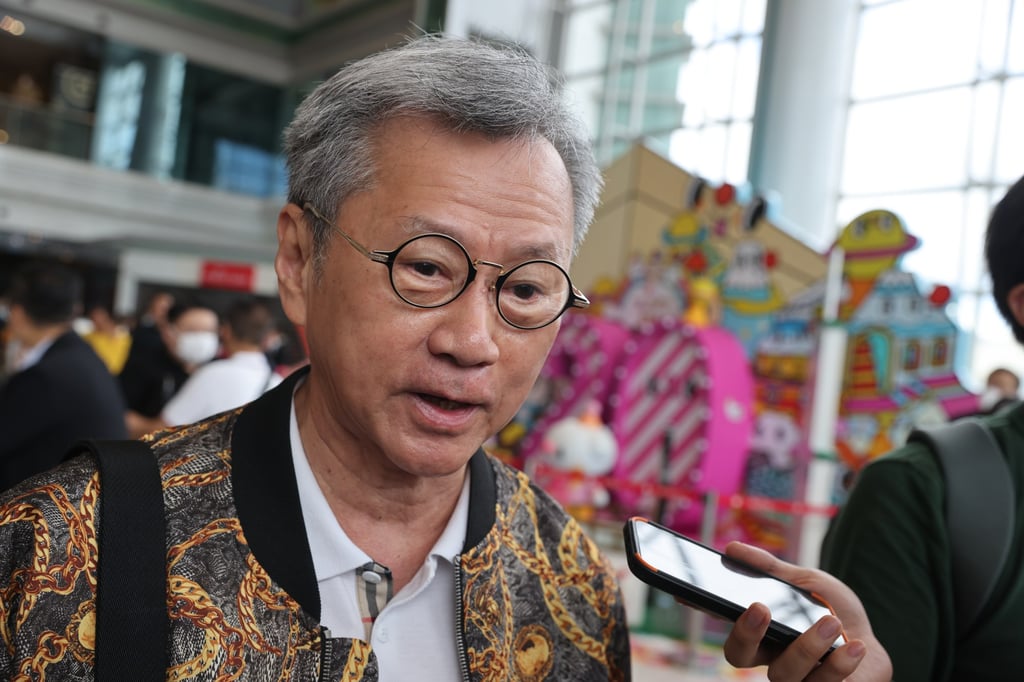
Last weekend saw rare scenes of tycoons handing out leaflets in Central, including Henderson Land Development chairman Martin Lee Ka-shing, Sun Hung Kai Properties executive director Christopher Kwok Kai-wang and CK Asset’s executive director Justin Chiu Kwok-hung.
Former health minister Sophia Chan Siu-chee, who is running in the medical and health services subsector, had also taken to the streets to canvass for support.
Beyond lobbying for support, Lau Siu-kai, a consultant to the semi-official Chinese Association of Hong Kong and Macau Studies think tank, said the street-level campaigning stemmed from Beijing’s hope that Election Committee members would close the gap with ordinary people and better represent voters’ interests when selecting the city leader and lawmakers.
“These elites, these Election Committee members, have a responsibility to serve the public. They are also accountable to the public,” Lau said.
“Because the public does not elect Election Committee members directly, a certain disconnect between them and the public is inevitable,” he added.
“The question is how to bridge that gap. They cannot just campaign to their constituents; they also have to reach out to the broader public.”
KioskNews shows a cleaned-up reading view extracted from the publisher’s page — the original always lives on their site, not ours.