Can China’s top-down military adapt to the speed of AI and drone warfare?
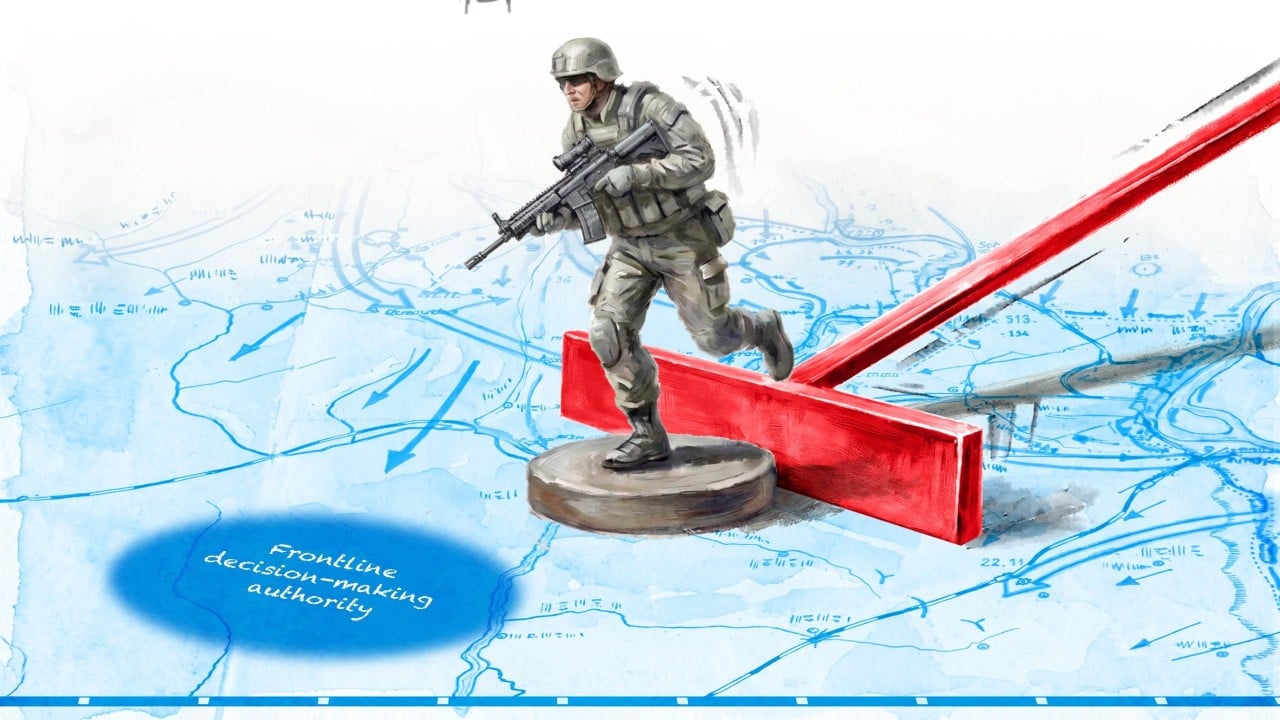
They argued that such troops needed to “make decisions independently” when they could not receive real-time instructions from higher headquarters. Those decisions, however, should continue to follow the “strategic intent of higher command”.
A more detailed proposal appeared in a PLA Daily article on October 18. It called for the authority of frontline units to be automatically adjusted as battlefield conditions changed.
Drawing on unnamed recent conflicts, the authors said rigid command arrangements had caused forces to “miss opportunities”, citing delays when troops had to seek approval “level by level” before striking targets.
But delays were not the only concern. The commentators also said that large, fixed command centres were becoming increasingly vulnerable to surveillance and long-range precision strikes. Destroying command centres early in a conflict could disrupt communications, delay orders and leave subordinate units struggling to coordinate operations.
Time has become a scarcer tactical resource than firepower
Militaries engaged in recent conflicts had consequently moved towards smaller, more dispersed and mobile headquarters, they noted. Such arrangements, combined with greater delegation of authority, could help forces continue operating, even if their command infrastructure came under attack, rather than simply allowing them to make decisions faster.
To address both challenges, the authors proposed automatically giving frontline commanders more freedom to act when facing sudden enemy threats, damaged command centres or brief strike opportunities.
That flexibility could then be curtailed as conditions stabilised under clear rules separating the decisions subordinate units could make independently from those they had to report to higher headquarters.
The authors of both the July 30 and October 18 commentaries nevertheless insisted that strategic deployments and major operations remain under centralised, unified command, arguing that flexibility needed “boundaries” and delegation required “limits”.
The push for battlefield flexibility also reflects technological change.
Timothy Heath, founder of US-based consultancy firm Perceptum, said the articles were probably linked to the PLA’s efforts to become an “intelligentised” force, incorporating artificial intelligence (AI) into military operations.
Those AI-related challenges surfaced in a November 5 PLA Daily commentary by Liao Zhenxi and Zou Zhenning. They said AI could improve battlefield awareness and accelerate decisions but that independent actions by AI-enabled systems might conflict with broader military objectives.
They argued that military command should shift from “issuing instructions for everything” towards “guidance through rules”, stating that decisions made by individual AI systems could potentially work against the overall military plan.
To prevent this, the authors called for clear rules on AI independence, continuous monitoring and the ability of commanders to step in.
Alongside AI advances, the Ukraine war has shown Chinese military researchers how digital networks help frontline units identify and engage targets without waiting for fresh orders.
In a commentary on November 2, Xu Changshuai and Feng Xiaoyu of the Air Force Research Institute described how Kyiv’s Delta battlefield management system enabled units to act on shared targeting information. They wrote that troops could engage targets without seeking further approval, provided those targets were within their assigned areas and authority had already been delegated.
“Time has become a scarcer tactical resource than firepower,” the authors argued, noting how frontline troops could now spot and strike targets within minutes.
But these technological advances also bring new vulnerabilities. In their commentary, Xu and Feng said relying on dispersed frontline units for drone strikes carried risks, citing reports that Russian electronic warfare systems could disrupt communications between drone operators and their aircraft.
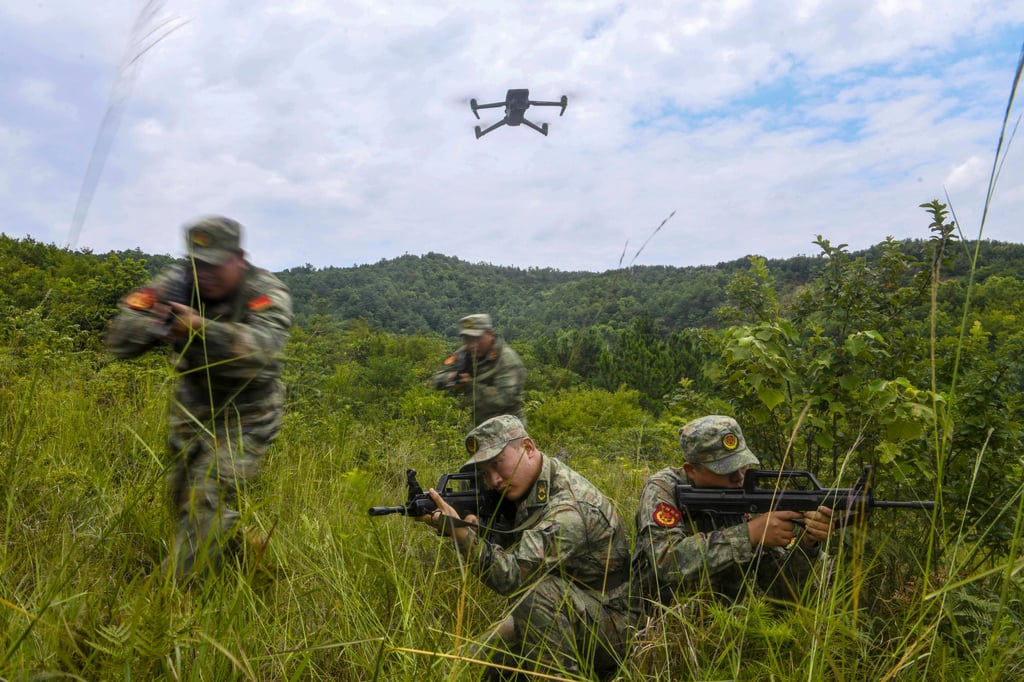
On the other side of the conflict, Russia has likewise adapted its command practices. A 2024 study by the US-based Institute for the Study of War found Russian forces began decentralising artillery fire control after the 2023 battle for Bakhmut, following delays caused by centralised decision-making.
By May and June that year, Russian troops were increasingly using drones to locate targets and coordinate artillery strikes faster.
Nathan Beauchamp-Mustafaga, a China defence researcher at the Rand Corporation, said lessons from Ukraine encouraged some PLA strategists to give frontline commanders greater freedom to make battlefield decisions.
The PLA’s interest in a more flexible command structure, however, predates the Ukraine war. Research cited in a 2025 Rand study showed that Chinese military thinkers had examined decentralised command arrangements for years.
More recent Chinese research has highlighted the importance of allowing military units operating across different areas of warfare to coordinate their actions without relying entirely on centralised command, particularly when using drones and other uncrewed systems.
But a separate 2025 Rand study said that implementing mission command unevenly could create new risks for the PLA.
While further independence might make PLA forces more adaptable and resilient when communications fail or are disrupted, the researchers said delegating authority without improving personnel capabilities and discipline could lead to “more aggressive, uncoordinated behaviour” by frontline units.
The PLA would also face institutional hurdles when putting such proposals into practice.
Heath said PLA commanders had “little tactical independence” under the military’s centralised command system and party discipline.
Under that system, operational orders flow from the Central Military Commission through theatre commands to units in the field. Within those units, Communist Party committees oversee major decisions, while military commanders and political commissars share responsibility for carrying them out.
In emergencies, commanders can make urgent tactical decisions without waiting for approval, particularly when acting within existing operational plans, but must report their actions afterwards.
More important decisions still require approval from higher authorities. Larry Wortzel, a retired US Army colonel and PLA expert, said that for major changes, “one must ask permission”.
The question of frontline autonomy has become more sensitive amid sweeping anti-corruption investigations and the removal of senior Chinese military officials.
Writing in June, K. Tristan Tang, a China Studies Fellow at the Jamestown Foundation, said the anti-corruption drive had brought renewed emphasis on following higher-level orders, even as frontline officers were encouraged to exercise independence.
Tang described this balance as “regulated autonomy”, allowing tactical decisions within limits set by superiors.
A PLA Daily report published on October 13 offered a glimpse into greater responsibility at lower levels. It described a Central Theatre Command Army combined-arms brigade directing a joint exercise involving multiple services, with higher headquarters responsible only for supervision and evaluation.
A captain reportedly coordinated airspace and fire support without seeking instructions from above.
But organising an exercise does not necessarily equate to greater autonomy in combat, where political and institutional constraints remain.
Wortzel said the PLA Daily commentaries suggested senior leaders wanted such ideas considered, but he said mission command could “undermine the complete control of the party over the PLA” and affect its commander-political commissar structure.
Heath likewise said the PLA’s political culture posed “a serious challenge” to independent judgment among junior commanders.
“I am sceptical that the PLA will be able to make this transformation,” he said while predicting that any changes would probably be “superficial” because he did not believe “the political imperatives will be sacrificed to improve the combat effectiveness of units”.
Officer competence presents another obstacle. Around the time of Chinese President Xi Jinping’s massive overhaul of the PLA at the end of 2015, military commentators highlighted the “Five Incapables”, a reference to shortcomings in commanders’ ability to assess battlefield situations, understand orders, make decisions, deploy forces and respond to unexpected developments.
01:36
Former PLA generals expelled from China’s Communist Party for factionalism and disloyalty
A 2025 study by the US-based National Bureau of Asian Research found that the PLA Daily continued referring to these shortcomings, although less frequently, while military leaders acknowledged the need for further education reforms.
Beauchamp-Mustafaga said increased autonomy would require both “improved command ability within the PLA officer corps” and “greater Chinese leadership confidence in the officers”.
PLA Daily commentators also recognised the importance of trust. In their November 2 article, Xu and Feng said decentralisation required the command system to “trust the judgment of small units”.
Whether greater responsibility in training translates into battlefield autonomy remains unclear.
Wortzel said he had seen no evidence of the broader proposals being implemented, while Heath said the evidence made it “difficult to judge” how far changes had progressed.
KioskNews shows a cleaned-up reading view extracted from the publisher’s page — the original always lives on their site, not ours.