How does India regulate food safety? Maharashtra’s plea highlights Centre-state divide
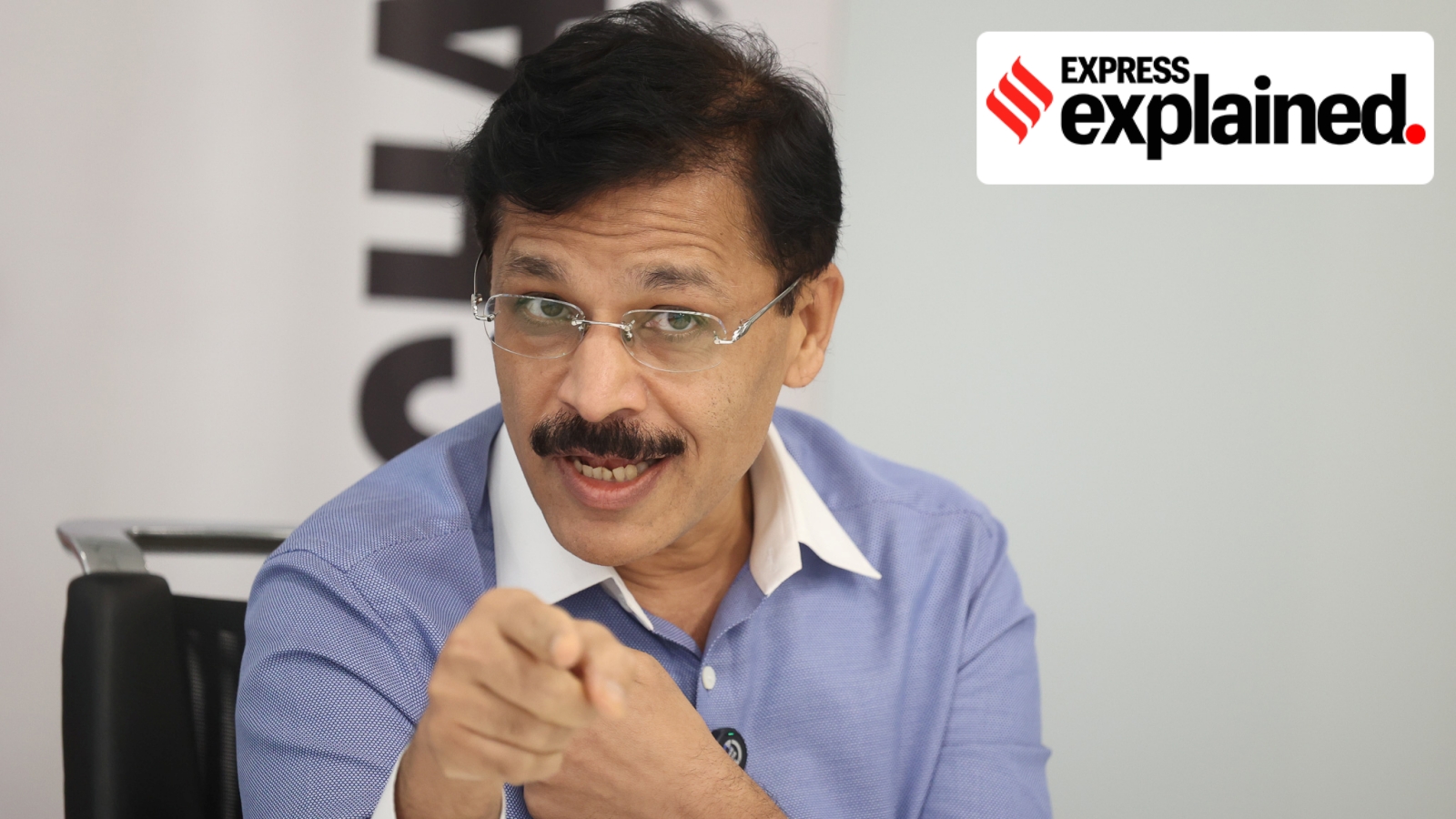
The Maharashtra government, through its Food Safety Commissioner Tukaram Mundhe, recently went to the Bombay High Court against the national regulator, the Food Safety and Standards Authority of India (FSSAI), alleging that it had created a parallel regulatory mechanism and encroached on the state’s powers.
Mundhe — known for taking strict action against food businesses and highlighting huge markups charged by hospitals on medicines and consumables — has said that the Centre has put restrictions on the powers of the commissioner and his officers.
The petition has put the spotlight on how food safety is regulated in India at both Central and state levels. We explain the division of responsibilities in terms of monitoring food safety, the points of contention in Maharashtra’s plea, and the challenges that arise out of the division of responsibilities.
What is the current division of responsibilities?
Section 31(3) of the Food Safety and Standards Act, 2006, states: “Any person desirous to commence or carry on any food business shall make an application for grant of a licence to the Designated Officer in such manner containing such particulars and fees as may be specified by regulations.” A Designated Officer, as defined under Section 36, is responsible for food safety administration of a specified area (usually a district), who is appointed by the Commissioner of Food Safety, who is responsible for the entire state.
The Act also empowers the Commissioner to appoint Food Safety Officers (FSOs) for specified local jurisdictions to carry out inspections and seizures in case of complaints or contraventions. These FSOs report to the district-level Designated Officer.
In its order dated March 13, 2026, the FSSAI said that food businesses with annual turnover of up to Rs 1.5 crore can get a registration, those with turnover up to Rs 50 crore need a state licence, and those above Rs 50 crore need a Central licence. Before this, companies with annual turnover of Rs 12 lakh needed a registration, those with Rs 12 lakh to Rs 20 crore needed a state licence, and those with turnover of more than Rs 20 crore needed a Central licence. This included food businesses with large footprints, those operating across state lines, those dealing with large quantities of high risk foods such as milk and meat products, and those manufacturing food products for export.
The FSSAI, in an earlier order dated May 12, 2023, had said that all Centrally licensed food businesses have to be inspected by the Central FSOs. The state officers are allowed to carry out inspection only in certain cases:
Story continues below this ad
- when there is an incident or emergency where immediate action is necessary;
- when the state authority is carrying out any special drives, only with prior permission of the state Commissioner and prior intimation to the Regional Director of FSSAI; and
- in case of VIP duty where time is of the essence.
Even in cases where inspection is carried out and samples collected by the state food officers, the reports have to be submitted to the Central licensing authority, with the consequent proceedings and appeals undertaken by the Central authority.
In cases of launching legal adjudication or prosecution, however, the state mechanism will be used. The case will be filed before the adjudicating officer notified by the state and then the appellate tribunal established by the state.
What issues has Maharashtra raised in its petition against FSSAI?
The Maharashtra government’s petition raises several important issues in the implementation of the 2006 Act.
Creating a parallel enforcement structure: The petition says that while the enforcement of the Act should have rested with the state Commissioners, FSSAI created a parallel mechanism through its May 2023 order. The order, which was meant to clarify the procedure for enforcement on Centrally licensed food businesses, said that inspections of such facilities will be carried out by the “Central food safety officers”.
Story continues below this ad
A senior officer from a state food safety authority, on condition of anonymity, said: “If you look at the Food Safety Act, there is no provision for the appointment of Central FSOs. It says that a FSO has to be appointed by a Commissioner of Food Safety, and the Commissioner of Food Safety is an officer appointed by the state government.”
The officer added: “The FSSAI CEO is not a commissioner and therefore cannot appoint FSOs. Yet, the Central body created this mechanism and carved out an enforcement space for itself.”
Usurping the powers of the state authority: The petition says that the May 2023 order, in fact, put restrictions on enforcement by the state officers. The order says that enforcement for the Centrally licensed premises can be carried out only by the Central FSOs even when a complaint has been received by the state authority.
Bringing in more food businesses under central authority: The Maharashtra government in its petition also challenged the mandatory rollout of the Food Safety Compliance System, claiming that it was designed to bring in more food businesses under the purview of the Central licensing authority (FSSAI), taking them outside the inspection remit of local officers.
Story continues below this ad
“While the initial regulations did carve out some exceptions for businesses that required Central licenses — mainly businesses operating across state lines and those dealing with say high risk perishable products in large quantities — FSSAI has since expanded this domain,” the officer said, adding that businesses such as five-star hotels and restaurants, all e-commerce platforms and their stores, neutraceuticals, and something called “proprietary foods” have been brought under its purview..
According to the officer, as “proprietary foods” refers to foods for which the parameters and standards had not been defined by the rules and regulations, their inclusion had initially caused confusion since they would’ve included small food businesses manufacturing snacks such as samosas and mixtures. The FSSAI later added an exception for Indian snacks “to ensure businesses making proprietary foods remained under its purview”, the officer added.
Changes without public consultation: The petition also contested FSSAI’s order dated March 13, 2026, which changed the “turnover threshold” — this time pushing more businesses towards state enforcement, with the threshold being raised for Central license from Rs 20 crore to Rs 50 crore. The petition said that the changes were finalised without any public consultation, which is a violation of the General Clauses Act.
The General Clauses Act, 1897, is an umbrella statute enacted to shorten statutory language, avoid repetitive definitions, and provide uniform rules for the interpretation and construction of Central Acts and Regulations.
What are the challenges faced by states?
Story continues below this ad
This division of responsibilities, according to the officer, creates a lot of friction. The officer said that there have been instances where inspections have been carried out in the premises of the state licensees by the Central authority.
“Why create a division and then breach it. There have also been cases where the central officers have conducted the inspection, collected the samples, and then handed over the case to state authorities. This is a challenge because in the court of law, we are unable to answer several questions beginning with basics — whether we can identify the proprietor of the business or the person from whom the sample was collected. These cases then fail to get convictions against the erring businesses,” the officer said.
Another major challenge, the officer pointed out, is the turnover threshold for state or central licence. “There is no definition of the turnover threshold — is it the total sales of the company in the year, would it be calculated on the basis of the sales tax, the GST paid by the company, their income tax filing, or by some other method. This lack of clarity also means that sometimes businesses with higher turnover are able to operate with simple registrations that are not accompanied with mandatory compliances like a licence.”
On the other hand, a senior official from the Central authority said: “Right now, the Maharashtra FDA is performing very well because of the leadership of Tukaram Mundhe, but can it be guaranteed that such action will continue after he moves away from the department? There have been challenges with inconsistent enforcement across states and within states from time to time. The Central mechanism can help in ensuring that at least bigger businesses always remain under the scanner.”
KioskNews shows a cleaned-up reading view extracted from the publisher’s page — the original always lives on their site, not ours.