LOCAL ELECTIONS 2026: Joburg remains the sticking point as ANC and ActionSA close in on Gauteng deal
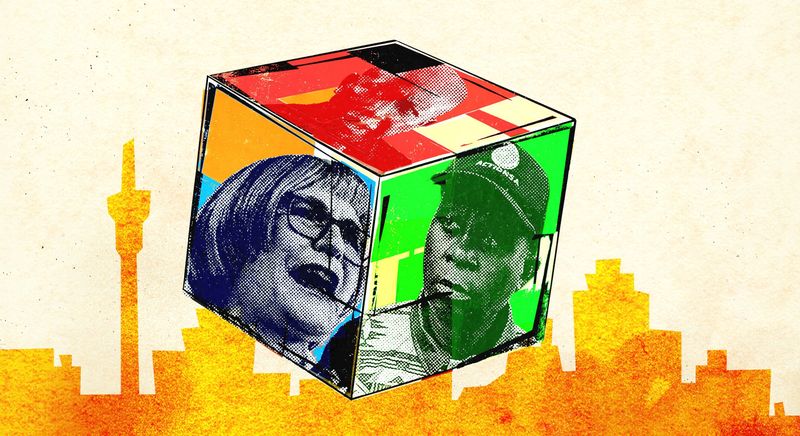
The African National Congress (ANC) and ActionSA are edging closer to a coalition agreement that could shut the Democratic Alliance (DA) out of Gauteng’s three metropolitan municipalities, with the parties discussing a possible division of mayoral positions as negotiations gather pace.
Daily Maverick understands that discussions between the two parties have reached an advanced stage, though several issues, including key position allocations, remain unresolved.
A draft proposal under consideration could see ActionSA take the mayoralties in Johannesburg and Tshwane, while the ANC leads Ekurhuleni. This would mark a major shift in power across Gauteng’s metros, where the DA emerged as the largest party in all three but fell short of an outright majority.
The ANC’s move follows internal resistance to continuing local government partnerships with the DA. As Daily Maverick has reported, several members of the ANC’s National Executive Committee (NEC) view the DA as a partner of last resort and prefer alliances with ideologically closer parties.
Sources close to the talks said the ANC is focusing on position allocations while attempting to consolidate discussions into a broader governing arrangement.
“The ANC has resolved on ActionSA. At this point, we are proceeding with discussing positions, then we will consolidate with the other parties,” said one source.
The source added that the ANC was continuing to engage with other parties individually before presenting a unified position to ActionSA.
However, ActionSA is understood to be reluctant to join the ANC’s proposed Government of Local Unity (GLU) structure, which would include several other parties, instead favouring a “political management committee” among participating parties.
According to the source, ActionSA expects the ANC to manage discussions with other smaller parties and return with a consolidated proposal, keeping direct negotiations primarily between the two major partners.
“We’re speaking to other respective parties to get what their interests are, since at the moment we are still the GLU. We consolidate on those with our GLU partners. So, when we go with ActionSA, we go with a consolidated view, including the GLU,” the source said.
Negotiations have not concluded, and the DA is also still courting ActionSA. According to a TimesLIVE report, the DA is considering replacing its Joburg mayoral candidate, Helen Zille, with party leader Geordin Hill-Lewis after ActionSA said it would support the DA if Zille is replaced.

The Joburg mayoral question
While the broad outline of the proposed arrangement is taking shape, Johannesburg remains a sticking point, with disagreement over who should become mayor.
ActionSA leader Herman Mashaba is understood to be seeking the Johannesburg mayoralty as part of any agreement with the ANC.
“Mashaba wants the mayorship from the ANC,” said another source.
The ANC, however, would have preferred to field its Johannesburg regional chairperson, Loyiso Masuku, who has experience as finance MMC and deputy mayor, but the party lacks a proportional representation (PR) seat in the city, which it needs to elect key leaders.

Consequently, the ANC is negotiating from a weakened position without a PR candidate of its own.
“The problem is that, in the negotiations, we are on the back foot. If we say we want the mayoral position, then who do we put forward? We don’t have anyone from our own list to convince them with. So we’re still negotiating, but we are not rigid,” said the source.
While the ANC believes Masuku has the experience needed to lead, it has not ruled out supporting Mashaba if necessary to secure an agreement.
“The ANC wants to field Loyiso as its candidate. She has experience. She’s been in office and has served as MMC for finance. She knows the city. But if ActionSA insists, then we will consider [Masuku for] deputy mayor,” said the source.
The ANC won 63 seats in Johannesburg, 44 in Tshwane, and 59 in Ekurhuleni, all through ward victories, leaving it without a single PR seat in any of the councils.
To overcome this, the ANC is exploring an arrangement with its alliance partner, the South African Communist Party (SACP), which holds PR seats in all three metros (two in Johannesburg, three in Tshwane, and two in Ekurhuleni).
An insider privy to talks noted that the SACP is expected to accommodate one ANC-aligned candidate on its PR list per council.
“We are in alliance with the SACP. The candidates we field will be under SACP on paper, but will be leading the ANC caucus as a chair of the ANC. This will assist in order to manage the dilemma of PR,” said the source.
This could see Masuku elected as an SACP PR councillor.
PR seats are not tied to individual wards and could therefore provide a route for the ANC to secure representation in the councils.
“The ANC is betting on this arrangement. PR is better because it is not constituency-based, so they can take up those roles,” the source said.
ANC Secretary-General Fikile Mbalula has written to the SACP urging the two organisations to act as a unified bloc and assist each other in coalition talks.
A wider coalition puzzle
The ANC’s emerging arrangement with ActionSA will still require support from other parties if it is to produce governing majorities in the three metros.
Together, the ANC and ActionSA fall short of governing majorities: holding 106 of 270 seats in Johannesburg (136 needed), 92 of 214 in Tshwane (108 needed), and 99 of 224 in Ekurhuleni (113 needed). This makes securing additional smaller parties critical.
Political and election analyst Wayne Sussman has cautioned that excluding one of the country’s biggest political parties from a coalition can make the process significantly more complicated, particularly when several smaller parties are needed to assemble a majority.
“Whenever you form a coalition without the biggest party, it is possible, but it is very complex,” he said.
Sussman warned that coalitions built primarily around keeping another party out of power, rather than shared policy positions or service-delivery priorities, can be difficult to sustain.
The DA, meanwhile, had been pursuing its own coalition arrangements through its proposed Government of Local Unity model, arguing that parties should work together in broader administrations. Its challenge is that ActionSA, a key potential partner in Gauteng, is also negotiating with the ANC. DM
KioskNews shows a cleaned-up reading view extracted from the publisher’s page — the original always lives on their site, not ours.