Experts call for stronger reef protection as 20% of coral survey sites bleached
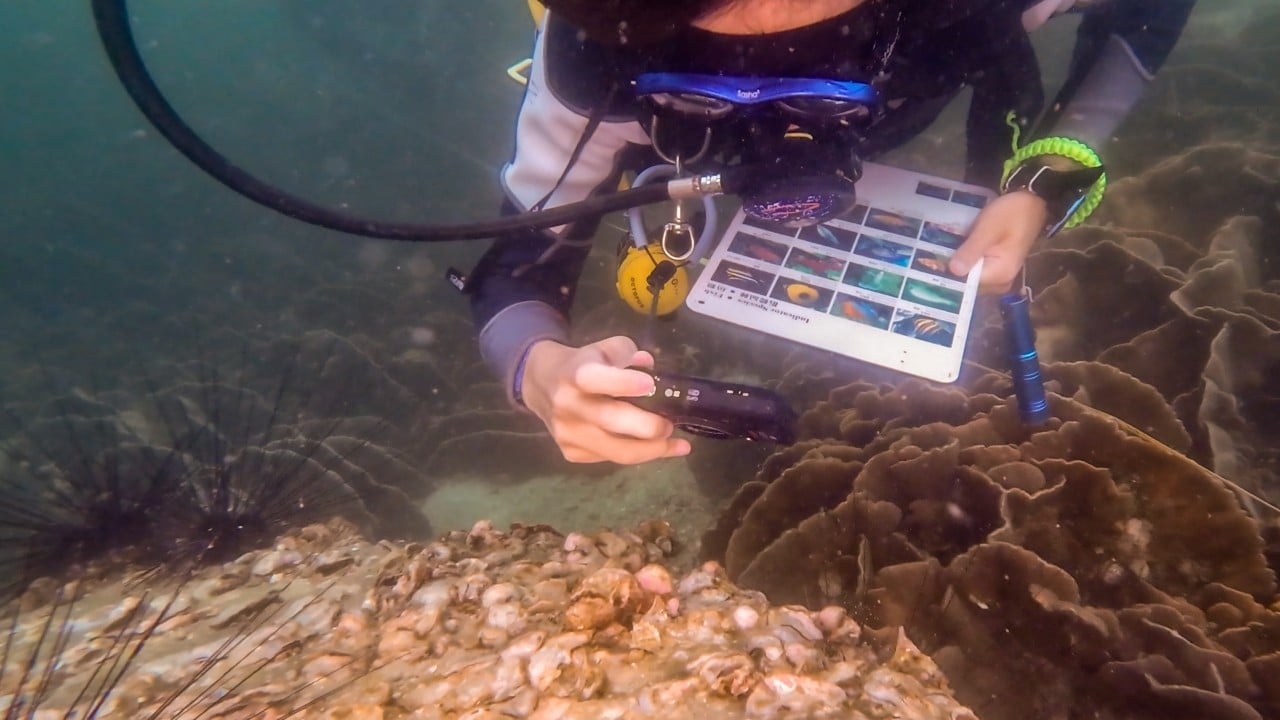
About 20 per cent of Hong Kong’s coral survey sites recorded minor bleaching this year, as experts called for stronger measures to protect the marine habitats from potential climate effects.
The Agriculture, Fisheries and Conservation Department shared the latest data with the South China Morning Post on Friday, saying minor coral bleaching was common during the summer months in Hong Kong.
However, experts said mitigation measures, such as installing shading to shield corals from UV light, should be implemented to prepare for increasingly extreme climate effects, including marine heatwaves.
The department, which coordinates the annual Hong Kong Reef Check, said seven out of 36 survey sites recorded “minor bleaching of coral colonies” this year, the same figure as in 2025. Coral bleaching was observed at 13 out of 33 sites in both 2022 and 2024, compared with six in 2021 and 2023, the latter two logging only “minor and localised” bleaching.
It added that most bleached corals would recover when water temperatures fell.
Coral bleaching events occur when the animals are subject to environmental stresses, such as shifts in temperature and salinity in their surrounding waters, causing them to expel the food-producing algae that live symbiotically within their tissues.
While a bleached coral is not necessarily dead, prolonged bleaching can lead to death.
In an interview on Thursday, Dr Jim Chu Chun-wa, the department’s assistant director, noted that no “abnormal health conditions” in the city’s corals have been logged in reef checks this year.
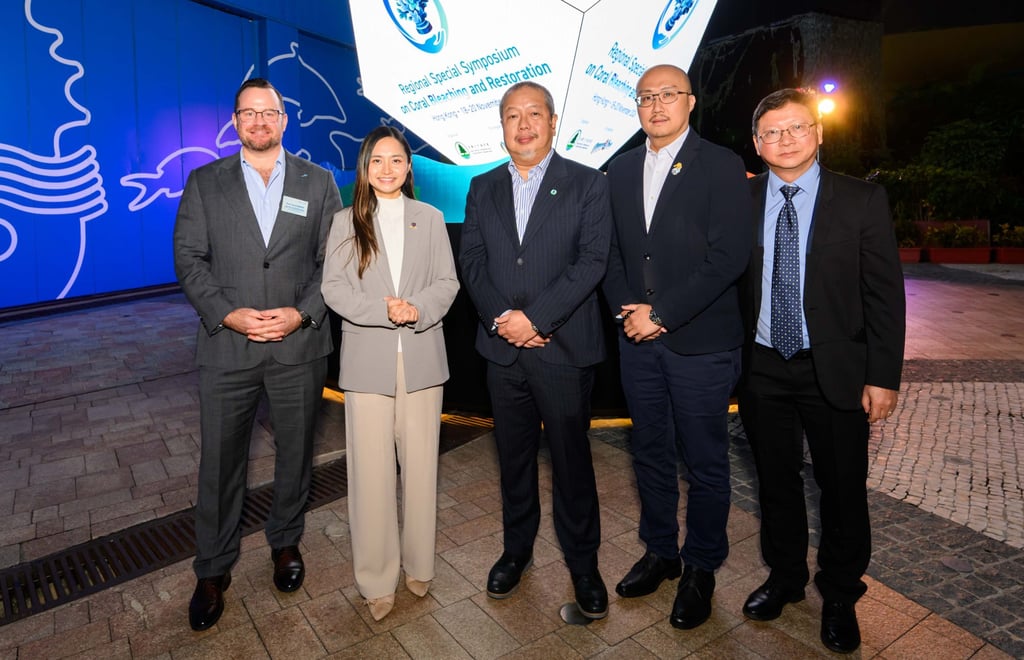
“As the main driver of coral bleaching is ultimately climate change, what we can do is find ways to help the coral become more resilient,” Chu said on the sidelines of a regional symposium on coral bleaching and restoration organised by the department and Hong Kong’s Ocean Park.
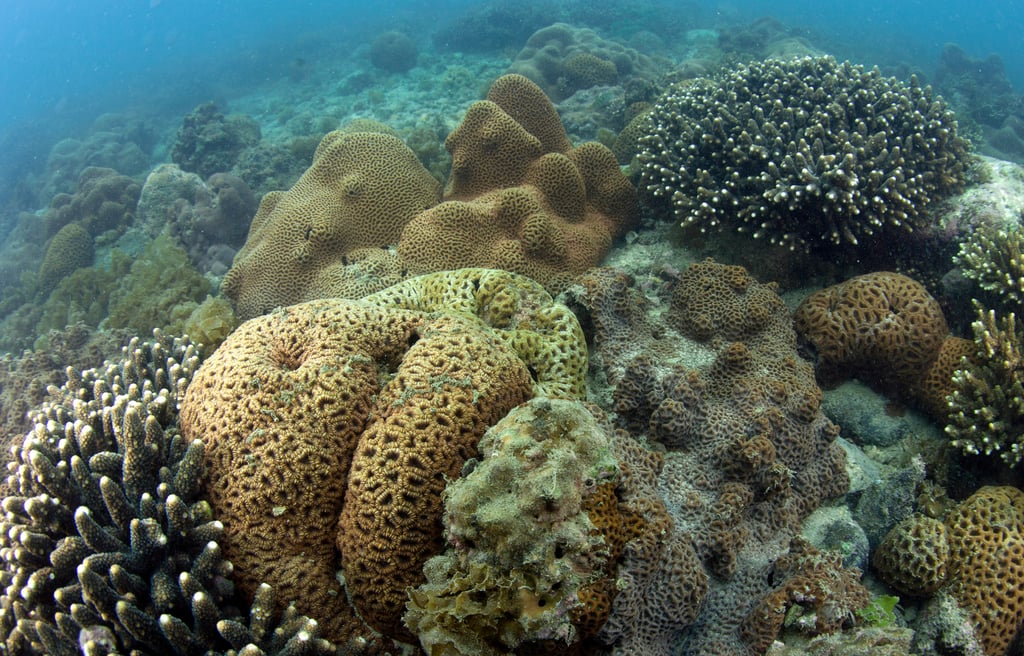
Various levels of coral bleaching were recorded in the city’s waters in 2024 as part of a global bleaching event caused by elevated temperatures, with the average water temperature at one local site 2 degrees Celsius higher compared with the same period a year earlier.
“We have to plan ahead for a more challenging environment in the future,” said Apple Chui Pui-yi, an assistant professor at the Chinese University of Hong Kong’s school of life sciences.
“Since we are starting this conversation in Hong Kong now, we still have some time to plan ahead before next year’s potential bleaching event, which is likely to be the most severe in July.”
Qiu Jianwen, chair professor in marine biology at Baptist University, who studied bleaching events in Hong Kong in 2014, 2017 and 2022, said previous experiments had found that common local coral species needed at least a week of continuous exposure to a water temperature of 32 degrees Celsius (90 Fahrenheit) to trigger bleaching.
And despite the heat felt this summer, water temperatures may not be as high, as it takes time for seawater to heat up, and tides bringing cooler waters from the South China Sea can further slow down the heating, he said.
Low salinity in seawater also explained some of the past bleaching events, he added.
Both Qiu and Chui described corals in Hong Kong as relatively resilient and said they would recover when water temperatures returned to normal.
Most local corals usually grow optimally in water temperatures between 25 and 28 degrees, according to the department.
But as the weather becomes increasingly extreme, there is a need to formulate emergency measures and be ready to respond when there is a high threat of coral bleaching.
Chui noted that corals suffered much more severe bleaching in shallow waters, whereas those below three metres in depth faced a much milder impact.
A difference of a few metres in depth can mean higher salinity and lower water temperatures, which means deeper water can be a natural refuge where coral nurseries can be established in the long run.
She added that targeted measures to lower stress on corals could be “a starting point”, such as installing shading to shield them from UV light as well as temporarily closing off certain areas to minimise additional human pressures.
Hong Kong waters are home to more than 80 species of hard corals, accounting for about one-tenth of the world’s species.
They provide a highly complex habitat capable of supporting a wide variety of marine life, Chu said.
Concern over the protection of the city’s marine habitats grew after reports of damage caused by tourists during the National Day “golden week” holiday in October.
This year, green groups recorded more than 100 incidents involving visitors collecting marine life or coral remains at Hap Mun Bay, at the southern end of Sharp Island.
The group reported similar behaviour on Sharp Island during the same period last year, with visitors trampling on coral reefs and digging up sea stars, sea urchins, sea cucumbers, conches and clams.
A planned marine park in waters surrounding Sharp Island in Sai Kung, with designation expected to be completed by mid-2027, has been proposed by the authorities to further protect major coral reefs in the area.
KioskNews shows a cleaned-up reading view extracted from the publisher’s page — the original always lives on their site, not ours.