Vietnam and Indonesia trailblazers in Asean nuclear power programme — Sheriffah Noor Khamseah Al-Idid Syed Ahmad Idid
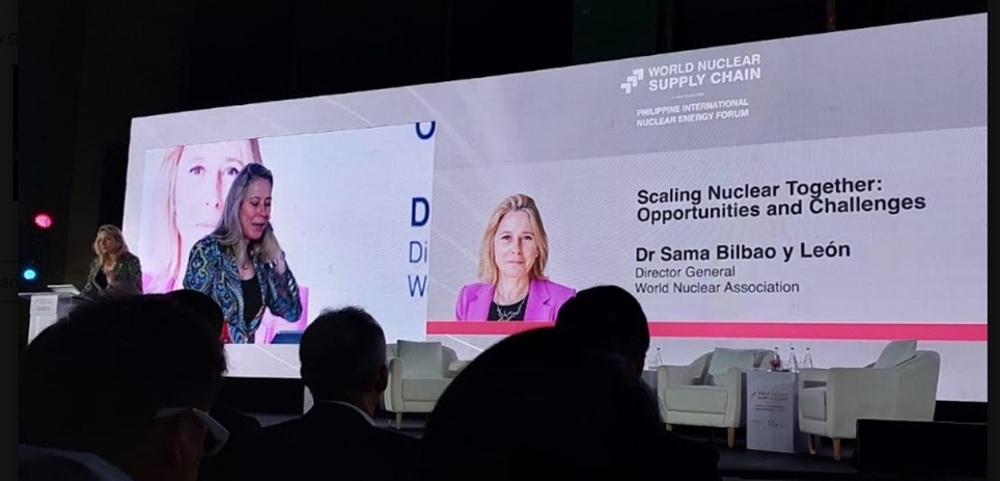
NOVEMBER 6 — Climate change, energy security are amongst compelling factors attributed to several Asean member countries investing, considering to invest in and launch a nuclear power programme.
At the World Nuclear Supply Chain 2026 Conference co-organised by the World Nuclear Association (WNA) and the Department of Energy (DoE), Philippines held in Manila, Philippines on October 20-21, 2026, (Fig 1) Dr Sama Bilbao y León, Director-General of the World Nuclear Association (WNA) had highlighted the Nuclear Outlook for the Association of South-east Asian Nations (Asean).
The World Nuclear Supply Chain 2026 Conference co-organised by the World Nuclear Association (WNA) and the Department of Energy (DoE), Philippines. — Picture courtesy of Sheriffah Noor Khamseah Al-Idid Syed Ahmad Idid
The South-east Nuclear Energy Outlook had highlighted that Philippines plans for 1.2GW nuclear capacity by 2032, 2.4 GW by 2035 and 4.8GW by 2050 followed by Vietnam with plans for 4GW nuclear capacity by 2034 and 14 GW in 2050, with Indonesia planning for 8GW by 2035, 21 GW by 2050 and 50-60 GW by 2060, and Thailand planning for 600MW nuclear capacity by 2037. (Fig 2)
It further lists that Mongolia, Myanmar, Laos, Malaysia, Singapore and Sri Lanka are planning or considering nuclear activities.
The SEA Nuclear Energy Outlook projects an overview of the four Asean member countries with concrete plans for introducing nuclear into their energy mix.
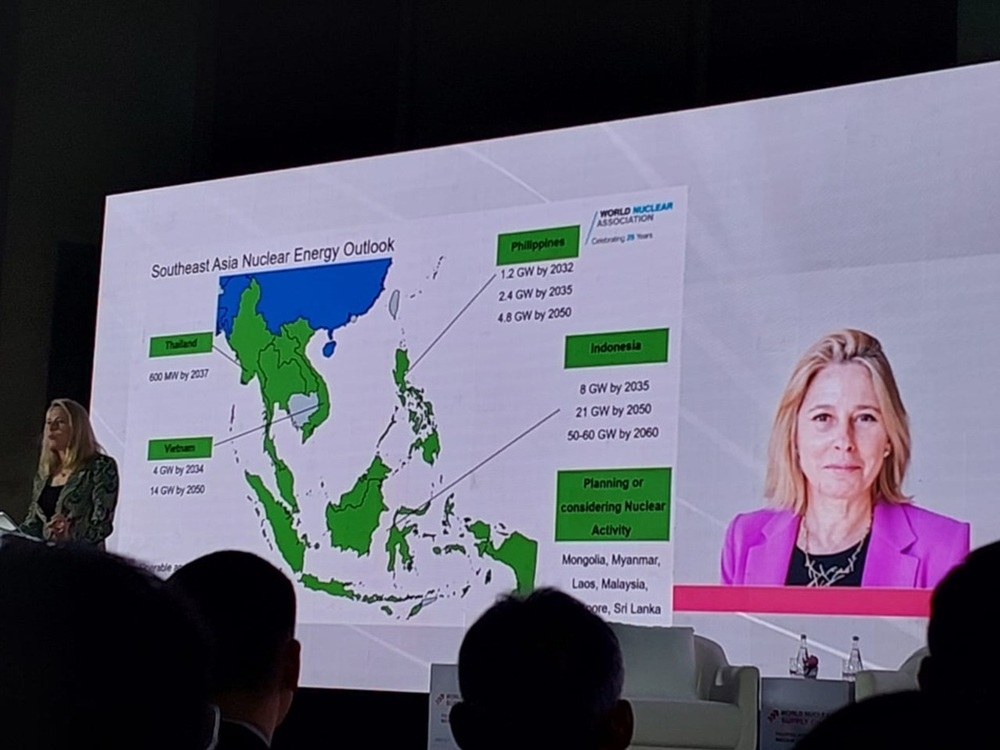
Dr Sama Bilbao y León, Director General of the World Nuclear Association (WNA) had highlighted the Nuclear Outlook for Asean at the World Nuclear Supply Chain 2026 (WNSC2026). — Picture courtesy of Sheriffah Noor Khamseah Al-Idid Syed Ahmad Idid
Dmitry Raspopine, CEO Rosatom (Vietnam) during his presentation titled Nuclear Afloat: Floating Power for Island and Coastal Markets had shared regarding the world’s first Small Modular Reactor (SMR), Russia’s Floating Nuclear Power Plant (NPP).
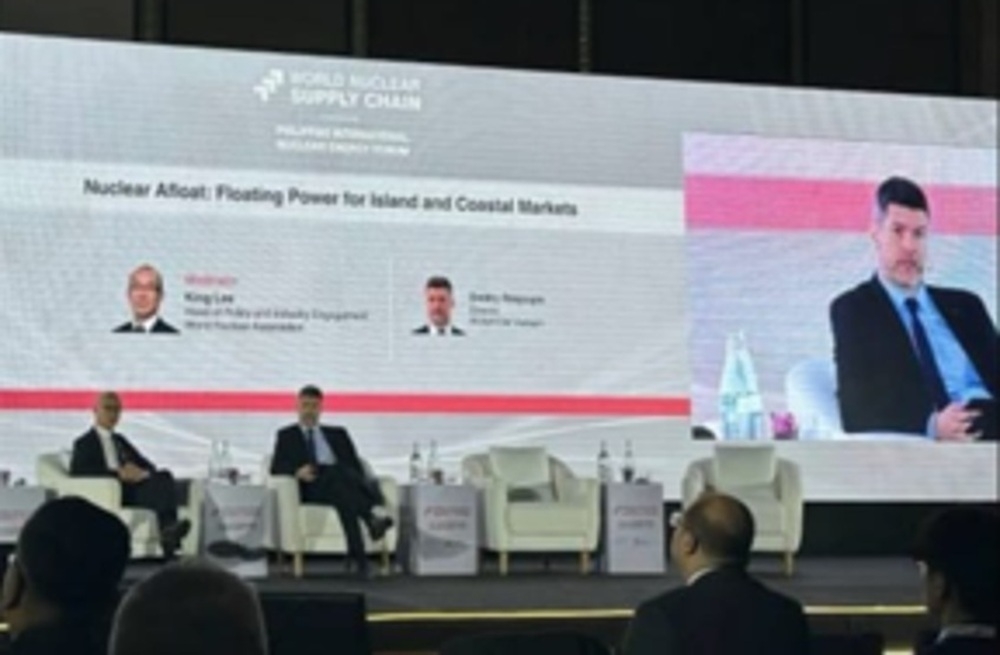
Dmitry Raspopine sharing about Russia’s Floating Nuclear Power Plant (FNPP). — Picture courtesy of Sheriffah Noor Khamseah Al-Idid Syed Ahmad Idid
Vietnam and Indonesia trailblazing Asean’s nuclear power ambition
Sheriffah Noor Khamseah Al-Idid Syed Ahmad Idid, a consultant on nuclear power, was invited by the WNA and DoE Philippines to speak on Nuclear Supply Chain had the pleasure to meet Dmitry Raspopine, Country Head (Vietnam) Rosatom at the WNSC 2026 in Manila (Fig 4) who had shared that a few days before the retirement of Vietnam’s Prime Minister Pham Minh Chinh, the premier visited Moscow Russia and had signed an intergovernmental agreement (IGA) with his Russian counterpart, Prime Minister Mikhail Mishustin, on March 23, 2026, the first day of Chinh’s three-day visit to Russia.

Sheriffah had the pleasure to meet Dmitry Raspopine Country Head (Vietnam) Rosatom at the World Nuclear Supply Chain 2026 in Manila, Philippines. — Picture courtesy of Sheriffah Noor Khamseah Al-Idid Syed Ahmad Idid
The IGA had laid out the legal framework for the construction of two (2) Russian designed large nuclear power reactors VVER-1200 reactors modelled after Russia’s new Leningrad Units (Units 1&2 of Leningrad NPP-2) each of nuclear capacity of 1200 Megawatts (1200 MW) producing a combined capacity of 2,400 MW.
Russia’s state nuclear power corporation, Rosatom will construct Vietnam’s first nuclear power plant at its proposed site Ninh Thuan-1 Nuclear Power Plant.
The Diplomat in its issue March 24, 2026 had highlighted that Vietnam has signed a number of energy-related agreements with Russia, including one on the construction of a nuclear power plant in the country’s south as the country scrambles to address energy shortages caused by the conflict in the Middle East. The Diplomat further dovetailed that Chinh’s trip takes place against the backdrop of global oil supply crisis which has led to a spike in fuel prices in Vietnam; Petrol prices has risen by around 50 per cent and diesel prices by about 70 per cent in the country since the start of the conflict, which has choked off oil exports through the Strait of Hormuz.
This nuclear deal revives Vietnam’s previous nuclear energy plans which was shelved in 2016 due to a number of concerns including safety risks and “economic conditions”, to achieve energy security, development and net-zero targets.
Additionally, Dmitry Raspopine had also shared that on October 16, 2026, Indonesia and Russia had signed a historic agreement, the world’s first ever export agreement for electricity supplied by a floating nuclear power unit (FNPP).
The agreement signed on the sidelines of Russian Energy Week (REW) in Moscow between Russia’s State Corporation, Rosatom and Indonesian private sector firm PT Pembangkit Listrik Nuklir, backed by investor Romo Nitiyudo Wachjo, will see the deployment of two FPU-100 Floating Nuclear Power units utilising RITM-series marine reactors (RITM-200M) (100MW each) providing a combined capacity of 200MW to supply electricity to the northern part of Halmahera Island in North Maluku Indonesia helping power local communities and Asia’s large nickel processing hubs.
The RITM-series reactor systems have demonstrated their efficiency, reliability and safety through years of operation aboard nuclear powered ice-breakers.
This unique partnership between Rosatom and Indonesia’s private sector relies solely on private investments with no state budget funding, with Rosatom owning and operating the plants and customers pay for the generated power.
Electricity supply is expected to begin within five years after the main contract terms take effect.
The World Nuclear News (WNN) dated October 19, 2026 had reported that in its discussion with Indonesia’s Government, Rosatom has proposed a two-phased approach to nuclear energy in Indonesia, with the first stage consisting of small scale floating nuclear power units, followed by a second phase involving land-based power plants equipped with large units.
Recommendations for Malaysian and Asean
1. In view of oil price hike arising from the geopolitical tension in the Middle east, Malaysia and other countries keen and are exploring nuclear power should expedite the exploration phase to deciding on the required nuclear capacity and year expected for commission and electricity generation advancing the nation’s nuclear power plans to nuclear power plants.
2. Asean member countries could adopt and adapt either Vietnam’s first Nuclear Power Plant (NPP) to consist of large units or follow Indonesia’s two stage approach of firstly introducing SMRs and then follow up with larger reactor units such as the case of Indonesia.
3. It is key for Asean to extend sources of financing nuclear power. And consider fully government financed, nuclear power projects, fully private financing model or PPP.
* By Sheriffah Noor Khamseah Al-Idid Syed Ahmad Idid, Consultant Nuclear Power, Venture Capital & Innovation
** This is the personal opinion of the writer or publication and does not necessarily represent the views of Malay Mail.
KioskNews shows a cleaned-up reading view extracted from the publisher’s page — the original always lives on their site, not ours.