Casting nets: floodwaters bring seasonal bounty to Vietnam's Mekong Delta
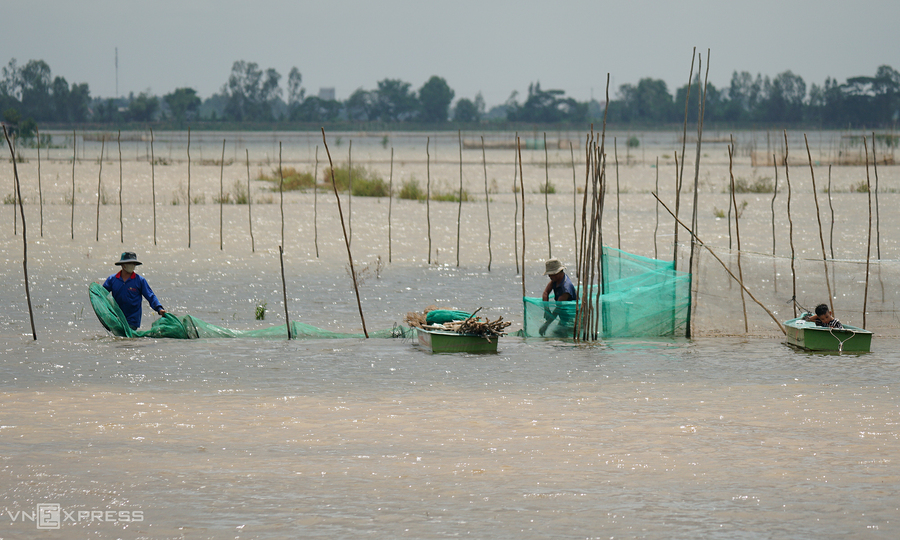
The arrival of the annual floodwaters signals the seasonal fishing rush in the Mekong Delta, prompting locals to head into the submerged fields to cast their nets and supplement their income.

The annual flood season is a natural cycle in the Mekong Delta, typically lasting from August to November. As water from the Mekong River and upstream areas flows into the region, vast areas of farmland become submerged. While the flooding can disrupt daily life and agriculture, it also replenishes nutrients in the soil and creates favorable conditions for fish, shrimp and other aquatic species to thrive, providing local communities with an important seasonal source of food and income.
The annual floods also help clean the fields, eliminate weeds and pests, and deposit nutrient-rich alluvial soil.
In this photo taken in Dong Thap Province, residents take their fishing gear into the fields to catch local specialties such as cyprinid fish, shrimp, crabs and eels, as the floodwaters arrive.


After more than 30 years of making a living by setting fishing traps, Le Van Son, from Thuong Lac Commune, Dong Thap, said his income depends on how high the water rises. Only when the water spreads across the fields and remains there for an extended period does it bring in large quantities of shrimp and fish.
"This job is enough to get us through a few months of the flood season, but it does not leave us with much extra," he said.

Flying minnow, a small fish familiar to Mekong Delta residents, appears in large numbers during the flood season.
The fish grows to only about the size of a finger, has tender meat and is commonly braised with pepper, deep-fried or cooked in soup. During the flood season, it is relatively cheap, selling for VND10,000-15,000 (US$0.38-0.58) per kilogram fresh, while dead fish sold as bait for larger fish can cost just a few thousand dong.

Brothers in An Hoa Commune, Dong Thap, head into the inundated field carrying nets to set fish traps.
A flood level of roughly half a meter creates optimal working conditions, reducing the physical strain of wading through deep water while extending the window to harvest seasonal aquatic specialties.

Flood-season catches provide the essential raw materials powering Hong Ngu Ward's traditional dried freshwater fish craft village in Dong Thap.
Home to roughly 20 households engaged in the production, the village is renowned for its dried snakehead, gourami, and catfish.
People clean, butterfly, salt, and season the fresh catch before laying the fish out to dry under the sun, a time-tested process that locks in their natural sweetness.


Wet markets swell with an influx of freshwater crabs and fish during the flood season, with supplies driving prices lower than in the dry months.
At Hong Ngu Market, crab vendor Duong Thi Huynh Nhu purchases hundreds of kilograms of crabs daily to keep up with brisk demand.
Nhu sells large crab claws separately for VND280,000 to VND300,000 per kilogram, while the remaining meat is finely ground to prepare rieu, a traditional Vietnamese crab soup base.
"The flood season is such a good time to sell," Nhu noted.

Other flood-season specialties sold at local markets include snails, water lily stems, sesbania flowers, grass carp and apple snails.

Other flood-season specialties sold at local markets include snails, water lily stems, sesbania flowers, grass carp and apple snails.

Other flood-season specialties sold at local markets include snails, water lily stems, sesbania flowers, grass carp and apple snails.
Other flood-season specialties sold at local markets include snails, water lily stems, sesbania flowers, grass carp and apple snails.
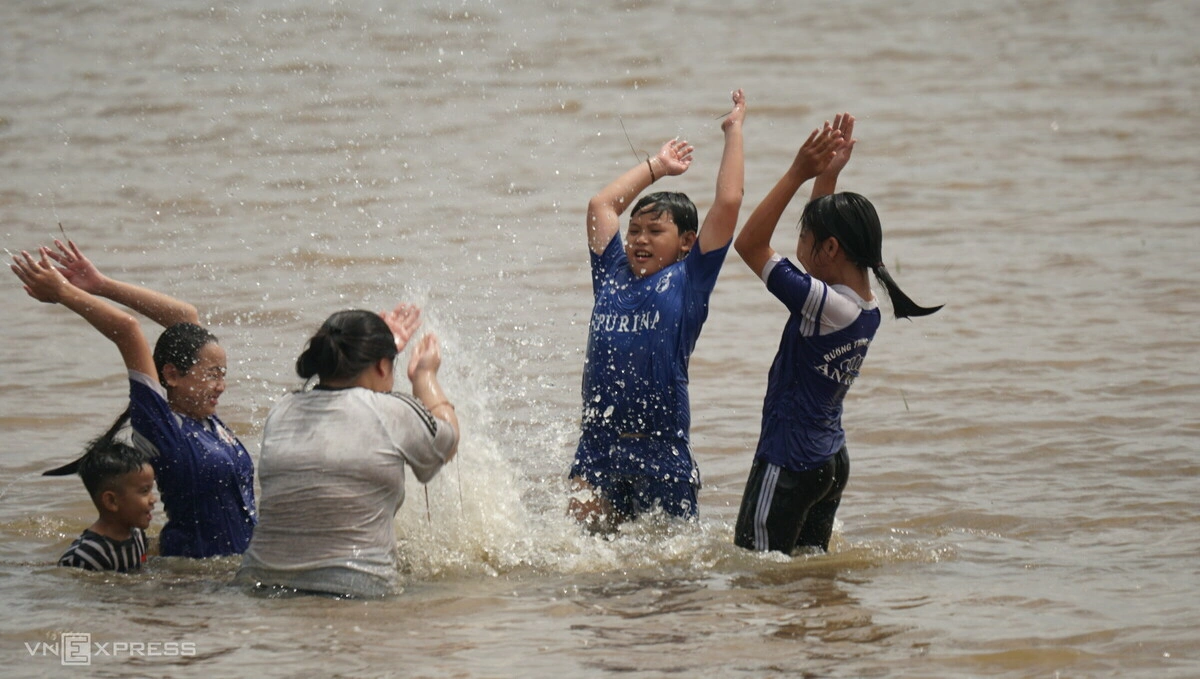

Vast expanses of floodwater gradually submerge rice paddies across the border fields of An Giang Province near Cambodia, marking the onset of the seasonal inundation that spans August through November.
The Mekong Delta's flood season is projected to peak in October, according to data from the Southern Regional Hydro-Meteorological Center.
KioskNews shows a cleaned-up reading view extracted from the publisher’s page — the original always lives on their site, not ours.