Opinion: Blog | I'm A Woman Motorcyclist, And I Refuse To Be Told Where I Belong
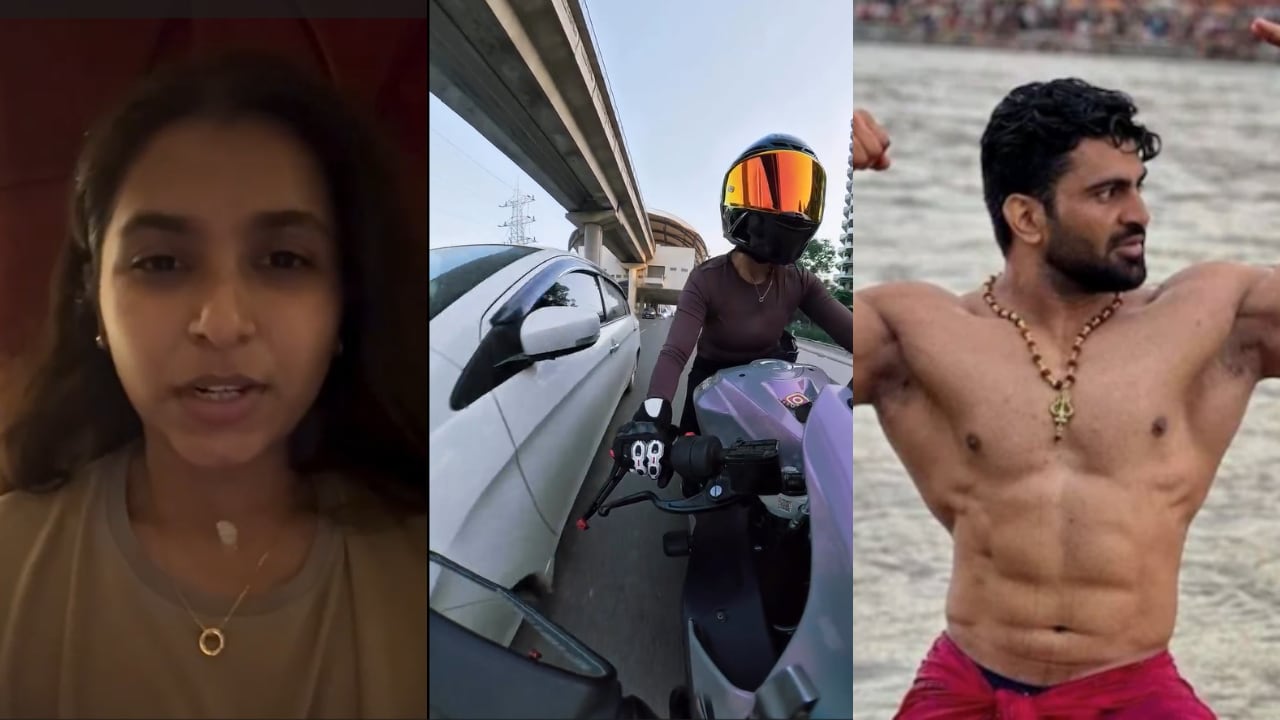
Last Sunday, I was riding on the same Gurugram roads where, elsewhere, a young woman on a motorcycle was being chased and then was allegedly rammed by a car.
The incident involving Sia has disturbed me deeply. Not only because she was a woman riding a motorcycle, but because it could have been any one of us. It could have been me. It could have been one of the women I train. It could have been any rider, cyclist, pedestrian, or driver simply trying to get home.
Fortunately, Sia was wearing her helmet, gloves, and shoes, which saved her from far more serious injuries in the fall. The entire episode was also captured on an action camera mounted on her motorcycle, and that footage became crucial evidence later. The police subsequently arrested the accused and added the attempt to murder charge to the case. The accused has denied hitting her deliberately and has described the collision as an accident.
But for me, the bigger question goes beyond this particular case.
Why do our roads feel so unsafe? And why does anyone feel entitled to use a vehicle as a weapon against another human being?
Skills Aren't Enough
I am a motorcycle training instructor and a professional rider, and I have founded my own formal riding academy. I have been riding on Indian roads for close to 20 years and have covered lakhs of kilometres on all kinds of motorcycles. I have seen enough to know that knowing how to operate a vehicle, whether it is a car, a truck, a bus, or a motorcycle, is simply not enough. Driving, or riding, is not only about how to accelerate, brake, turn, and balance. It is also about how to behave on a public road. Road sense, etiquette, and public conduct matter just as much.
Maintain distance. Give way. Signal before turning. Do not use your phone while riding. Do not drive aggressively because the person ahead of you is slower. Do not turn a disagreement on the road into a personal battle. And avoid road rage at all costs, because it ends badly for everyone involved.
These are not advanced skills. This is basic road etiquette.
Yet, India continues to pay an enormous price for unsafe road behaviour. Government data recorded 4,80,583 road crashes and 1,72,890 deaths in 2023. The Ministry of Road Transport and Highways identifies several contributing factors, including speeding, mobile phone use, drunken driving, and lane indiscipline.
We have somehow normalised all of this.
Don't Blame The Machine
A vehicle hitting another vehicle is called an "accident". A rider falling is treated as part of riding. Someone cutting across lanes is dismissed with a shrug. We are yet to admit that a vehicle does not move an inch by itself. It starts and rolls only when a human being turns the key. How, then, do we keep blaming the machine when there is always a person behind the wheel?
Not everything that happens on the road is inevitable. Some of it is a choice.
And when the person on the receiving end is a woman, there is another layer to the problem.
Women riders still attract curiosity, judgement, and, sometimes, hostility. Even when I take women out for a ride after their training at my track, I notice people staring as though a woman on a motorcycle is an unusual sight.
It should not be.
A woman should not have to justify why she rides a motorcycle. She should not have to prove that she belongs on the road. And she certainly should not have to calculate the possibility of harassment every time she rides alone.
We often tell our daughters what to wear, where to go, when to return, and how to protect themselves. Perhaps it is time we also taught our sons something equally important: respect.
Respect the woman on the motorcycle. Respect the cyclist. Respect the pedestrian. Respect the person driving faster or slower than you. Respect the road rules even when nobody is watching.
My Own Pending Case
I say this not as someone who has never faced danger. In May 2023, a speeding car hit my motorcycle from behind. I registered an FIR and pursued the matter, but to this day, I do not know where that case has reached.
I have also had several close calls with vehicles coming dangerously close to me. Sometimes experience and reflexes get you out of trouble. But we should not confuse survival with safety. We should not be looking at our watch before stepping out on the roads - to feel unsafe checking a certain odd hour to leave home. Our lives should not depend on the mercy of other drivers. On another day, we may not be lucky enough to survive even a minor brush, because riders are far more exposed than anyone sitting inside a car. That is why I believe India needs much stronger and more structured rider and driver education.
Learning to move a motorcycle or a car is only the beginning. Before people enter public roads, they need to understand responsibility, road conduct, risk perception, and consequences. We need to teach not just how to drive, but how to share the road.
Until that culture changes, we must protect ourselves as much as we can. I never ride without proper protective riding gear. A full-face helmet, gloves, and riding boots are the minimum, to be accompanied by a riding jacket and knee guards, and they should be worn on every single ride on a motorcycle. Our mantra should be - All The Gear, All The Time!
Because we cannot control the person approaching us from behind. We cannot control someone else's anger. We cannot control someone else's impatience.
We can control how prepared we are.
And safety cannot become the woman's responsibility alone.
For me, this was not simply a case of a woman rider being challenged and chased by a man with a bruised ego. It sits at the intersection of two issues: women's safety and road safety. The outcome could easily have been fatal had a following vehicle run over her. We cannot afford to ignore a case like this. It calls for far greater awareness and real corrective action, so that such incidents do not become a routine affair on Indian roads.
A camera should not be the difference between being believed and not being believed. What happens when there is no helmet camera? No CCTV? No witness? Does an incident become less serious because there is no recording? That is the question this case should leave us with.
Who Does The Road Belong To?
As we approach the festivals in which we celebrate and worship our goddesses, perhaps we should also ask ourselves how we treat the women who actually share our roads, our homes, and our workplaces.
The road does not belong to the fastest vehicle. It does not belong to the biggest SUV. It does not belong to the loudest rider. The road belongs to all of us.
I do not want another woman rider to become a headline before we take road safety seriously. I do not want another Sia, or another Suparna, to be in the news for such an unfortunate reason. I do not want another family waiting for someone who may never return home.
We cannot change road culture overnight. But we can begin with something simple: ride sensibly, drive responsibly, respect one another, and remember that the person beside you is not an obstacle. They are a fellow citizen, another human being trying to get home safely - every single time. People are not numbers. We are irreplaceable in our respective families, and hence, our safety is a shared responsibility of society. Not a great ask as a responsible citizen of the country, right?
(Suparna Sarkar is a motorcycle training instructor and a long-distance rider. She is the founder of STAR Academy (School for Training of Aspiring Riders) and STAR Riders India, a riding community dedicated to promoting riders to ride safe, confident, and responsible - right from the start. She also runs a Track in Gurugram emphasising the importance of formal motorcycle training in India)
KioskNews shows a cleaned-up reading view extracted from the publisher’s page — the original always lives on their site, not ours.