China has more than 20 small nuclear reactor start-ups. Should the US worry?
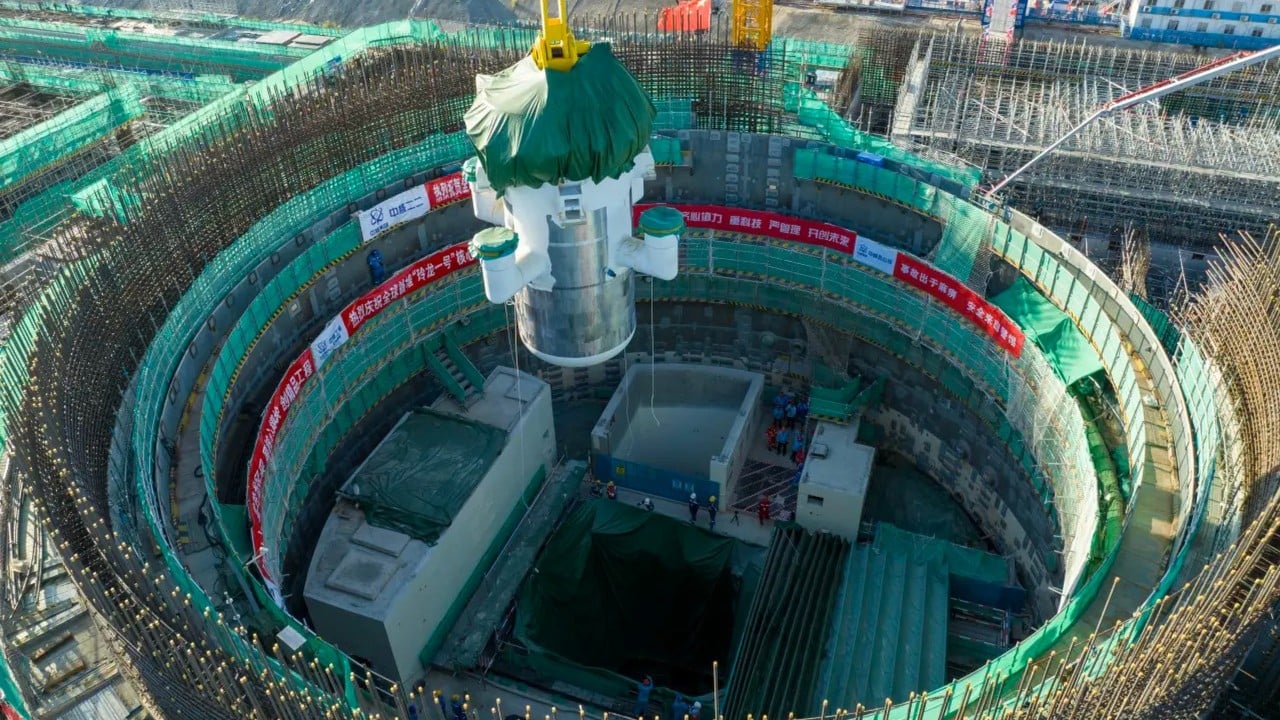
More than 20 Chinese start-ups are developing small modular reactors (SMRs) with ambitions to reshape the global energy landscape, according to the founder of one of the sector’s front runners.
Hu Po, founder of Weilan NuEnergy, a Shanghai-based start-up betting on the technology, noted that in 2024, as the artificial intelligence boom drove up energy demand, nuclear power – particularly SMRs – began to attract substantial capital in the United States.
Hu said that in China, the start-up teams had emerged rapidly since 2025.
“Compared with the US, China’s nuclear power plant construction, whether conventional reactors or SMRs, is built upon the continuous development and deep cultivation of our industrial system over the past 40 years,” he said.
09:18
Is the world embracing a new nuclear age 40 years after the Chernobyl disaster?
The private sector-driven commercialisation of SMRs has only just begun. “[But] just like China’s other large-scale energy projects, while we will fully secure and meet domestic energy needs, we will certainly actively pursue a global footprint,” Hu said.
Chinese SMRs are expected to be internationally competitive, benefiting from a comprehensive supply chain and a robust manufacturing base.
Hu said the continuous industrial upgrading had achieved supply chain self-reliance and highly advanced manufacturing capabilities, making domestic SMRs potentially “more competitive” in terms of both technology and cost in the future.
This trajectory has been proved time and again in the construction of large nuclear power plants.
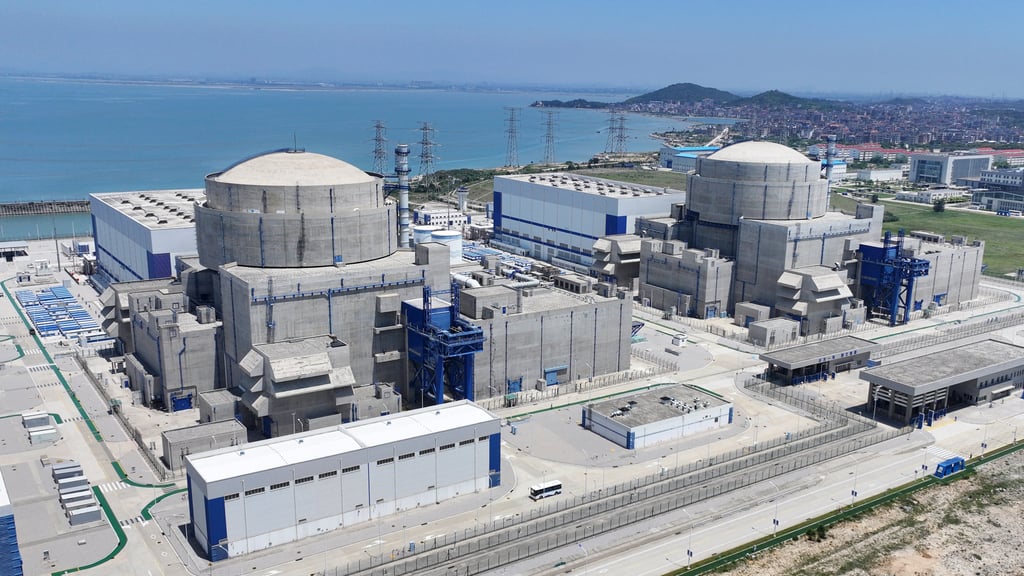
For instance, the nuclear power reactor Fuqing 5 in China’s southeastern Fujian province – the first Hualong One model to enter commercial operation globally – set a record for construction time.
Its construction began in 2015, and the unit entered commercial operation in January 2021 at a cost 20 to 30 per cent lower than that of its foreign competitors.
SMRs are an emergent class of nuclear fission reactors with a rated electrical power of fewer than 300 megawatts. Compared with their larger counterparts, small reactors are cheaper, simpler and more flexible. Thanks to their compact modular design, they are more affordable to build and are better suited for smaller grids.
In the United States, the SMR race has gathered momentum with several leading players finally transitioning from reactor design to construction, licensing and actual customer projects.
One such player is TerraPower, headquartered in Bellevue, Washington. It began site work for its nuclear plant in Wyoming in 2024 and received a construction permit in March.
“SMRs will ease the strain on US energy infrastructure and drive the next wave of technological innovation,” according to an article published by China’s National Nuclear Safety Administration in May.
“AI training-driven computing power doubles every five months, and data centre electricity consumption doubles every year,” the article said. “The grid cannot keep pace with this growth, but SMRs can.”
Previously, however, China’s SMR projects were mainly spearheaded by state-owned nuclear energy conglomerates.
Construction of the facility was commissioned in 2021. Once operational, it will have a power generation capacity of 125 megawatts, capable of producing 1 billion kilowatt-hours of electricity a year and meeting the needs of 526,000 households.
Translating that scale into reality relies heavily on the engineering pedigree of field experts such as Hu.
Hu earned his bachelor’s degree in nuclear engineering from Tsinghua University before moving to the US to pursue a PhD in the same field at the University of Wisconsin-Madison. Since 2008, he has held a teaching position at Shanghai Jiao Tong University.
He said the idea of launching an SMR venture began about five years ago, when his team designed a new reactor technology and patented it.
Yet, the idea was shelved for various reasons, including the likelihood that the advanced design would be difficult to realise in the short term.
By 2024, he sensed the time was right. As AI boomed, the demand for energy-intensive data centres used for model training propelled several US SMR companies to go public.
Believing that SMRs in China could perhaps replicate the nuclear fusion model – commercialisation driven by venture capital – Hu applied to Shanghai Jiao Tong to register a company.
04:33
Fukushima 15 years on: why Japan’s younger generation is embracing nuclear power
In March 2025, Weilan NuEnergy was established. Following this and catching wind of the trend, a slew of domestic start-up teams emerged in rapid succession.
Hu said policy and the market had jointly boosted the commercial prospects of SMRs in China.
In October, for instance, a document issued by Beijing proposed the orderly development of advanced nuclear fission energy to support carbon neutrality goals, while building a power system with a high proportion of renewable energy.
“From our industry’s understanding, China will need to use nuclear power to gradually replace coal-fired power to drive the energy transition,” Hu said.
SMRs would enjoy long-term market demand both domestically and abroad, as they could be deployed in inland markets much more flexibly, he added.
To ensure the company could secure orders – or at least enter the construction phase – by its fifth year, the start-up opted for mature third-generation pressurised water technology.
This is the mainstream reactor technology represented by the Hualong One model, which already has 47 units in operation or under construction globally, making it the largest fleet of its kind in the world.
Weilan NuEnergy’s ambition to lead the market and gain a competitive edge is reflected in its talent acquisition: it poached Xian Chunyu, the chief designer of the Hualong One model, to become its chief technology officer and chief engineer.
Xian did not join the Shanghai-based start-up by himself. He brought with him more than a dozen top technical experts involved with a nuclear plant’s vital subsystems, including core design, the nuclear island, fuel, mechanics and control.
“There were no similar domestic competitors when we launched,” Hu said. “This allowed us to successfully recruit a cohort of outstanding engineers from the industry with extensive practical experience. Building a high-calibre team is our greatest competitive advantage at present.”
KioskNews shows a cleaned-up reading view extracted from the publisher’s page — the original always lives on their site, not ours.