Call my (estate) agent! Why celebrities are always buying each other’s homes
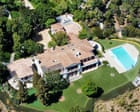
Last year, Austin Butler bought a mansion from Brad Pitt. The month before, Brad Pitt bought a mansion from one of the Killers. In 2022, Adele bought Sylvester Stallone’s old house, but only if he let her keep his Rocky statue. Aaron Paul recently sold a house that he bought from The Big Bang Theory’s Jim Parsons, who bought it from Robert Pattinson, after it was previously owned by Noah Wyle, Kareem Abdul-Jabbar, Tim Curry and the guy who directed Legally Blonde.
If this makes it sound to you as if there are only a handful of celebrity-friendly homes on earth, and celebrities spend their lives swapping them around among themselves, then you’re right.
According to Mohamed Mussa, the managing director of Chestertons Global, this is partly by design. In an op-ed that has been doing the rounds, Mussa explains that celebrities often require things in properties that civilians like us might not consider, such as gated entrances, secluded grounds, space for staff and layouts designed to keep fans at bay.
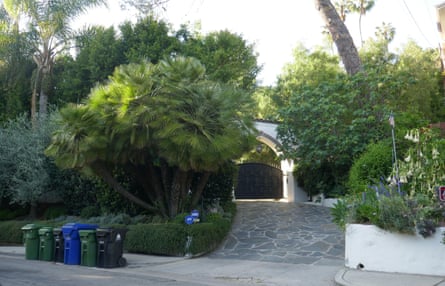
“In 2020, Los Angeles City Council passed an ordinance allowing tour buses to be banned from residential streets judged unsafe,” he explains, which has to be useful. I once had a fairly major freakout after buying my house because I didn’t check the details properly and missed that the plumbing under my kitchen sink consisted of an Evian bottle sellotaped to a pipe. Imagine how much worse it would be to buy a house and realise that a packed bus parks outside your front door three times a day so that tourists can try and take a picture of you putting the washing out.
In other words, it helps a celebrity to know that a celebrity used to live there because, as Mussa states, a property’s ownership history “can also offer a useful indication of how well the home accommodates the demands of a high-profile lifestyle”.
You may have also noticed that a lot of these celebrity homes never reached the open market. According to Mussa, this is also by design. “Drake bought Robbie Williams’ Beverly Crest estate in 2022 in an off-market deal, illustrating how a transaction can take place privately,” he writes. “At this level, buyers, sellers and their trusted advisers form a small ecosystem, connecting people with similar lifestyles and property requirements, sometimes before a home is ever advertised. This network helps explain how certain properties pass from one high-profile owner to another, with each new buyer looking for many of the same things as the last.”
Of course, the big benefit of doing this is that you avoid a public listing. This is preferential, because once your home goes up on Zoopla, then every casual rubbernecker on the face of the planet can click around and see the untrammelled depths of your berserk self-absorption. To be clear, I am talking about Joe Pesci here.
In 2019, Joe Pesci listed his eight bedroom Jersey Shore mansion for $6.5m. But he did it publicly, which meant that a gallery went online. How do we know the home belonged to Joe Pesci, you ask? Well, the subtle clues were there all along.
There was a barber chair near the front door, because Pesci worked as a barber in the 1960s. There was a music room, because Joe Pesci once recorded an entire album in character as the guy he played in My Cousin Vinny. Then there was a room containing 12 separate posters for Joe Pesci movies, a full-sized Lethal Weapon 3 pinball table and a framed poster-sized photo of Joe Pesci winning an Oscar for Goodfellas, although strangely not the Oscar itself. It is also worth pointing out that one of the rooms in Joe Pesci’s house contained a giant printed-out meme of Joe Pesci and the caption: “If U ain’t adding to this shit don’t ask me for shit.”
Could this have been avoided if Pesci had followed Mussa’s advice and sold the property to another celebrity off the books? Almost certainly. Did seeing the photos of Pesci’s home make me wish that I could buy it and live there in its Pesci-era state? Definitely. But was the home demolished as soon as Pesci moved out four years ago? Sadly yes. And has knowing this left me in a state of bleak despondency? Also yes.
Year-end fundraiser
$0 of $2,000,000 goal
A moment full of possibility – and risk
We hope you appreciated this article. Before you close this tab, can we ask you to spare 37 seconds to sustain the Guardian’s fearless journalism in the decisive year ahead?
In the last two years alone, Donald Trump has eroded many of the pillars of US democracy – slashing funds for universities, undermining science, shutting down arts institutions, and attacking the free press as an “enemy of the American people” and “a threat to our national security”. While he and his allies have enriched themselves and spread lies, federal forces have harassed and imprisoned innocent people and violated the constitutional rights of many Americans.
Now, in a sweeping change election, the American people have spoken: Donald Trump, Pete Hegseth, RFK Jr, Elon Musk and the tech oligarchs may finally be held to account. A majority of American voters have demanded an end to the costly and immoral wars, the flagrant profiteering, and the corrosive attacks on communities and democratic institutions.
It’s a moment full of possibility, with more stories than we can possibly cover. New leaders are emerging from Texas and Michigan to Iowa and South Carolina – and heading to Washington to fight for affordability, against wealth inequality, and for human survival in the face of AI and the climate crisis.
These new leaders will be facing a cornered Trump and his hardline chief of staff, Stephen Miller, who have nothing left to lose. The next few years are critical for the future of the country. Journalism that covers the epic clash between these forces has a vital role to play right now.
Investigative journalism provides a fact-based paper trail for an emboldened Congress to follow. Members of Congress – and the American public – often rely on our in-depth reporting to inform the tough questions, to connect the dots and to pursue accountability for wrongdoing.
At the Guardian, our newsroom is devoted to uncovering the truth and conveying it to as many people as possible. We’re not alone in this mission, but this kind of journalism faces unprecedented hurdles: big tech threatening our financial stability and stealing our work for AI, billionaire owners telling journalists what to publish, and a hostile executive branch intent on suppressing our reporting.
The Guardian is free to dig deep without fear because we’re funded by our readers. Our readers hold us to account, and we hold the powerful to account.
However, this only works when enough of our readers contribute. Against the advice of most industry analysts, we’ve refused to put up a paywall – we believe good journalism should be freely available to all people, regardless of ability to pay. If you’re counting on our reporting, and you can’t afford to pay, please stop reading this message and go back to our articles.
If you can afford to contribute, please know that your support is not only helping yourself – from voters in Kansas to immigrants in Minnesota and families in Gaza, your generosity is bringing factual news to people around the globe.
Today is among our most important fundraising days of the year. To sustain our unique financial model, our goal is to raise $2,000,000 before the new Congress is seated on 3 January. More than 19,000 people have contributed already. If you can afford 37 seconds, please join our ranks – and show your support for the rekindling of democracy in the US and around the world.
KioskNews shows a cleaned-up reading view extracted from the publisher’s page — the original always lives on their site, not ours.