If You Only Read One Fantasy Book, Brandon Sanderson Says It Should Be This One

Hannah is a senior writer and self-publisher at ScreenRant. There, she focuses on writing news, features, and list-style articles about all things comics, books, anime, and manga. She works as a freelance writer in the entertainment industry, focusing on video games, anime, and literature.
Her published works can be found on Screen Rant, FinanceBuzz, She Reads, and She Writes.
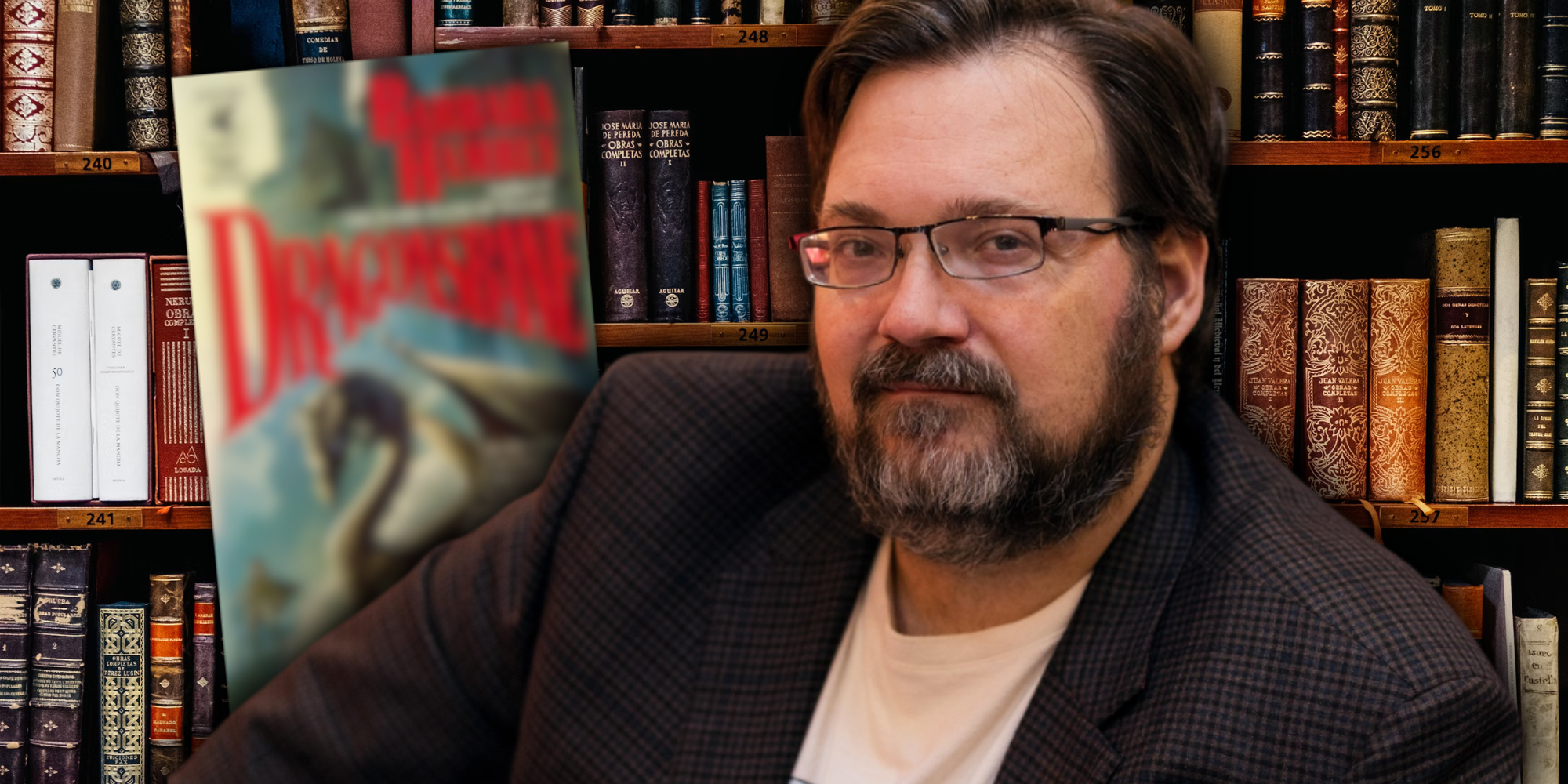
For readers overwhelmed by the sheer size of modern fantasy, Brandon Sanderson has an unusually direct recommendation. In a 2012 interview, the author singled out Barbara Hambly’s Dragonsbane, saying he mentioned it often and strongly encouraged fantasy readers to try it. His praise is notable because the novel is far removed from the sprawling style associated with his own best-known series.
Dragonsbane was first published in 1985 by Del Rey, introducing a fantasy story that puts dragons, magic, marriage, parenthood, and moral uncertainty on the same level. It became the first book in Hambly’s Winterlands series, later followed by Dragonshadow, Knight of the Demon Queen, and Dragonstar. Yet the original novel remains can be read as a complete story on its own.
The Fantasy Novel That Helped Shape Sanderson

The connection Sanderson has to Dragonsbane goes beyond simply liking an older fantasy title. Brandon Sanderson's own fantasy recommendation list identifies it as one of the books that helped get him into fantasy, making Hambly’s novel part of the literary background behind one of the genre’s biggest modern authors.
That influence makes sense when looking at what Hambly focuses on. Dragonsbane is built around people who feel lived-in rather than legendary. John Aversin is famous as the only living man known to have killed a dragon, but he is also a practical lord with responsibilities at home. His reputation does not erase his exhaustion or doubts.
Jenny Waynest provides the novel’s more complicated center. She is a sorceress with limited training, a wife, and a mother to John’s sons, and her relationship with magic never feels separate from ordinary life. That combination was striking enough for Sanderson to recall the book as an important discovery, particularly because fantasy recommendations then often centered on younger heroes.
A Dragon Story That Refuses To Be Simple

The plot begins when Prince Gareth travels to the Winterlands to find John and ask him to confront Morkeleb, a black dragon occupying the Deep of Ylferdun. John agrees only after securing a promise that the kingdom will provide help against threats facing his northern home, immediately tying heroic adventure to practical survival.
Once the party reaches the southern kingdom, the dragon problem turns out to be only one part of a larger crisis. Zyerne, a powerful sorceress who influences the king, is pursuing greater magical power connected to the Stone in the Deep. Morkeleb is dangerous, but Hambly makes clear that human ambition may ultimately prove more threatening.
Morkeleb also complicates the usual fantasy book formula. He is not merely a monster waiting for a sword through the heart. He is intelligent, ancient, and capable of communication, forcing Jenny to reconsider what separates a creature from an enemy. Their encounters turn the expected dragonslaying quest into a story about power, temptation, identity, and sacrifice.
Why Dragonsbane Still Stands Out

One of the book’s biggest strengths is its treatment of adulthood. Jenny and John are not teenagers discovering themselves for the first time; they already have a marriage, children, obligations, and history. That gives the adventure a different emotional weight, because every dangerous choice threatens something established rather than merely something hoped for.
The magic is equally personal. Jenny’s abilities expand dramatically as the story progresses, but greater power creates new problems instead of solving everything. Her attraction to the freedom represented by Morkeleb challenges the life she has built with John. Hambly uses that tension to ask whether becoming more powerful necessarily means becoming happier or more fulfilled.
Brandon Sanderson’s endorsement is especially persuasive because Dragonsbane offers a reminder of what fantasy looked like before today’s giant series dominated bookstore shelves. At roughly 340–350 pages depending on the edition, it is compact compared with many modern epics. Yet Hambly still delivers dragons, sorcery, political intrigue, romance, family conflict, and a difficult question about what it means to remain human.
KioskNews shows a cleaned-up reading view extracted from the publisher’s page — the original always lives on their site, not ours.