Can’t detain under National Security Act based on confession: Supreme Court on Sambhal mosque violence case
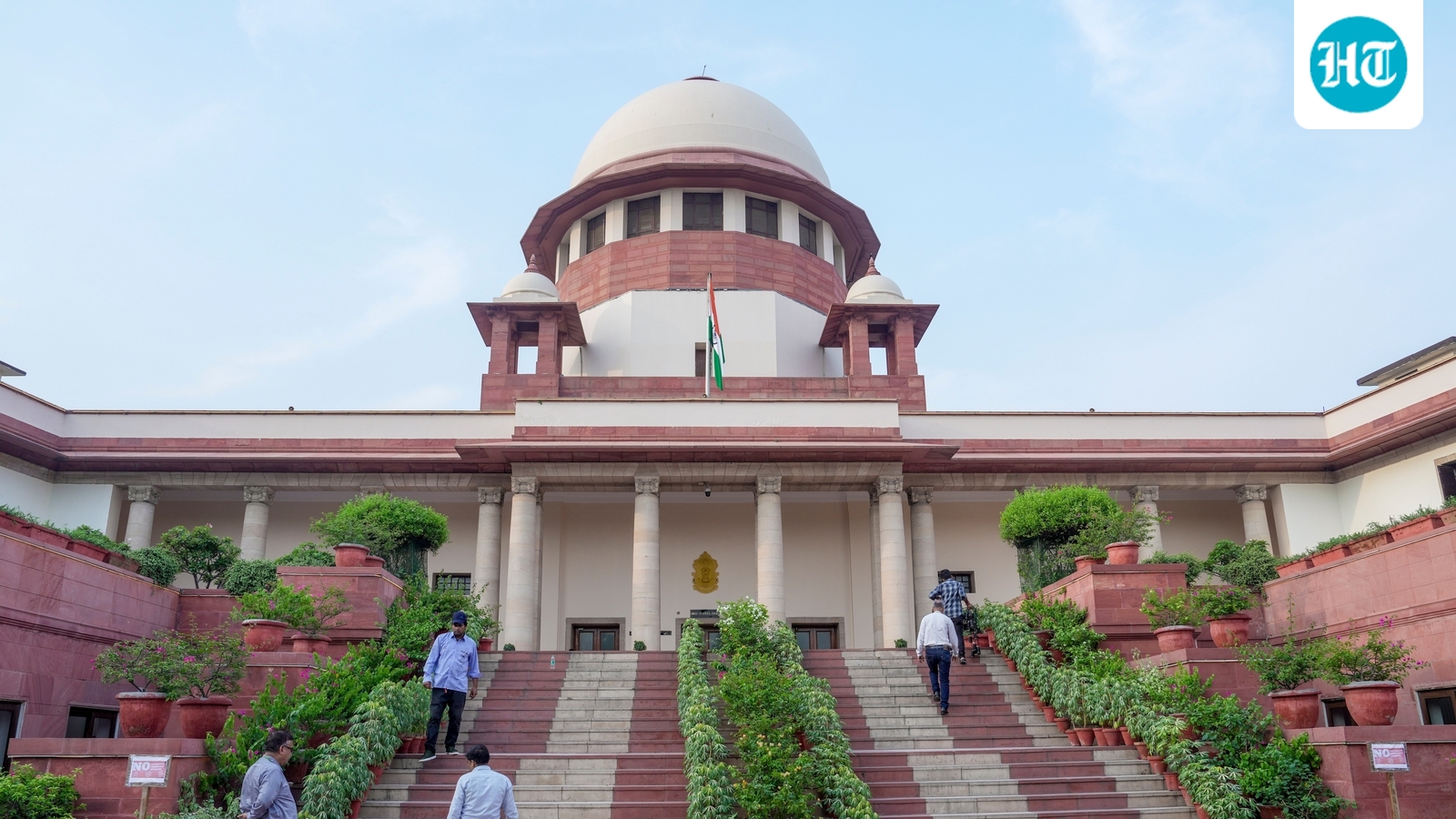
Observing that a preventive detention cannot become punitive, the Supreme Court on Tuesday slapped a cost of ₹10 lakh on the Uttar Pradesh government for passing an order under the National Security Act (NSA) against an accused in the Sambhal mosque violence in November 2024
Setting aside the detention order issued in October 2025 by the District Magistrate, Sambhal, a bench of justices Dipankar Datta and Sheel Nagu held that it was based on a confessional statement made by the accused while in custody and the same could not have served as the sole basis for curtailing the liberty of the accused.
Also Read I SC scraps NSA order against Sambhal violence accused, slaps ₹10L cost on UP govt
‘Considerable loss of liberty’
The order was passed on a petition filed by one Mulla Afroz, who was an accused in the violence that followed an order of survey of the Sambhal mosque by a district court on November 24, 2024.
The survey order was passed in a suit filed by Hindu parties seeking access to the Sambhal mosque claiming that the site used to be a temple.
Four deaths were reported during the violence. The police arrested Afroz nearly two months after the incident. The detention order under NSA was passed on October 13, 2025 and was again confirmed on November 28, 2025 for a period of one year, expiring two months later.
The court said, “The appellant has already suffered considerable loss of liberty, even while being granted bail in all the cases relating to the incident in which he featured as an accused. In such circumstances, the process was made the punishment…We consider it prudent to impose costs of ₹10 lakh on the state for being made over to the appellant within a month from the date of this judgment.”
Afroz had earlier approached the Allahabad high court which upheld his detention.
Protection against self-incrimination
Two issues were brought up in his subsequent appeal before the Supreme Court – whether a confessional statement alone can be the ground for preventive detention and whether the state was right in issuing the detention order.
Advocate Divyesh Pratap Singh, who argued for Afroz, said that the appellant was tortured and threatened in custody and the entire statement was vitiated as it was recorded while he was in custody in the alleged murder case related to the violence. The state, on the other hand, claimed that he faced multiple cases and for this reason, his preventive detention was justified.
The court noted that the state did not deny the fact of torture suffered by the appellant in custody. “By no stretch of imagination, can the confessional statement of the appellant be seen as voluntary in nature,” it said.
Also Read I SC pulls up NCPCR for ‘indifferent’ implemention of 25% EWS quota
Since the Constitution protects a person against self-incrimination, the bench said that even under the law on evidence (section 23 of Bharatiya Sakshya Adhiniyam), no confession made to a police officer shall be proved against an accused.
“Therefore, we are of the considered opinion that a confessional statement made before a police officer cannot, by itself, and in the absence of any independent material lending support thereto, constitute a basis for forming the subjective satisfaction necessary to sustain an order of preventive detention,” the Supreme Court said.
Grounds to sustain detention
On the second issue, the court examined whether there was any order material on which the detention order could be sustained. It noted that in September 2025, the accused secured bail and a month later, the detention order came to be passed.
“Where a person is already in custody and preventive detention is sought to be invoked, the scrutiny of the detention order must necessarily be more exacting. The existence of a prior order granting bail in one of the connected cases was a relevant circumstance which required due consideration by the detaining authority,” it said.
Also Read I Supreme Court to examine 22 acquittals in Sohrabuddin Shaikh encounter case, but not Amit Shah’s discharge
The bench noted that the police used the same material for sustaining both the criminal and preventive detention proceedings which made the court to observe, “The detention order has assumed a character more punitive than preventive.”
It stated that preventive detention is regarded as an exceptional measure and must be invoked with the utmost circumspection and only in those rarest of rare cases where the circumstances genuinely warrant such exercise.
KioskNews shows a cleaned-up reading view extracted from the publisher’s page — the original always lives on their site, not ours.