Happy birthday! What deals and discounts does your age unlock?

Have you just unwrapped some presents? Been sitting in a soft play centre and watched a toddler blow out some candles? Double-checked what time the party starts later?
With 26 September being statistically the most common day to have a birthday in England and Wales, according to the Office for National Statistics, it is quite possible that you or someone close to you is marking another trip around the sun.
Even if you no longer celebrate the big day with a party or family outing, there are still reasons why it is worth noting because some milestones bring gifts of their own.
Age 12
You can legally buy Christmas crackers. At this stage, the jokes will be much older than you are.

Age 14
You can get a part-time job. There are some professions – acting and modelling, for example – where you can work from a younger age. There are some local councils that allow you to work from the age of 13 for a very limited number of hours a week.
Age 16
You are entitled to earn £8 an hour under the UK’s minimum wage laws. You may also have to pay national insurance (NI). This tax is collected by your employer if you earn more than £242 a week from one job. You will be issued with a NI number and card before your birthday. You should receive a letter – make sure you read it and amend any mistakes.
You can also take charge of your child trust fund (if you have one) although you cannot withdraw the money yet. You and your parents should get a letter from the provider about this.
Age 17
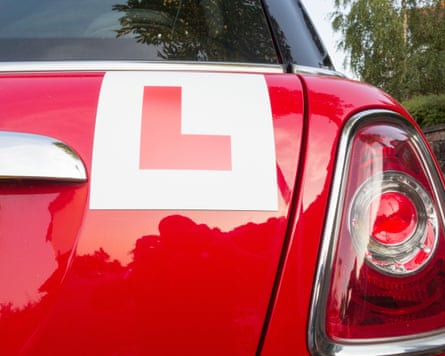
This is the legal driving age for most people in the UK. You can apply for your provisional licence much earlier in Great Britain – from the age of 15 years and nine months, or two months before you turn 17 if you live in Northern Ireland. It costs £34 to apply online and £43 to do so by post in Great Britain, or £62.50 in Northern Ireland.
Age 18
You can withdraw your child trust fund or junior Isa – but you do not have to. If it is a child trust fund, you can transfer it to an Isa; if it is a junior Isa, it will automatically become an adult one. Lots of people are unaware they have a child trust fund: you can check for yourself or your child on the government website.
At this age you can open an Isa – either cash or stocks and shares. You could choose a lifetime Isa, which is designed to help you raise a deposit for a home and is not an account you can dip into, or a standard Isa, which will be more flexible.
Benefits such as universal credit can be claimed once you turn 18 if you are not in education and are on a low income or out of work. Payments are lower for under-25s than older claimants.
The minimum wage you are entitled to also goes up to £10.85 an hour (currently – the rates change in April each year).
Age 21
You are entitled to the full adult minimum wage, which is now £12.71 an hour.
Age 26
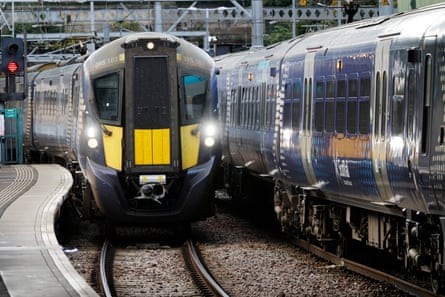
You have outgrown what used to be called the Young Persons Railcard but have no fear: you can still get one-third off train travel, only now with a 26-30 Railcard. It costs £35 for a year and is available online, so you can buy it and use it on the same day.
Age 28
You are no longer a young person in the eyes of car rental companies. They typically charge a young driver’s fee: a surcharge that is usually about £35 a day and is paid on top of the regular hiring cost. The age up to which this is charged varies by company. At Budget, for example, it is up to the age of 25, while at Europcar, it is 26. At Sixt the surcharge applies to bookings by those under 28.
Age 39
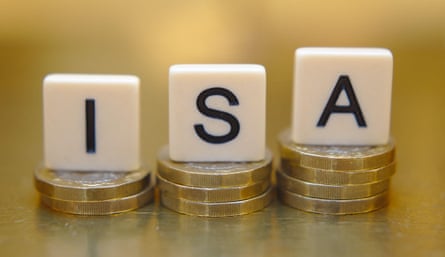
This year is your last chance to open a lifetime Isa. This is the tax-free account that offers a government bonus on your savings every year to help you save a deposit for a property or towards your retirement. The account is available to 18- to 39-year-olds who can pay in up to £4,000 a year each. This is boosted by a payment worth 25% of what you paid in each month. Between the ages of 40 and 50 you can keep paying into the account. At 50 you will not be able to add any more; you can withdraw the money to buy a home or when you turn 60.
Age 40
People in England, Wales and Northern Ireland who have a close relative with a glaucoma diagnosis can get free eye tests from the age of 40. Ask your optician if you think this applies to you.
Age 50

“Welcome to the Saga club!” is the sort of thing people say when you hit your half century. Saga is the company well known for offering products and services, including insurance and holidays, exclusively to the over-50s.
This is also the age when you may be targeted by over-50s life insurance providers. With this type of cover, typically aimed at those aged 50 to 85, you pay a fixed monthly premium and are guaranteed a fixed payout when you die – but there are downsides.
There are some train discounts available to those who are 50 and older. ScotRail has Club 50, which gives you a 20% discount on most tickets when bought online, plus other benefits (it costs £15 a year). In England, for Greater Anglia and Stansted Express services, there is the Club 50 Railcard (£25 for a year), which works in a similar way.
Age 55
This is usually the earliest age at which you can take money from your private or workplace pension – it is rising to 57 from 6 April 2028. You may be able to take your pension before 55 if, for example, you need to retire early because of poor health. However, a private pension is normally designed to pay out from about the age of 65, so you will usually get less money than you expect if you access it early.
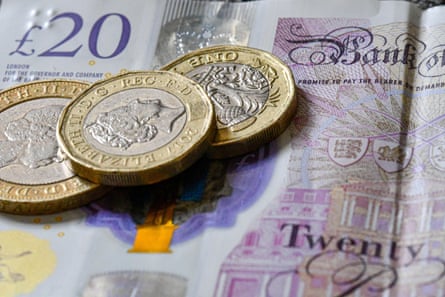
That’s because the headline estimate of your future retirement income that will be in the documents usually assumes you will continue paying in until the scheme’s normal pension age.
Some cinemas offer cheap tickets to those aged 55-plus (but for most, 60 is the important age). The upmarket Everyman chain runs Silver Screen: weekly matinee screenings with a reduced ticket price for those 55 or older. Tickets include a complimentary hot drink and a slice of cake.
Age 60
In England, NHS prescriptions become free, saving you £9.90 an item. They are already free for everyone in Scotland, Wales and Northern Ireland.
Some good travel schemes kick in at this age. The over-60s can get a third off rail travel with a Senior Railcard costing £35 for a year or £80 for three years. The average saving that holders enjoy is said to be £114 a year.
If you live in London, you can get a 60+ London Oyster photocard, which gives you free travel on buses, the tube and other transport within the capital, but is subject to some restrictions. You have this until you reach state pension age and are eligible for a Freedom Pass. If you are in Wales, you can travel for free on most bus services in Wales and the borders and get discounted or free travel on many rail services by getting a Concessionary Travel Card.
Photograph: Christopher Jones/Alamy
On the shopping front, the retailer Iceland offers 10% off for all customers aged 60 or over every Tuesday. You need an Iceland Bonus Card (this is free) and to show valid proof of age at the till – for example, a senior bus pass, driving licence or senior railcard. This in-store-only deal applies to all UK Iceland and The Food Warehouse stores but excludes Iceland Local and The Range stores.
The bakery chain Patisserie Valerie offers the over-60s with a valid passport or driving licence 10% off. To access this, you need to verify your age via a service run by a separate company.
In England and Wales, you become entitled to a free NHS eye test. In Northern Ireland, you can get a free Health and Social Care (HSC) sight test. In Scotland, NHS eye tests are free for everyone.
Many local authority leisure centres offer free swimming for over-60s at specified times, and some theatres – including the National Theatre in London and some ATG venues – give discounts on selected shows.
Age 65
A few companies offer discounts – for example, at some Hilton hotels in the UK, guests who are 65-plus can enjoy savings of up to 6%. This is also the age that some theatre discounts for older people kick in (for example, at Birmingham Hippodrome and the RSC in Stratford-upon-Avon).

You should also be able to get the free NHS flu jab. This is typically offered from September or October (in regions such as England and Wales, this includes those who will turn 65 by 31 March 2027).
Age 66+
If you were born on or before 5 April 1960, your state pension age is 66. As of now it is rising gradually each month, and by one month at a time, until it reaches 67 in April 2028. It will eventually rise to 68, affecting those born after April 1977.
The new state pension (as opposed to the old basic state pension) is up to £241.30 a week, and entitlement can unlock other benefits and help. The MoneyHelper website has more information.
Age 75
You can apply for a free TV licence, provided you (or your partner living at the same address) receive pension credit.
Age 80

To get the winter fuel payment for 2026-27, you have to be 66-plus (born on or before 27 June 1960) – however, those aged 80-plus (born before 28 September 1946) can get more: a total of £300. It is available to those in England, Wales and Northern Ireland (Scotland has its own scheme), and the rules are complicated.
Some people who receive little or no basic state pension are able to apply for the “over 80 pension”. This can now give you £110.75 a week.
Age 100
You can get a free birthday message from King Charles when you hit 100 – and then every year from age 105 onwards.
KioskNews shows a cleaned-up reading view extracted from the publisher’s page — the original always lives on their site, not ours.