‘Baby, she’s back!’ SpaceX’s Starship is caught midair in a dramatic first
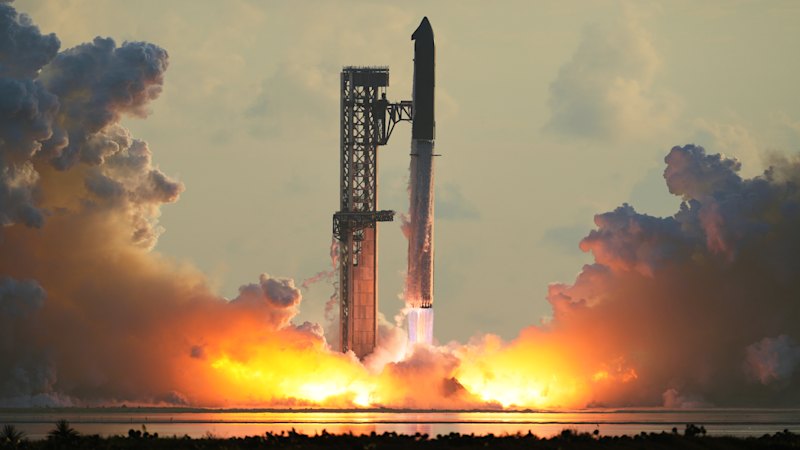
Cape Canaveral: SpaceX’s Starship made a triumphant return to Earth on Saturday (US time), caught by giant mechanical arms on its launchpad.
It was the grand finale that Elon Musk and his team hoped for – the first-ever capture of a Starship returning from space. As the first-stage booster exploded shortly after Friday’s liftoff from Texas 22 hours earlier, the company fell short of its desired double catch, still the goal for accelerating moon and Mars travel.
Booster wreckage was still cordoned off in the Gulf of Mexico, as the sleek stainless-steel spacecraft lowered itself upright onto the pad, sci-fi style.
The capture helped blot out the booster’s messy miss. Cameras panned up and down the spacecraft, supported by the arms of the launch tower.
“Look at her! Baby, she’s back!” shouted SpaceX commentator Dan Huot, then Musk congratulated his “incredible team”.
SpaceX officials said the catch demonstrated Starship’s capacity for full re-use, crucial for rapid and low-cost recycling, while three previous booster catches validated the technique.
NASA welcomed Saturday’s news. The space agency is paying billions for Starship to land Artemis astronauts on the moon later this decade and help build a permanent lunar base. Musk’s ambitions are even grander: he wants to launch a fleet of Starships to build a city on Mars.
“It was almost magic,” NASA administrator Jared Isaacman said via X. “Making more believers by the day ... one step closer.” He added emojis of the moon and the US flag.
The world’s largest and most powerful rocket – a 124-metre behemoth – blasted off from the Starship base near the US-Mexican border, separating neatly from its booster before things went awry.
The upper stage spacecraft soared into orbit and released 26 advanced Starlink satellites. From 265 kilometres up, Starship streamed down live views of itself and Earth via Starlink. The spacecraft completed 14 orbits, outshining the previous mission.
It was SpaceX’s 15th flight of a full-scale Starship since 2023 and only its second trip to orbit.
SpaceX reported that all equipment, including the craft’s vital heat shield, appeared to work well. As for the booster, SpaceX’s Kate Tice said its engines stopped firing too soon on the way back down – its guidance system sensed it was out of position and automatically initiated the watery detour and destruction. Engineers are investigating.
SpaceX expects to begin launching Starships from Florida’s Kennedy centre within months. That is the starting point for NASA’s next Artemis mission, which will skip the moon and remain in orbit around Earth for lunar lander practice.
Artemis III’s four astronauts will attempt to dock their capsule with both Starship and Blue Origin’s Blue Moon. The two companies will alternate delivering crews to the lunar surface. NASA is targeting as soon as 2028 for Artemis IV, humanity’s first moon landing since the Apollo era more than half a century ago.
KioskNews shows a cleaned-up reading view extracted from the publisher’s page — the original always lives on their site, not ours.