Legendary Italian Premier League striker in court fight over massive UK tax bill
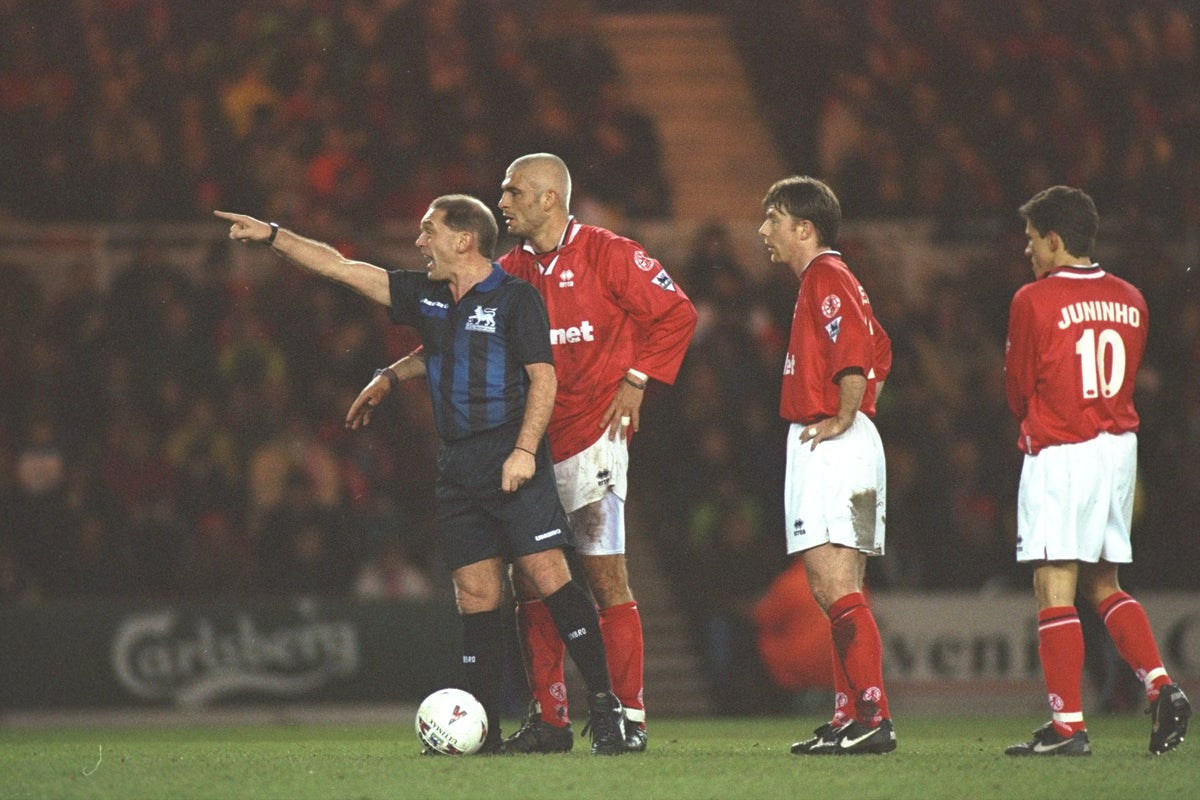
Former Premier League legend Fabrizio Ravanelli is locked in a court row with the UK taxman over a £340,000 bill linked to his playing days 20 years ago.
Ravanelli, famed for his prematurely white hair which won him the nickname “white feather,” carved out a stellar career as a striker in Italy and later England, as one of the biggest stars in the fledgling Prem, clocking up a hat-trick against Liverpool on his debut for Middlesbrough in 1996.
The Italian international went on to make 50 appearances for the club, scoring 32 goals, before moving on to Marseille and Lazio, and then returning to the Premier League in the latter stages of his career with Derby County.
But he is now fighting a High Court battle with the taxman after some of his earnings - paid into an "employee benefit trust" (EBT) by Derby County - were hit with a massive tax bill when cashed in.
The trustees running the fund ended up handing HMRC £1.2m out of the £2.1m destined for the former star in "settlement" of any tax which was due on the money.
Mr Ravanelli is now fighting to recoup £340,000 of it, claiming that it represents National Insurance Contributions which he was never liable to pay.
The former footballer says NICs were the responsibility of his employer, Derby County Ltd, and cannot now be claimed by the taxman after the company ceased trading amid financial difficulties more than two decades ago.
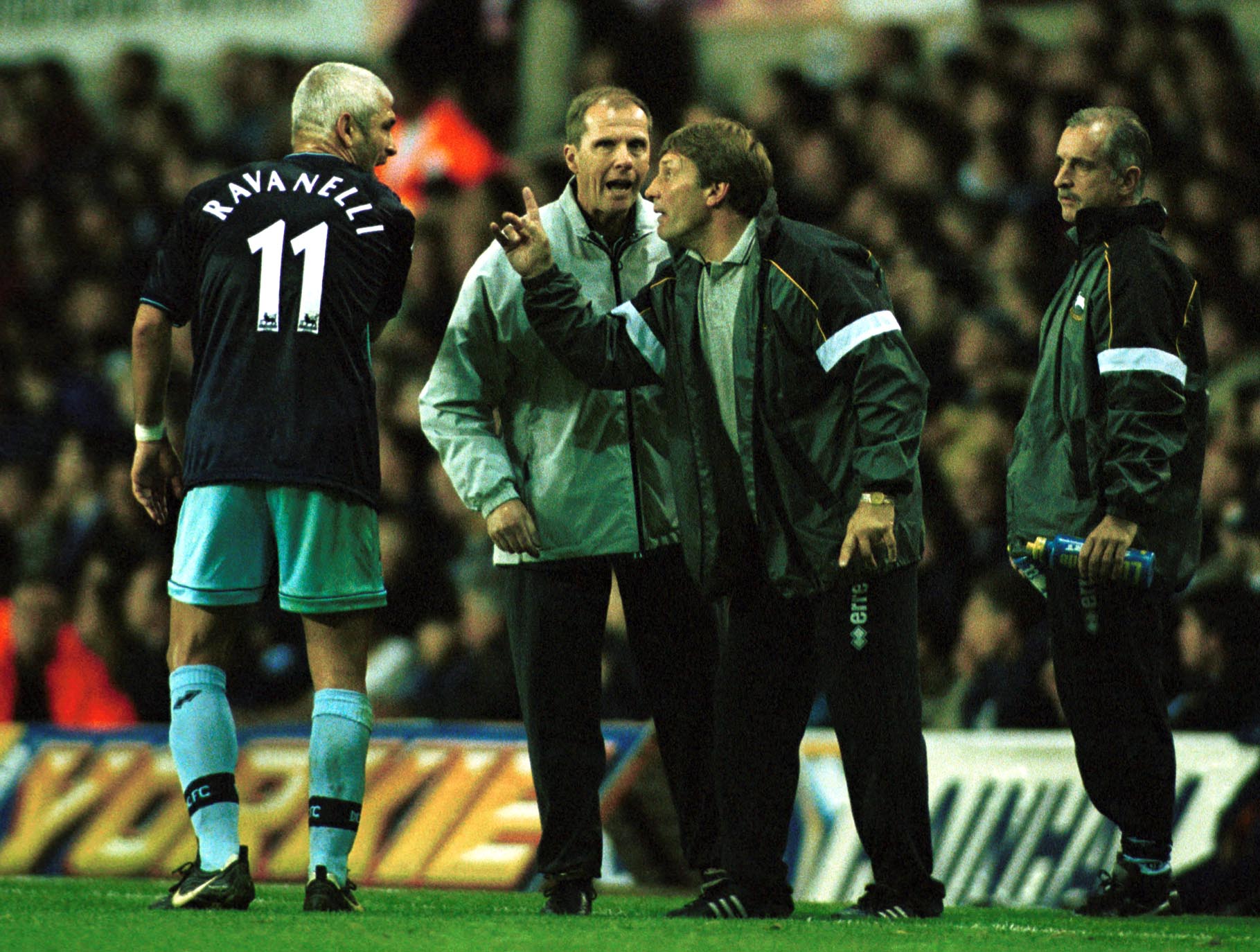
Mr Justice Eardley heard that the dispute arose because part of Mr Ravanelli's earnings at Derby County were paid into an employment benefit trust.
Although he was only at the club from 2001 to 2003, it paid a total of £1m into the trust between February 2002 and March 2006 - which due to investment gains was worth £2,136,310 by July 2021.
The issue of tax arose because, faced with the prospect of an impending inheritance tax charge due to employee benefit trust rules, the trustees decided to pay the money out.
The money to be paid out of the trust to the former footballer would be "part of his remuneration as an employee," the judge was told.
After discussion with HMRC, a "settlement" was agreed by the trustee under which £1,280,834.85 went from the trust to the taxman, with the rest going to Mr Ravanelli.
He is now challenging the trustee's bill, arguing that any NICs due were the responsibility of his previous employer - the long dissolved club company - and that tax rules state that, "if the employer no longer exists, the employee will not have to pay any National Insurance contributions."
His lawyers say that, in those circumstances, HMRC acted wrongly in refusing to "reopen the settlement agreement" and should now pay him the £340,000 which was said to have represented NICs.
"The NICs were not owed by or on behalf of Mr Ravanelli," his barrister, Tim Johnston, said. "They remained liabilities of the employer, who had ceased to exist.
"According to HMRC’s own guidance, no sums should have been withheld in respect of NICs when the distribution from the EBT was made to Mr Ravanelli.
"Mr Ravanelli’s case is that, as a matter of tax law, NICs were never due. As a result, no amount for NICs should have been deducted from the distribution out of the EBT."
He added: "HMRC must accept that there are circumstances in which it will not be possible to collect NICs, because an employer has ceased to exist."
But HMRC barrister, Adam Tolley KC, said Mr Ravanelli's case that no NICs were payable because Derby County Ltd had been dissolved was "wrong as a matter of tax law" and is a misunderstanding of the NICs legislation.
"When the trustee made the distribution, for the purposes of the relevant NICs legislation it did so as the deemed employer of the claimant and he received the distribution as the deemed employee of the trustee," he argued.
"As such, the trustee was liable to pay the NICs."
Continuing, he said HMRC's "primary case" is that the trustee of the employee fund, having agreed, was "contractually liable to pay, and did pay, the agreed sum pursuant to the settlement agreement."
He said Mr Ravanelli's lawyers were wrong in their challenge to say that the settlement agreement had "determined Mr Ravanelli’s total tax liability."
"Nor is there any suggestion that any part of the sum envisaged in the offer or paid under the settlement agreement represented NICs for which the claimant was liable," he added.
"Rather, part of the sum paid under the settlement agreement represented NICs for which the trustee was liable - or, on the claimant’s case, for which DCL would have been liable had it not been dissolved."

He also said there was no way HMRC could re-pay any money to the former footballer, as the money had been paid to it by the trust, and not him.
The judge reserved his decision on the case until a later date.
Ravanelli, who was not in court for the two-day hearing, works as a TV pundit and still plays in occasional legends' games, but missed the recent October 2026 Middlesbrough 150th anniversary game, which featured fellow Prem legend, Juninho, due to a broken leg.
He joined Derby County on a free transfer in 2001, but was reputedly one of the club’s highest-earners at a time when Derby were foundering financially - and was also relegated from the Premiership during his stint there.
He moved on to Scottish club, Dundee, after leaving Derby, later playing for his home town club, Perugia, in his final years before retiring professionally in 2005.
He subsequently switched to coaching, going on to help manage the Juventus youth team before taking up the post of head coach at French side, Ajaccio.
KioskNews shows a cleaned-up reading view extracted from the publisher’s page — the original always lives on their site, not ours.