Desperate Netanyahu goes nuclear in bid to stay in power. Next step could be war with Iran
Tel Aviv: The drums of war are pounding in Israel just a day before the nation’s first election in four years, and Benjamin Netanyahu is playing percussion.
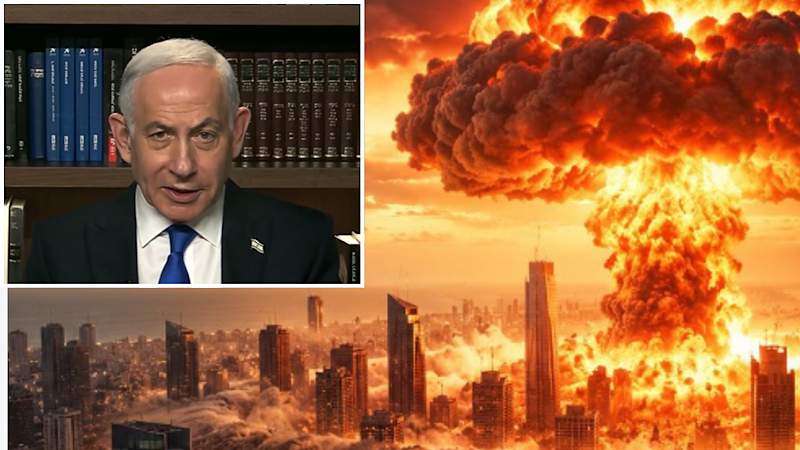
On Sunday (Israel time) Netanyahu took to social media to post an apocalyptic AI-generated image of a nuclear bomb being dropped in the middle of Tel Aviv. The message was as subtle as a slap in the face: vote for me or armageddon will follow.
Netanyahu accompanied the image with a statement by conservative Israeli commentator Yuval Blumberg: “The State of Israel is in real and tangible existential danger. If the Iranians acquire nuclear weapons, nothing will ever be the same again ... Future generations will not forgive us if we miss the historic window of opportunity that allows us to try and complete the most critical mission facing our generation.”
The post was just the latest indication that the United States and Israel are increasingly likely to resume military strikes against Iran within weeks.
In Australia, following the attack on Helen Haines, politicians are talking about the need to turn down the temperature in the political debate. Here, Netanyahu is ratcheting up the thermostat in a polarised country already at boiling point. It takes a lot to shock Israelis, who play politics hard, but his nuclear bomb post did. “His campaign’s fear tactics have reached an intolerable extreme,” wrote The Times of Israel political commentator Tal Schneider.
Netanyahu’s social media post reeks of desperation. A leader confident of being re-elected would not need to flick the switch to hysteria and try to frighten people. Most of the final election polls show Netanyahu’s bloc of parties hovering around 50 seats, far short of the 61 required to form a government. The opposition bloc believes it has enjoyed a burst of last-minute momentum, topped off by reports of left-leaning Israelis flying in en masse to vote against Netanyahu.
Yet only a fool would count out Netanyahu, the great survivor and grand magician of Israeli politics. He was first elected in 1996, when artificial intelligence was the stuff of science fiction. He has been in power for almost 7000 days. You don’t achieve that without smarts.
Politicians like Netanyahu deploy scare tactics for a reason: fear can be a more powerful motivator than hope. Israelis agree Iran is their top adversary and agreement on the need to defang it transcends political divides. Here, the conflict of Iran is not seen through the prism of high petrol prices but national survival.
Gadi Eisenkot, the former military chief who is Netanyahu’s top rival in this elected, responded by saying: “Like in every election campaign, the same old method of lies and scare tactics again. This time - threatening Israeli citizens with mass destruction. And this after you failed to achieve the war’s objectives against Iran.”
Mark Sofer, Israel’s former ambassador to Australia, says Netanyahu has had a “terrible, terrible campaign”, making decisions that seem to define logic. Before Netanyahu’s nuclear tweet, Israelis were abuzz about a television interview he gave in which he floated the prospect of using cryptocurrency to bypass the impact of looming international sanctions.
Over 100 economists, including two Nobel laureates, responded with an open letter expressing “deep anxiety and concern” over Netanyahu’s “baffling” comments, noting that such methods are typically associated with criminal organisations.
Banking sanctions against Israel would cause “immense and irreversible damage”, they warned.
The Bank of Israel intervened by saying cryptocurrencies “cannot be used as a route for bypassing sanctions”.
“The right thing for Israel’s economy is preserving the economic relationships with our principal trade partners and focusing on preventing sanctions and their negative influence on the economy,” the bank said.
Given this blunder, it’s no wonder Netanyahu wanted to do something dramatic to change the national conversation.
According to reporting in the London Financial Times, Netanyahu pushed to resume large-scale strikes against Iran earlier this month ahead of the October 27 Israeli elections. While Trump knocked back his bid, he appears much more open to a military campaign after Americans vote in the midterm elections. “We may do another little Epic Fury,” Trump told a campaign rally in Florida last week.
While resuming the war will come too late for Netanyahu to affect the election results, military strikes in early November could upend the negotiations over who will form a government. The post-election deal-making could string out for weeks, and even months, if there is a deadlock and Netanyahu’s ideologically diverse opponents cannot cobble together a governing majority. Throughout this period, Netanyahu will remain in power, with full authority over defence and foreign affairs. If no-one can form a government, Israelis will head back to vote again.
With Iran lobbing missiles into Israel, Netanyahu would surely argue that removing an experienced war-time leader in the middle of a military campaign would be disastrous. President Isaac Herzog, who has said he is not keen for another round of elections, could seek to create a national unity government with Netanyahu and Eisenkot, for example, rotating the prime ministership. Trump, who endorsed Netanyahu for re-election last week, may insert himself in the process.
No-one can kick a can down the road like Netanyahu. After the October 7 attacks, his prime ministership seemed in ruins and his government repeatedly looked on the verge of collapse. Yet he served out a full-term, a rarity in Israel. He has strung out his bribery and fraud trial for over six years with no resolution. Aged 77 and determined to stay out of jail, he is still playing for time, still looking for a way to stay in office.
Will this be the time the magician’s tricks finally fail him? This story has a long way to go, and could become much more frightening before it ends.
Get a note directly from our foreign correspondents on what’s making headlines around the world. Sign up for our weekly What in the World newsletter.

KioskNews shows a cleaned-up reading view extracted from the publisher’s page — the original always lives on their site, not ours.