How Delhi’s AI-enabled traffic management system will create green corridors for ambulances?
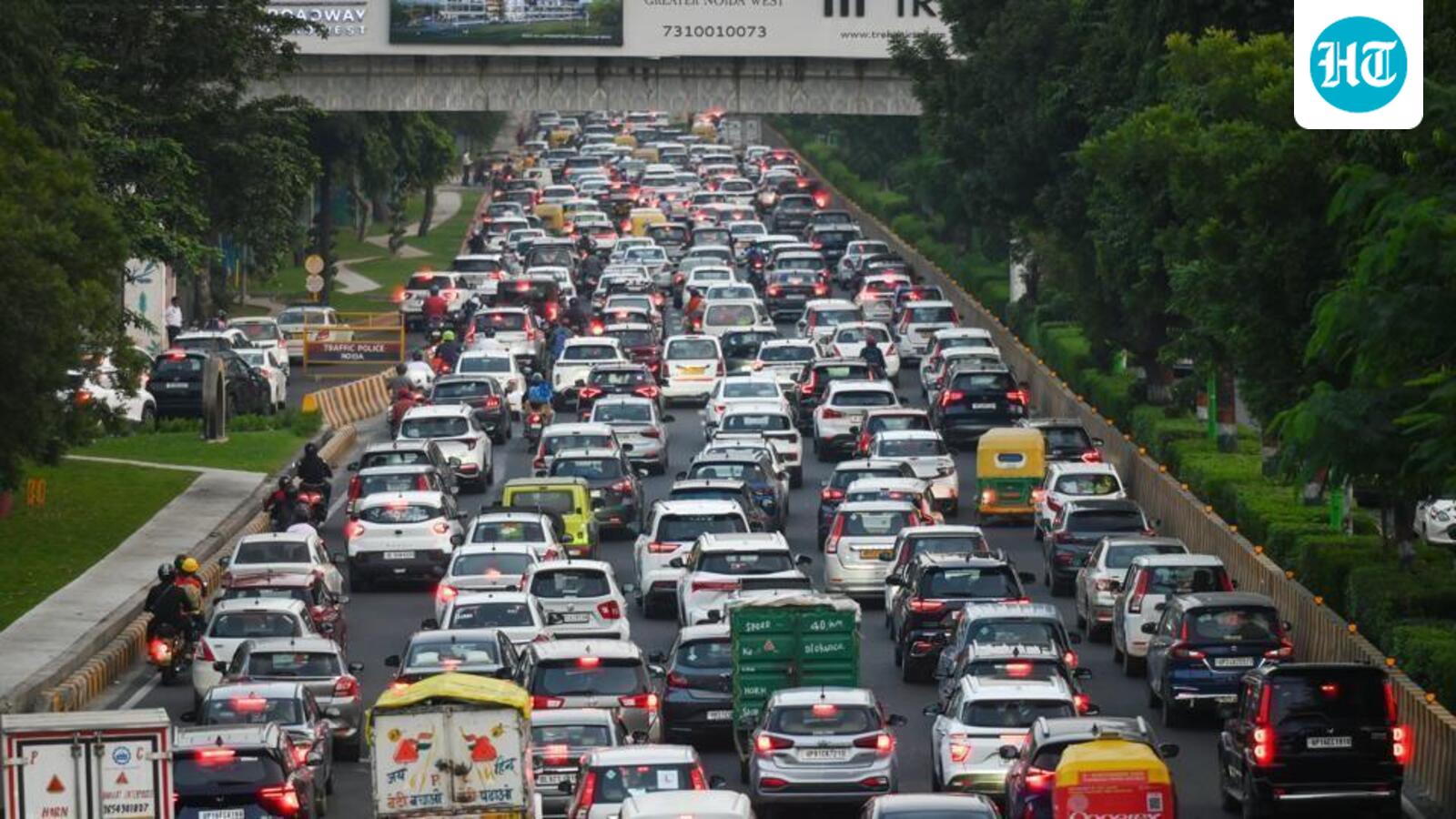
Delhi’s new AI-enabled Intelligent Traffic Management System (ITMS), approved by the Union cabinet at a cost of ₹1,789.52 crore on Wednesday, will enable traffic signals to automatically create “green corridors” for ambulances and other emergency vehicles, allowing them to pass through intersections with minimal stoppages.
Experts said emergency vehicles will be fitted with sensors that can communicate with traffic signals as they approach a junction. Once the signal detects an approaching emergency vehicle, it will automatically turn green and remain so until the vehicle has crossed the intersection, senior adviser of the National Council of Applied Economic Research S Velmurugan said.
“All emergency vehicles will have a sensor installed in the vehicle. The sensor will be detected by the next traffic signal and it will automatically turn green and remain so till the emergency vehicle passes,” Velmurugan, also the former chief scientist of the Central Road Research Institute (CRRI), said.
The system is expected to use the sensor’s signal to identify an approaching emergency vehicle within a specified range. The exact range will depend on the capability of the technology and the system deployed at the junctions, Velmurugan said, adding, “For instance, it may be able to catch the signal if the emergency vehicle is in 200-500m range.”
This means that as an ambulance approaches a signal, the traffic management system could identify its presence in advance and alter the signal cycle to give it a clear passage. The process would be repeated at subsequent signalised intersections, potentially creating a continuous green corridor along the ambulance’s route, he said.
However, Velmurugan said the manner in which the system will function when an emergency vehicle is outside the stipulated detection range will have to be worked out by the Delhi Traffic Police and the companies implementing the system.
“If the emergency vehicle is not in the stipulated range, whether a green corridor will be made is yet to be ascertained. The traffic police and the companies involved in the implementation will have to see,” he said.
The Intelligent Traffic Management System (ITMS) is part of a larger plan to modernise traffic management in Delhi through adaptive signals, technology-based enforcement and real-time traffic information. The system will be implemented across 42 key traffic corridors in three phases over 24 months, followed by five years of operation and maintenance, a statement by the central government said.
Under phase one, the system is to be commissioned across five traffic corridors within the first 12 months, with 250 adaptive signal junctions and 271 enforcement points. Phase two, scheduled for completion within 18 months, will add seven corridors, 222 signalised junctions and 236 enforcement points, according to the proposal made by the Delhi Police in February this year.
Unlike conventional fixed-time traffic signals, adaptive signals will continuously analyse live traffic volumes and dynamically alter signal timings based on traffic conditions.
The concept of an integrated traffic management system for Delhi, however, is not new. Officers aware of the matter said the idea was first conceived and proposed in 2008, when authorities had planned to introduce traffic-detecting sensors, CCTV cameras, automatic number plate recognition (ANPR) systems, speed-violation detection, signalised pedestrian crossings and stopline-violation detection systems.
“Over the years, all these measures were taken in phases and we now already have ANPR cameras, multiple cameras, speed detection and stopline violation detection softwares installed in the cameras,” an officer said.
The latest ITMS proposal was submitted by Delhi Police to the Ministry of Home Affairs in February, with artificial intelligence-based traffic management now being brought together under one integrated system.
KioskNews shows a cleaned-up reading view extracted from the publisher’s page — the original always lives on their site, not ours.