Hong Kong private secondary sector expands as local universities’ reputation grows
The number of private secondary schools in Hong Kong has risen by more than half in five years as demand for alternative curricula grows and new operators seek to attract families drawn by the city’s highly ranked universities, education authorities and principals have said.
Between 2021-22 and 2025-26, the number of private secondary institutions increased from 16 to 25, a jump of 56.3 per cent, Education Bureau figures show.
Leaders at schools offering alternative curriculum pathways said that more mainland Chinese and overseas students were considering Hong Kong universities due to the institutions’ rising global reputation amid geopolitical concerns.
Over the same period, the number of private primary schools also rose from 62 to 65, up 4.8 per cent.
Private schools offering a non-local curriculum, which charge between HK$100,000 and HK$300,000 (US$12,800 and US$38,260) a year in tuition fees, do not receive government land grants and have no caps on their ratio of local to non-local students.
International schools, however, typically operate under fixed ratios of non-local students, while private independent schools, which receive government land grants, must enrol at least 70 per cent local pupils.
The Education Bureau pointed to a stronger economy and shifting parental preferences as factors behind the rising number of private schools.
“Driven by overall economic growth and a growing demand for diverse educational choices that cater to varying parental preferences for education, the sectors of international schools and other private schools offering a formal curriculum have been steadily expanding,” it said.
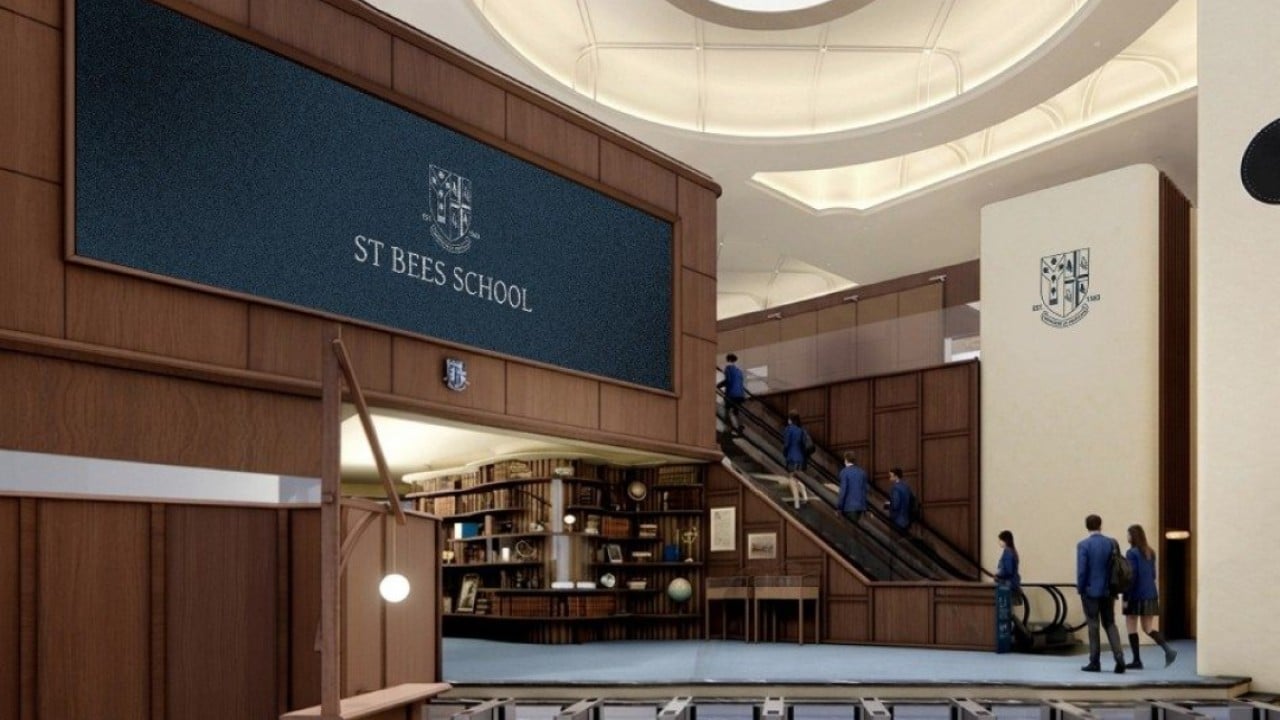
St Bees (Anchors) Sixth Form College is one new private school entering the sector. It is set to open in West Kowloon’s Coronation Circle for the 2027–28 academic year.
David Cardwell, founding co-chair of St Bees and former pro-vice-chancellor at the University of Cambridge, said Hong Kong’s established international curricula give families diverse pathways to maximise their children’s university prospects.
“Hong Kong is the perfect place to study – a city of just 7 million people with five universities in the global top 100. It is unprecedented,” he said.
St Bees will offer A-level and International General Certificate of Secondary Education programmes. Its registration application is being reviewed by the bureau, with fees to be confirmed upon approval.
Cardwell said its graduates were expected to pursue higher education globally, whether at Hong Kong universities, in the United Kingdom or in the United States.
The school is targeting 150 students for its first year of operation, with a long-term capacity of 500.
“We would like to get 30 to 50 per cent international, if possible, but again we do not want to have a cap,” Cardwell added.
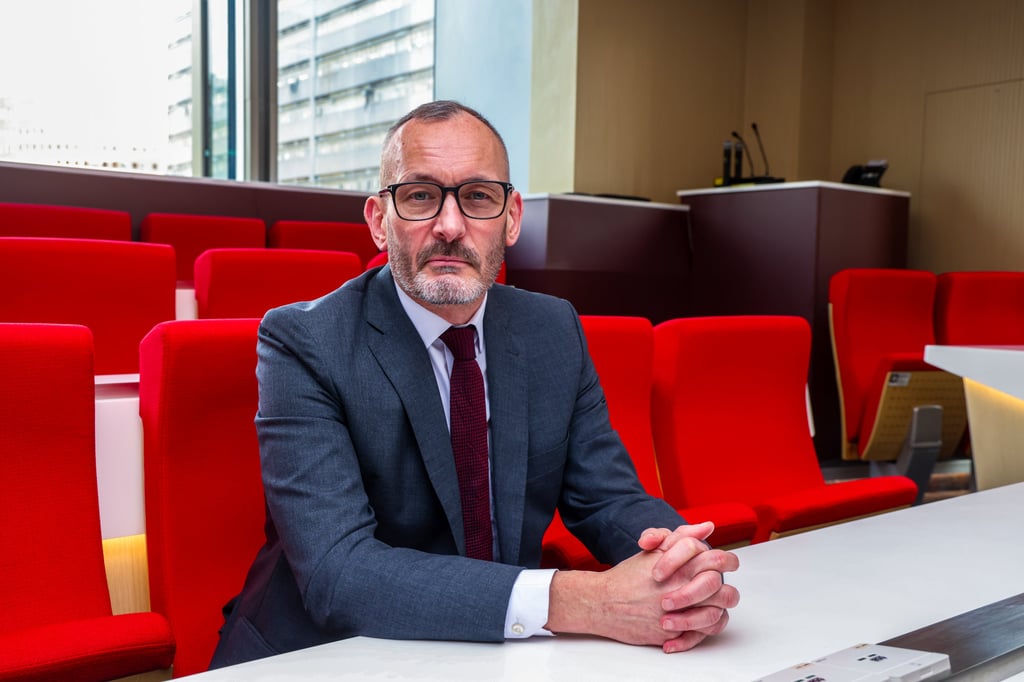
School co-chair Danny Wang Tak-chi said it aimed to keep its main cohort local while recruiting internationally, although geopolitical and economic factors would shape its composition in coming years.
Wang said recent adjustments to the visa policy for the dependants of arriving talent – including a two-year residency rule before they could apply for subsidised places at local universities – were designed to ensure recipients contribute to society, not to discourage arrivals.
“The trend of people coming to Hong Kong will just keep growing and growing, as Hong Kong becomes a hub for education in Asia,” he said.
Among the recent graduate cohort at Kellett School, more students, including non-local ones, aspired to enter university in Hong Kong.
The international school said 34 of its 85 graduates this year submitted a total of 112 applications to Hong Kong universities, the most in recent years.
“One of the reasons for the growth in applicants is that five of the world’s top 100 universities are here in Hong Kong, so the city has a very strong reputation for university education,” school principal and CEO Paul Tough said.
“With the government’s intention to develop the university town, the growth is only going to get stronger.”
He added the soaring costs of university education in the US and the UK, combined with a geopolitical climate that had parents wanting their children closer to home, were driving more families towards Hong Kong institutions.
The school, which was established in 1976, opened its Sixth Form Centre at the Bay Hub, a commercial building in Kowloon Bay in August.
The centre can accommodate 240 students, with 225 currently enrolled. The annual tuition fee for Sixth Form is HK$279,100.
As an international school offering the A-level curriculum, Kellett maintains a 70:30 ratio of non-local to local students.
KioskNews shows a cleaned-up reading view extracted from the publisher’s page — the original always lives on their site, not ours.