Indonesian wildfires threaten world’s oldest cave paintings in Sulawesi
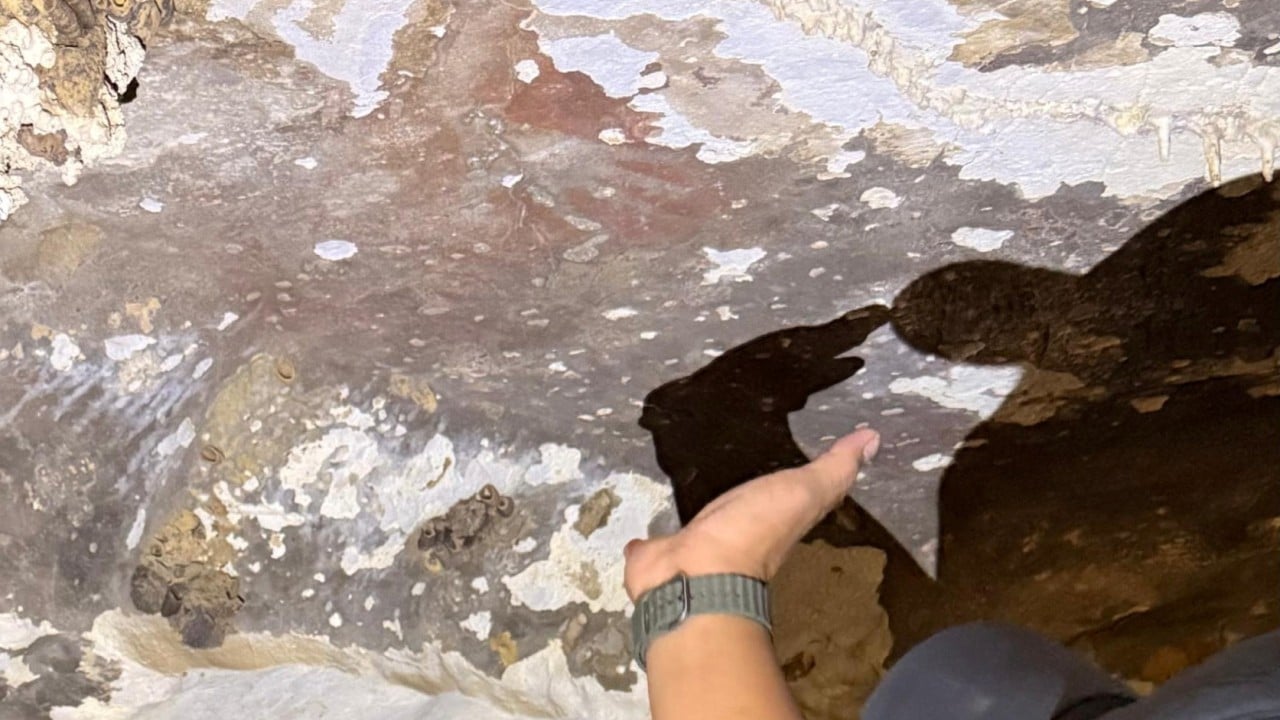
The world’s oldest cave paintings on the Indonesian island of Sulawesi are under threat as heat and smoke from the country’s worst wildfires in more than a decade risk accelerating the deterioration of the more than 67,000-year-old works of art, according to researchers.
Indonesia is battling its most intense forest and land fires since 2015 as a severe El Nino drives up temperatures and reduces rainfall, leaving its forest and peatland vulnerable to fire. While the islands of Sumatra and Borneo are the worst affected by the disaster, fires have also spread on the island of Sulawesi, including in South Sulawesi where limestone caves house the world’s oldest prehistoric art.
In a cave in South Sulawesi’s Maros-Pangkep, an artwork depicting human-like figures interacting with a pig was dated by researchers from Australia’s Griffith University to be at least 51,200 years old. In a cave on Muna island, off Sulawesi, a reddish-coloured hand stencil was dated to at least 67,800 years.
Near the Maros-Pangkep cave, firefighters worked to put out fires as smoke drifted over the dramatic karst landscape that is a defining feature of the national park and Unesco Global Geopark surrounding the cave.
KioskNews shows a cleaned-up reading view extracted from the publisher’s page — the original always lives on their site, not ours.