How much is the cost of living in the UK rising? Here’s what the data says
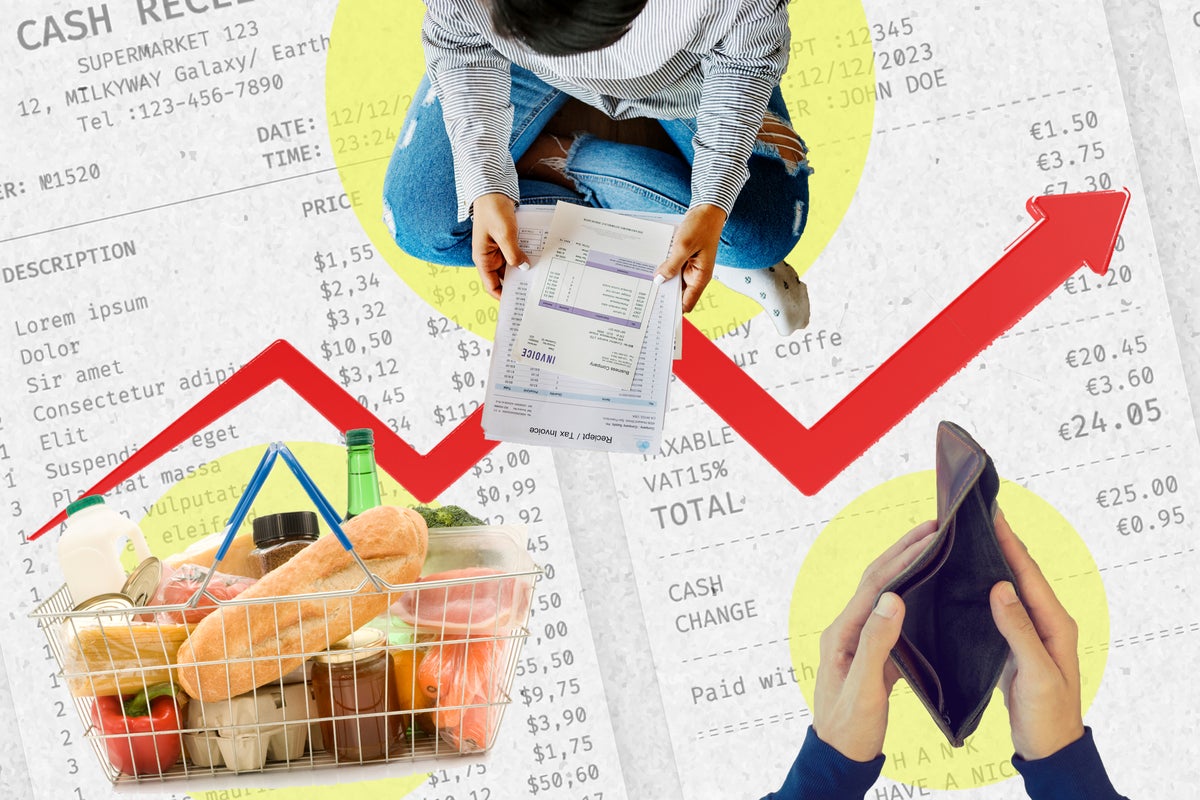
Violence and looting has broken out across numerous European cities over the growing cost of living crisis, a lack of affordable housing and deteriorating school conditions.
In France, since president Emmanuel Macron took office in 2017, prices have risen by 23.4 per cent, Le Monde reported.
Meanwhile, in the UK, job vacancies have hit a five-year low and households are increasingly spending more money on their bills.
So how much is the cost of living in the UK rising? Here, The Independent looks at the data – and explains what it tells us.

Has unemployment increased?
The latest data shows the unemployment rate in the UK has dropped to 4.7 per cent, according to the Office for National Statistics (ONS). It dipped 0.2 per cent in the three months to August, from 4.9 per cent in the previous three months.
And, while the number of workers on payroll increased by 13,000 between August and September, it’s still 66,000 lower than last year.
Figures also show the number of job vacancies has hit a five year low, falling by 21,000 to 691,000 job postings.
Meanwhile, youth unemployment has fallen to 15.6 per cent ahead of next week's Autumn Budget. While unemployment among men aged 16 to 24 has fallen from 18.5 per cent to 16.8 per cent, the rate for young women has remained broadly unchanged at around 14 per cent.

Invest at least £100 in Stocks or ETFs of your choice. Get fractional shares worth £50!
Terms and conditions apply.
Go to websiteADVERTISEMENT
Invest at least £100 in Stocks or ETFs of your choice. Get fractional shares worth £50!
Terms and conditions apply.
Go to websiteADVERTISEMENT
The NEET crisis hit 13 per cent, with 981,000 young people not in education, employment or training in April to June 2026. That’s an increase of 30,000 when compared with the same period in 2025.
While young people are struggling to get into work, teenagers want more help preparing themselves for the world of work.
More than half (54 per cent) of teenagers have never undertaken unpaid work experience and 42 per cent say they want more support with job applications, according to a survey of 2,000 young people aged 13 to 18 by polling company Survation for Radio 5 Live and BBC Bitesize.
The survey found teenagers are focused on their future employment prospects, with almost half (46 per cent) saying they would consider leaving the UK for better job opportunities.
What is driving inflation?
The UK inflation rate rose to 3.1 per cent in the year to August, pushed up by soaring petrol and diesel prices.
Inflation hit 2.9 per cent in July – its highest level in four months – after the price of energy was pushed up by the conflict in the Middle East.
The ONS said the cost of transport, “particularly motor fuels”, made the largest upward contribution to the higher inflation rate. But food and non-alcoholic drinks costs made the smallest contribution to inflation since September 2021.
What cost £10 in 2021 would now cost £12.88, according to Bank of England data from August 2026.
That means annual inflation figures have risen by an average of 4.63 per cent a year.
Have wages kept up with inflation?
Average regular earnings growth rose to 3.7 per cent in the three months to August – down from 3.9 per cent in the previous three-month period.
The last time wage growth was below 3.7 per cent was in 2020, when it was at 2.8 per cent.
When using the Consumer Prices Index, excluding owner occupiers' housing costs (CPI), annual growth in real terms for regular pay was 0.8 per cent.
Cost of living: how much more are households spending?
Analysis of ONS data by Trades Union Congress (TUC) reveals that, over the past five years, households with mortgages have spent an average of £9,034 extra on mortgage payments (£1,806 extra a year). Those with loans have spent an extra £1,911 extra on repayments (£382 extra a year).
Rental costs have increased at a higher rate than mortgages, suggesting mortgage costs are being passed on to renters.
Households have also spent, on average, £2,644 extra on electricity and gas bills (£529 extra a year) and £372 extra on water bills (£74 extra a year).
That means households facing all these costs have forked out an additional £13,961 on bills on average over the last five years – an extra £2,792 a year.
Londoners have also seen a 34 per cent increase in spending on goods and services compared to March 2020, according to Trust for London.
That means households in the capital are needing to spend about a third more to achieve the same standard of living as they did before the pandemic.
KioskNews shows a cleaned-up reading view extracted from the publisher’s page — the original always lives on their site, not ours.