China could tighten rare earths exports if US escalates chip curbs over Nvidia: analysts
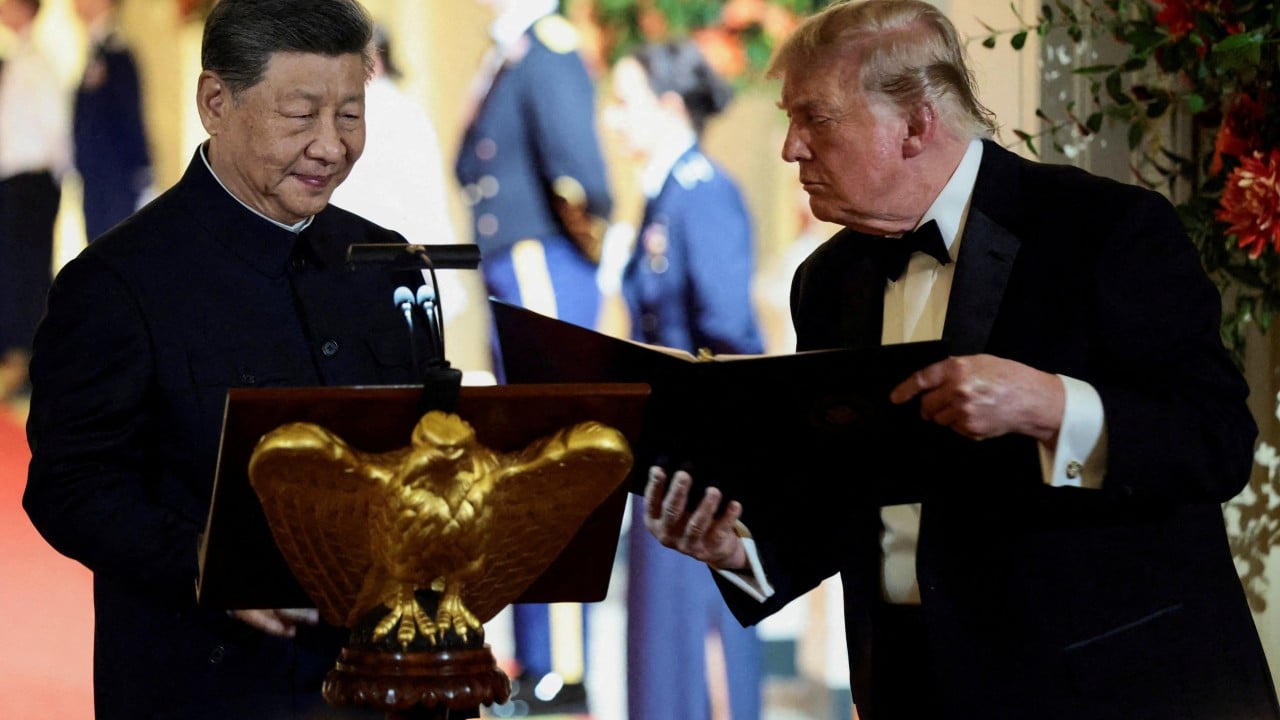
China could retaliate with tighter rare earth export controls if Washington further restricts chip sales in the wake of the Nvidia saga, Chinese analysts say, though they expect broader US-China trade talks to remain on track ahead of a planned meeting between the two countries’ leaders next week.
Following Jensen Huang’s resignation from Nvidia on Thursday amid reports of multiple extramarital affairs, attention now turns to whether Washington will further tighten semiconductor export controls on China.
US politicians seeking to exploit the Nvidia controversy during the trade talks to pressure Beijing would be “completely miscalculating”, according to Victor Gao, vice-president of the Beijing-based think tank Centre for China and Globalisation.
“What they may do is force China to tighten control of rare earths exports,” he said.
Huang admitted over the weekend to being unfaithful to his wife. The New York Times reported earlier that he had shared a close relationship with businesswoman Alice Huang, whom US officials suspect of being a Chinese operative. Beijing has repeatedly denied the spying allegations.
Alice Huang is a former executive at Singapore-based company Megaspeed, which the US is investigating for allegedly playing a role in diverting advanced Nvidia artificial intelligence chips into China, where they are restricted for sale.
China used to be a key market for Nvidia, before an intensifying technology rivalry with Beijing led Washington to bar the company from selling its most advanced chips there in 2022.
There are so many other things above Nvidia chips, above Jensen Huang, above Alice Huang, that China and the United States need to care about
Gao said the restrictions disrupted Nvidia’s long-standing business relationships in China, prompting Jensen Huang to repeatedly lobby the US government to restore chip sales to the country, where demand remained high.
Tighter restrictions could push China closer towards achieving semiconductor self-sufficiency over the next few years, before becoming a major chip exporter itself, Gao added.
Wang Yingliang, a Shanghai-based political economist and chief editor of economic analysis platform Sharp Voices, said that by making Jensen Huang’s personal affairs a security issue, the US had fresh justification for clamping down on its AI chip exports to China.
But Beijing could retaliate with sanctions on American companies, Wang said, or negotiate concessions on chip exports through broader trade discussions or cooperation on rare earths, drug trafficking and telecoms fraud.
“I do not believe that chips will have a significant impact on trade negotiations,” Wang said, adding that China’s substantial chip inventories and growing domestic technological capabilities could cushion the short-term impact of further restrictions.
SCMP Plus is a new premium news platform that gives you an
all-inclusive edge to stay ahead on China news.
To access our exclusive content you’ll need to subscribe.
Already a subscriber?
LOG IN
China’s foreign ministry said on Friday that Beijing had consistently opposed the abuse of export controls, adding that further restrictions on Chinese access to American computing power would disrupt global supply chains.
“China and the United States should work together to implement the important consensus reached by their leaders and maintain the momentum of stable development in bilateral economic and trade relations,” spokeswoman Mao Ning said.
The impact of the Jensen Huang saga on the global tech market
Ahead of the leaders’ meeting, another round of trade talks between the two sides is expected, where topics including reciprocal tariff cuts, agricultural purchases and rare earths are likely to be on the table.
Gao similarly downplayed the impact of the Nvidia case on US-China relations, noting that the two countries faced more pressing geopolitical issues.
“There are so many other things above Nvidia chips, above Jensen Huang, above Alice Huang, that China and the United States need to care about,” Gao said, adding that global conflicts and other issues were expected to be higher on the agenda in Shenzhen, especially with Trump and Xi also expected to meet Russian President Vladimir Putin.
Xu Tianchen, an economist at the Economist Intelligence Unit, however, argued that relations between China and the US could become more fragile, especially after the Republicans’ defeat in the recent US midterm elections.
“The ‘constructive strategic stability’ is essentially one between China and Trump, and Trump is now weakened,” said Xu, who was also of the view that Beijing was likely to further restrict exports of rare earths if the US imposed stricter chip controls.
The Nvidia issue has raised scrutiny from China hawks in Washington, with Commerce Secretary Howard Lutnick under fire over his oversight of chip sales to China.
Trump himself had largely remained supportive of Jensen Huang, having called him on Tuesday to urge him to fight for his job, The New York Times reported.
Wang said uncertainties remained over the US investigations into Alice Huang and potential opposition from Democrats in Congress. But barring any further escalation of national security concerns, he said he expected the Trump administration to continue adhering to its current chip export policy.
“Ultimately, whatever happens, it will depend on Trump’s own position,” Wang said.
KioskNews shows a cleaned-up reading view extracted from the publisher’s page — the original always lives on their site, not ours.