7 Masterpiece Christmas Books Better Than ‘A Christmas Carol’

Beatriz (Bea) Valero de Urquia is a Books & Literature author at Collider, where she focuses on Lists surrounding recent bestsellers, classical novels, and everything in between. She is a historian by training and a bilingual reader, moving between English and Spanish literature.
Beatriz began her career as a technology writer at a startup in the UK. Almost a decade later, journalism has taken her to five cities across three continents and into business reporting, cultural criticism, and live TV commentary. She joined Collider in 2026.
Beatriz has a passion for travelling and loves keeping an eye on the books headed to the screen. One of her favorite pastimes is critiquing the historical accuracy of period movies. She also once volunteered for the Charles Dickens Museum. Beatriz also has a core belief that a book is always better than the movie, but she has been happy to have been proven wrong in a couple of occasions.
When she isn’t reading, Beatriz is watching musicals, stage managing Shakespeare plays with a local theater group or doing historical research. She enjoys tracing family trees for her history and genealogy TikTok, creating databases for historical analysis and sifting through 17th-century stories for the novel she is currently in the process of writing.
Every Christmas, we turn to the same stories. The same movies the grandparents like, and the song that plays every single Christmas Eve so that everyone in the family can sing along. It is comforting to have stories to return to. Many of the traditions we return to were actually cemented by none other than Charles Dickens. A Christmas Carol is the most popular, having been adapted hundreds of times. Dickens cemented Christmas as we know it today, but that doesn't mean there aren't other Christmas stories worth knowing.
A Christmas story can be a Christmas story for many reasons. The setting, for instance, sets the mood, but the values are what stay. During this time of year, it is normal to gravitate toward stories with deeper meaning that reflect on what one is grateful for. Some books have achieved this with incredible mastery. Here are the best.
'Little Women' (1868)

"'Christmas won't be Christmas without any presents,' grumbled Jo, lying on the rug." Louisa May Alcott's Little Women might not be everyone's go-to Christmas story, but it should be. The word "Christmas" appears twice in the first sentence of the book and, within the first couple chapters, the March sisters have already given away their Christmas breakfast to a hungry family. It is something out of a Dickens story.
The original Little Women volume, not including its continuations, takes place over a year, bookended by two very different Christmases. During this time, Alcott subtly shows the importance of maintaining the values we so cherish during the festive season year-round. Marmee often encourages her daughters to be selfless, humble, studious, and caring. By the end of this volume, Beth is recovering from scarlet fever and the sisters receive the best present they could have wished for: their father's return. The book is perfect for the holiday season.
'Small Things like These' (2021)

Claire Keegan's novella Small Things like These is quietly heartbreaking. Set in Ireland in 1985, it follows Bill Furlong, a coal and fuel merchant. The week before Christmas, he goes about his routine while thinking about what presents to get his wife and daughters. One day, he visits a local convent and is surprised to find a young woman named Sarah locked in a nearby shed and asking about a baby. He frees her and leaves her with the Mother Superior, who says she was playing a game. The girl reminds Bill of his mother, who was an unmarried teenager when she got pregnant with him. Over the following days, Bill cannot shake the suspicion that something terrible is going on in the convent.
This story shows that Christmas stories do not need to be wrapped in a pretty bow. It is also possible to read something themed to the season that deals with ethical questions. In the case of Small Things like These, Keegan discusses the difficult topic of Ireland's Magdalene laundries, where young women were imprisoned and forced to do labor. The subject is treated with the dignity and care it deserves, showing how a single person can choose to do what is right in the face of larger injustices, even when the cost is high.
'Hogfather' (1996)
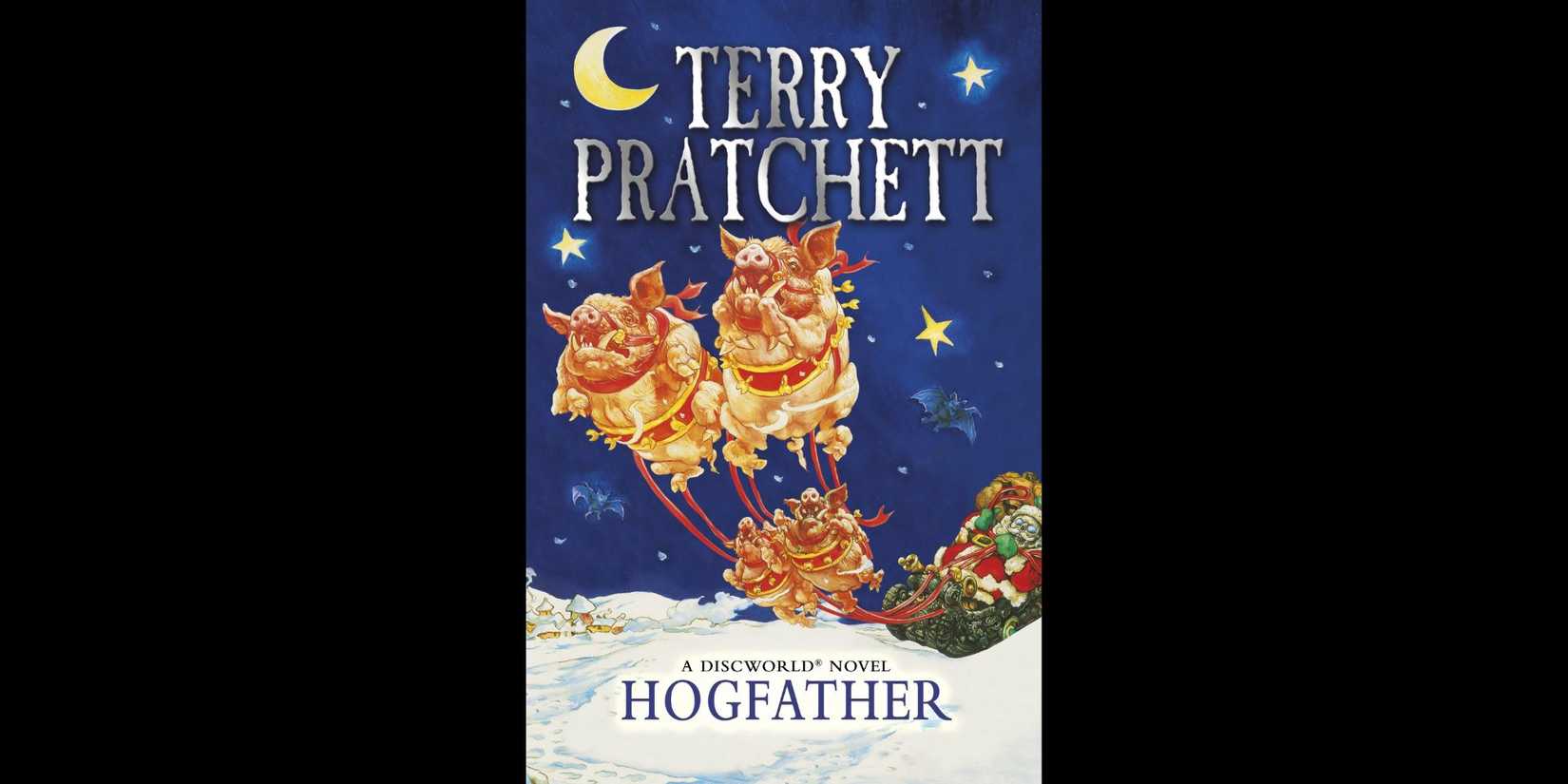
Hogfather is missing. The Auditors of Reality, a group of celestial bureaucrats, have hired the assassin Mr. Teatime to murder Discworld’s Santa Claus equivalent, who gives children presents on the night of Hogswatch, on December 32nd. Without children's belief in Hogfather, the sun won't rise. The only one who understands the importance of Hogfather's role is Death, and so he must step in. Aided by Albert, his reluctant pixie servant, Death puts on a red suit and starts delivering presents. His granddaughter, Susan, is tasked with traveling to the Tooth Fairy's realm to bring Hogfather back.
As funny and magical as all of Terry Pratchett's stories, Hogfather is a wonderful seasonal read. In addition to an incredible display of whimsy, the book includes one of the most thoughtful discussions of the importance of faith and why we go to such great lengths to keep the magic of the holidays alive. "Humans need fantasy to be human," Death tells Susan. "To be the place where the falling angel meets the rising ape."
'The Nutcracker and the Mouse King' (1816)

After Dickens, Russian composer Pyotr Ilyich Tchaikovsky has a monopoly on Christmas. However, not many people know that the Nutcracker ballet, often performed during the holiday season, is based on Alexandre Dumas' story, which is itself an adaptation of an older (and much darker) short story: The Nutcracker and the Mouse King by E. T. A. Hoffmann.
One Christmas Eve (of course), Marie notices a nutcracker under the tree. That evening, while playing with the nutcracker, she sees mice start to come out from beneath the floor. Their leader seems to be a seven-headed Mouse King, taller than all the others. Suddenly, all of Marie's toys come to life and, led by the nutcracker, begin to fight the mouse army. They are at a disadvantage, so Marie throws her slipper at the Mouse King to stop him from capturing the nutcracker. The morning after, Marie wakes up with a bandaged arm and no idea if the events she witnessed were real. The only person who believes her is her godfather, who then tells her the tragic story of Princess Pirlipat and Madam Mouserinks, the Queen of the Mice, which explains the origins of nutcrackers.
COLLIDERInteractive
Naughty List
Film/Quizzes/Christmas
Season’s Greetings
Collider QuizWhich Christmas
Villain Are You?8 Questions · 5 AntagonistsEvery Christmas story needs somebody standing in the way of it. Some of them are reformable, some of them are having far too good a time, and one of them meant well the entire way through. Eight questions will work out which one you are.The Lineup
Grinch
Scrooge
Gruber
Wet Bandits
Jack
Door 01 / 080% Opened
Question 01THE DECORATIONS
01The decorations go up at work on November 3rd.Everybody reacts to the first sign. Yours says a lot.
Pick one, then Next
Door 02 / 0812% Opened
Question 02THE PARTY
02Somebody invites you to a big Christmas party.The invitation is the test. The answer is the personality.
Pick one, then Next
Door 03 / 0825% Opened
Question 03SECRET SANTA
03You get put in charge of the office Secret Santa.A small amount of power over other people's December.
Pick one, then Next
Door 04 / 0838% Opened
Question 04THE LIST
04Your family asks what you want this year.What you ask for is usually more revealing than what you give.
Pick one, then Next
Door 05 / 0850% Opened
Question 05THE MORNING
05It's Christmas morning and something has gone wrong.Something always goes wrong. The tell is the first thing you do.
Pick one, then Next
Door 06 / 0862% Opened
Question 06THE CHILD
06A child asks you a sincere question about Christmas.This is the moment most of these stories really turn on.
Pick one, then Next
Door 07 / 0875% Opened
Question 07THE FEEDBACK
07Someone tells you that you're being a bit much about Christmas.Being told is one thing. What you do next is the other thing.
Pick one, then Next
Door 08 / 0888% Opened
Question 08DECEMBER 26
08It's the day after. What are you doing?The last shot of the story, and the one that decides what it was about.
Pick one, then Next
The List Has Been CheckedYou Are
Your answers point to the Christmas antagonist who shares your particular objection to December, your method for dealing with it, and your odds of being forgiven by the final scene.
1966The GrinchHow the Grinch Stole Christmas!It was never the presents. It was the noise.
You are not against joy. You are against volume, obligation, and being told when to feel things, which in December amounts to a full-time grievance.Why This Is You
- The Grinch spends an entire special engineering the perfect scheme and loses to a town that simply keeps singing. The plan was never the weak point. The premise was.
- You share his real quality, which is not cruelty but sensitivity, badly handled and pointed outward.
- You are the most reformable name on this list, and the one who gets the best scene when it finally happens.
- Your heart is a measurement problem. It always was.
The NoiseReformableBest Turnaround
1843Ebenezer ScroogeA Christmas CarolThe ledger was always correct. That was the problem.
You are not cruel so much as closed. The arithmetic of your life has been right for years, and it has quietly cost you everything that was never on the sheet.Why This Is You
- A Christmas Carol has outlasted nearly everything else written in 1843 because Dickens made the antagonist the only character who changes.
- You have the same shape. Show you the evidence and you will not argue with it, which is rarer than it sounds.
- Your turnaround, when it arrives, is total and slightly embarrassing in its enthusiasm. You will overpay for a goose.
- Nobody doubts you were wrong. The story is about what you do on the morning after you find out.
The LedgerTotal TurnaroundOverpays
1988Hans GruberDie HardExceptional taste. Somebody else's building.
You are the best-dressed and best-briefed person in any room, and you have never once been the one who lost control of the situation. Until the one time.Why This Is You
- Hans Gruber turned a Christmas party into a stage, and became the template every charming antagonist has borrowed from since.
- You share the method: preparation, presentation, and an absolute refusal to raise your voice.
- Your plan is better than everyone else's plan. It accounts for everything except one person who was not supposed to be in the building.
- You will be remembered for the manners rather than the scheme, which is exactly how you would want it.
The SuitThe TimetableOne Variable
1990The Wet BanditsHome AlonePhysics. Repeatedly. In the face.
You are not sophisticated, not subtle, and not remotely discouraged. You have been outwitted by an eight-year-old and a paint can, and you are already planning the return trip.Why This Is You
- Home Alone works because its antagonists are indestructible and completely undeterred, which turns the whole thing into a cartoon.
- You have that same quality. Setbacks do not register with you as information. They register as delay.
- You argue with your partner constantly and you would never once consider working with anybody else.
- You will be back. Worse plan, identical enthusiasm, same outcome.
PersistentNever LearnsComing Back
1993Jack SkellingtonThe Nightmare Before ChristmasYour heart was right. Your judgment was not.
You did not set out to ruin Christmas. You wanted to understand it, and then improve it, and then run it, and somewhere in that sequence it went very wrong.Why This Is You
- The Nightmare Before Christmas gives you an antagonist who is also the hero: someone whose enthusiasm vastly outpaces his research.
- You are the same. You commit completely to things you have not finished understanding, and the commitment is genuinely the best thing about you.
- An entire town believed in you, which removed the one thing that might have stopped this: somebody willing to say no.
- You will learn the lesson. You will have forgotten it by October.
Over-CommittedMeans WellForgets By October
Closest Matches
Copied
A Collider InteractiveCOLLIDERMore quizzes at collider.com
"A Christmas Memory" (1956)

Yes, this story was written by the same author who wrote both Breakfast at Tiffany's and In Cold Blood. And yes, it is a perfect Christmas classic. Truman Capote's "A Christmas Memory" is set in rural Alabama in the 1930s. It was inspired by Capote's own life and his experience of the holiday season in a family with financial difficulties. The short story is beautiful, warm, funny, and deep. It will also absolutely break your heart.
“It's fruitcake weather!” Buddy's elderly cousin announces, declaring the start of winter. The relationship between the seven-year-old boy and his cousin is the heart of Capote's story. They are two childlike, wide-eyed people in a stern and strict family. During the story, they gather the ingredients to make fruitcakes and share them with friends. Years later, Buddy looks back at the simple magic of those shared Christmases. The prose is as beautiful as the story, and it is worth reading, if only for the last few lines. The cousin character is said to have been inspired by Sook, a relative the author lived with as a boy, who may have had intellectual disabilities. Capote called her "a genius."
"The Dead" (1914)

The plot of this story is as simple as most people's holiday celebrations. Dubliner Gabriel Conroy is a teacher and part-time book reviewer. One winter evening, he attends a party with his wife, Gretta, hosted by family members. There is music, pudding, a goose, and tipsy guests. While greeting friends and old acquaintances, Gabriel thinks of the speech he has to give. At the end of the evening, a guest sings a sorrowful song. Gretta is moved by the song, and later confesses it reminds her of a young man she once loved who has passed away. Gabriel could be anyone. What makes him stand out is the beautifully crafted way he thinks about life and death.
"The Dead" closes James Joyce's Dubliners. At almost 16,000 words, it can also be a short novella. Whatever its definition, the story is timeless and deeply moving. It discusses local topics related to Irishness, while reflecting on universal themes such as love and loss. The ending, "His soul swooned slowly as he heard the snow falling faintly through the universe and faintly falling, like the descent of their last end, upon all the living and the dead," might be one of the most beautiful and poignant lines in the history of literature.
'Sir Gawain and the Green Knight' (late 14th century)

What is a 14th-century Middle English chivalric romance doing in a list of Christmas books? Well, it is a great story, and it is set at Christmastime, so it meets every requirement to be here. A warning: it is written in alliterative verse, so it might be denser than other picks, although J. R. R. Tolkien himself has an accessible translation. Still, it is absolutely worth the effort. And what better way to end the year's reading challenge than with a classic?
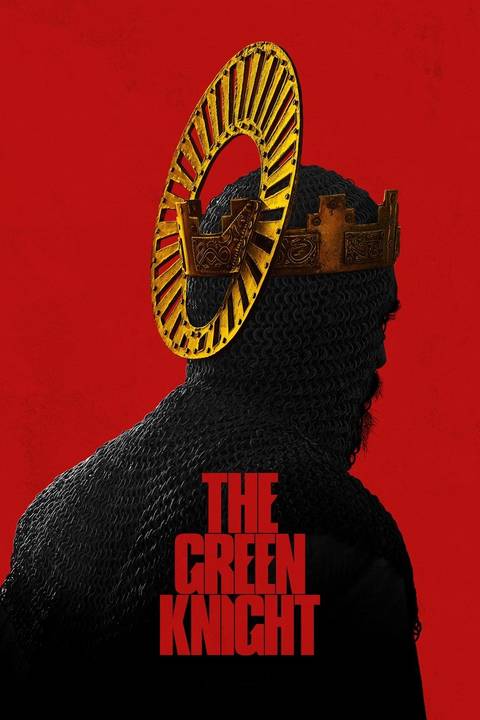
Sir Gawain and the Green Knight takes place in King Arthur's court during the celebrations between Christmas and New Year. Suddenly, a giant green knight interrupts the feast. He offers his axe to any man who dares to strike him. However, in return, that person will agree to take a blow in a year and a day. Sir Gawain, one of King Arthur's knights, accepts and beheads him. A year later, on the way to that appointment, Gawain is taken in by a generous lord and his wife. What follows is a game of temptation and a test of honor that Gawain must pass.
The Green Knight
- Release Date
- July 29, 2021
- Runtime
- 130 minutes
- Director
- David Lowery
- Writers
- David Lowery
-

Lady / Essel
-

Gawain
- Producers
- David Lowery, James M. Johnston, Theresa Page, Tim Headington, Toby Halbrooks, Edmund Sampson
- Budget
- $15 million
- Studio(s)
- A24
- Distributor(s)
- A24
- Executive Producer(s)
- Aaron L. Gilbert, Edmund Sampson, Eoin Egan, Jason Cloth, Macdara Kelleher, Tomas Deckaj
KioskNews shows a cleaned-up reading view extracted from the publisher’s page — the original always lives on their site, not ours.