The Most Powerful Lord of The Rings Weapon Isn't The One Ring, It's the Silmaril

Once head of Screen Rant's Star Wars coverage and co-lead of Superheroes, Tom Bacon now works with the movies and books teams. He's a lifelong fan of the fantasy and sci-fi genres, and loves franchises such as Doctor Who and Marvel. You can find him on Twitter @TomABacon, on LinkedIn @tabacon, or on Muckrack under tombacon.
Tom has a wide range of interests, and he continues to serve his university as a volunteer chaplain. He's heavily involved with his local church, and anyone who checks him out on Twitter will swiftly learn he's into British politics too.
Sign in to your ScreenRant account
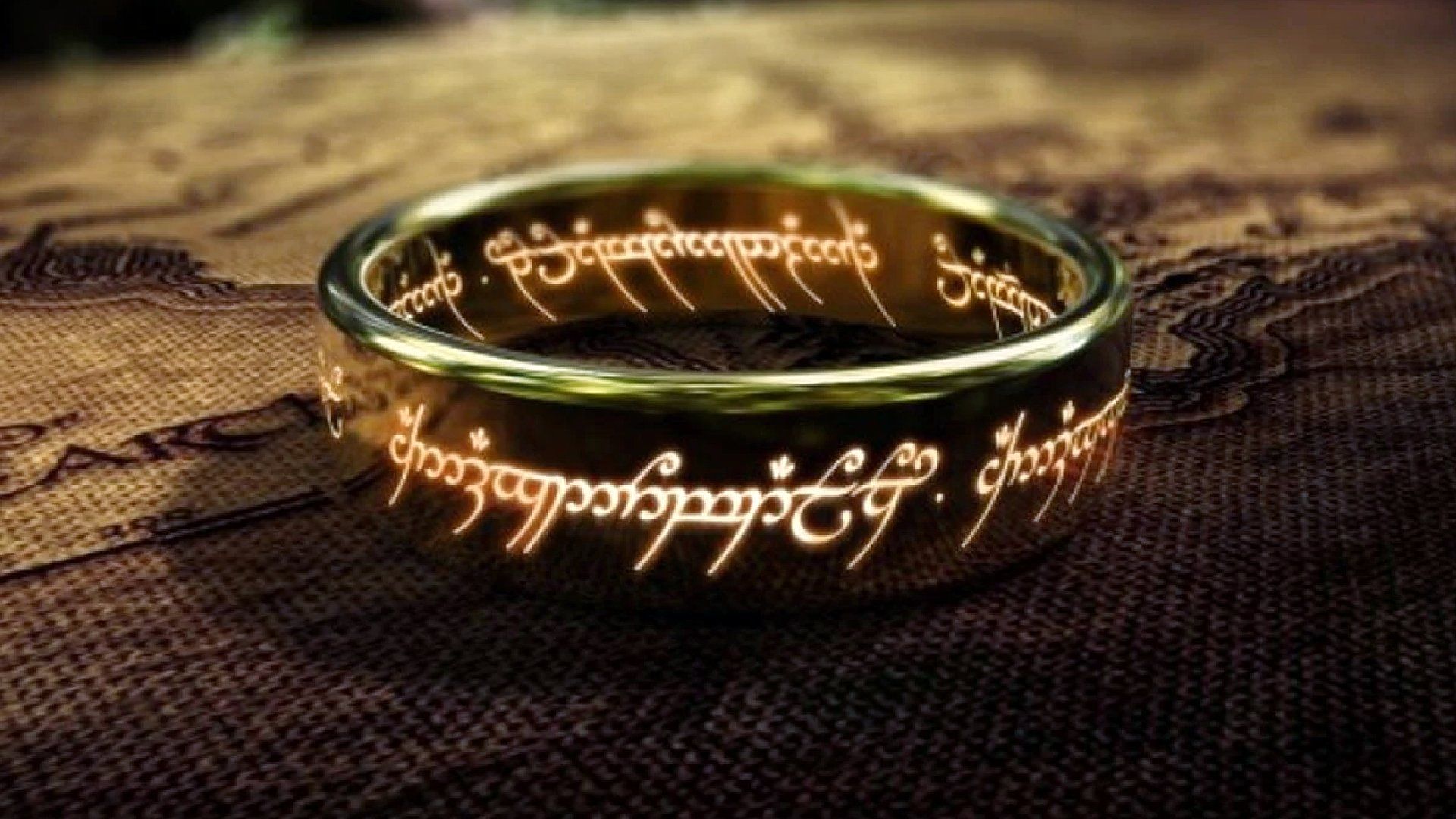
The One Ring is the most dreaded weapon in The Lord of the Rings, but it's far from the most powerful. Easily the most feared weapon in Middle-earth, the One Ring was forged by Sauron to give him control over all other races. The power of the One Ring is so great that Sauron was considered unstoppable while he wielded it, and he was only defeated when it was lost. As seen in The Rings of Power, the One Ring was designed to tap into the magics of the other rings, each of which benefited an individual race. By binding their magic, the One Ring would grant ultimate dominion to its bearer.
Tolkien's books only give a glimpse of the One Ring's power. The focus lies instead on the One Ring's corruptive influence; Tolkien didn't buy into the simplistic "power corrupts" narrative, but rather told a different story in which specific forms of power were more dangerous than others. The One Ring is about dominion, which is by nature unhealthy; a being possessing power over another for selfish purposes cannot help but be turned. Even the noblest members of the Fellowship of the Ring could be corrupted. But looking beyond that form of power, there are far more formidable weapons in Tolkien's world.
Why The One Ring Isn't The Most Powerful Weapon In Lord of the Rings
The One Ring's Power Comes at a Cost
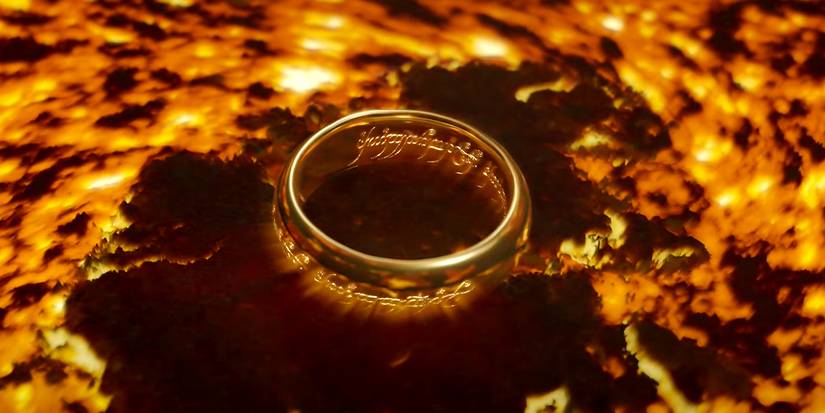
There are many different models of power. Domination is just one of them, and Tolkien was highly critical of it. In his view, there was a tremendous irony to this kind of power; it's unnatural, and so diminishes the being who exercises dominion. That's a recurring theme in Tolkien's writings, and it can be seen with Sauron's master Morgoth, Sauron himself, and even (to a lesser extent) Saruman. The theme is most spectacularly demonstrated by Gollum, who became increasingly inhuman due to exposure to the One Ring.
It's unsurprising, then, that Tolkien explored several other forms of power in his writings and wider mythology. Angrist was an ancient knife, for example, which could cut through iron as "if it were green wood." For another, Anglachel was the strongest sword in Middle-earth, teased to actually be sentient, and it had a destructive effect on its bearer. But even those were limited, usually resulting in negative consequences due to the aggression with which they were wielded. There's only one major weapon in The Lord of the Rings that lacked this effect, more powerful than even the One Ring.
The Silmarils Were the Greatest "Weapon" in Middle-Earth
Easily the Greatest Power in Tolkien's World

The Silmarils were the most powerful weapons in The Lord of the Rings. They're not really a part of the main story, but they play a major role in the established lore, and they're very relevant indeed in The Rings of Power. In ancient times, the elven smith Fëanor created three jewels that contained the essences of the Two Trees of Valinor. Blessed by the Valinor themselves, these became some of the most coveted objects in Tolkien's mythology. Morgoth himself stole the Silmarils, but was driven mad by them.
The Silmarils do not possess the power to dominate. Rather, their beauty is so great that - as discussed in The Rings of Power - they almost turned Morgoth good again. Their light and beauty is the power of redemption, and Morgoth grew bitter when he found he could not even touch them without being burned. The Silmaril are incorruptible, impervious to all the powers of evil. Unlike the One Ring, they appear impossible to destroy. They may not be the kind of weapon Sauron would have coveted, but they are far greater than the One Ring - and so much less destructive.
- Movie(s)
- The Lord of the Rings (1978), The Lord of the Rings: The Fellowship of the Ring, The Lord of the Rings: The Two Towers, The Lord of the Rings: The Return of the King, The Hobbit: An Unexpected Journey, The Hobbit: The Desolation of Smaug, The Hobbit: The Battle of the Five Armies, The Lord of the Rings: The War of the Rohirrim
- TV Show(s)
- The Lord of the Rings: The Rings of Power
- Video Game(s)
- The Lord of the Rings Online (dupe), Middle-Earth: Shadow of War, The Lord Of The Rings: Gollum, The Lord of the Rings: Return to Moria
- First Film
- The Lord of the Rings (1978)
- Cast
- Norman Bird, Anthony Daniels, Elijah Wood, Ian McKellen, Liv Tyler, Viggo Mortensen, Sean Astin, Cate Blanchett, John Rhys-Davies, Billy Boyd, Dominic Monaghan, Orlando Bloom, Christopher Lee, Hugo Weaving, Sean Bean, Ian Holm, Andy Serkis, Brad Dourif, Karl Urban, Martin Freeman, Richard Armitage, James Nesbitt, Ken Stott, Benedict Cumberbatch, Evangeline Lilly, Lee Pace, Luke Evans, Morfydd Clark, Mike Wood, Ismael Cruz Cordova, Charlie Vickers, Markella Kavenagh, Megan Richards, Sara Zwangobani, Daniel Weyman, Cynthia Addai-Robinson, Lenny Henry, Brian Cox, Shaun Dooley, Miranda Otto, Bilal Hasna, Benjamin Wainwright, Luke Pasqualino, Christopher Guard, William Squire, Michael Scholes, John Hurt
- Created by
- J.R.R. Tolkien
KioskNews shows a cleaned-up reading view extracted from the publisher’s page — the original always lives on their site, not ours.