Kintsugi: Why Japanese art mends broken pottery with gold, not hiding cracks
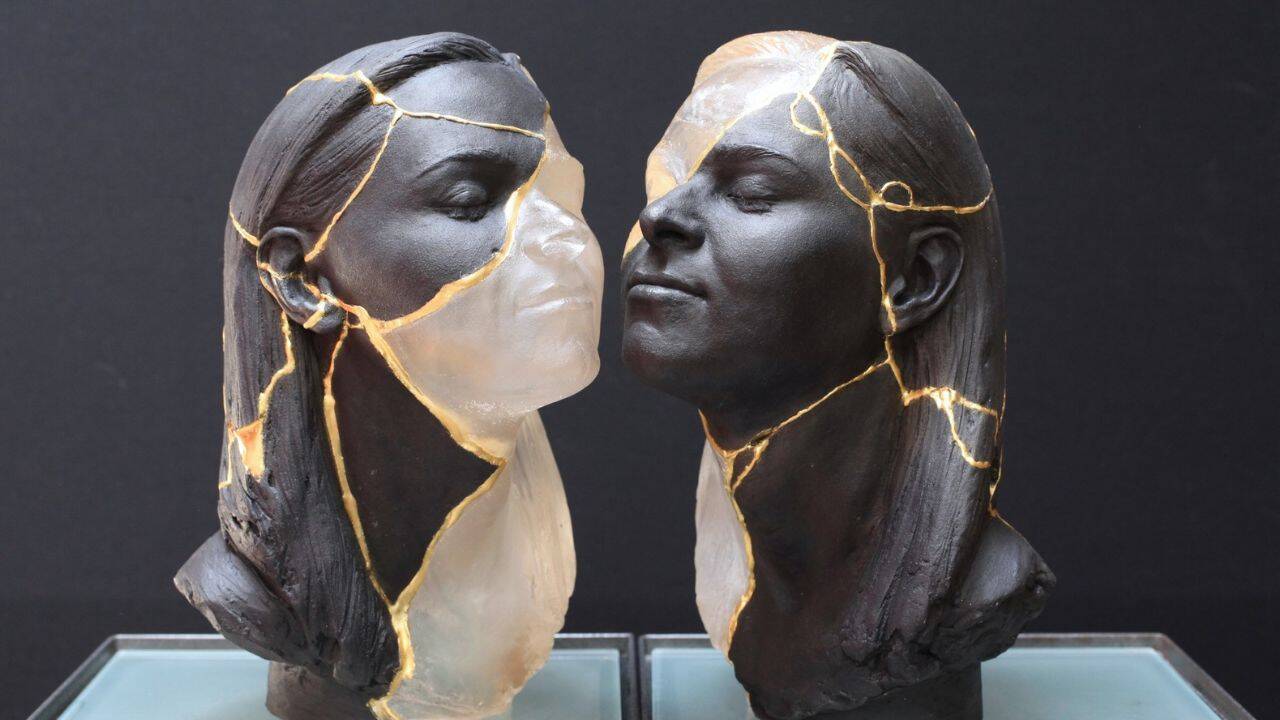
A pair of Kintsugi portrait young woman sculpture (Image Credit: Canva)
The fast paced world that runs on short term trends, the Japanese people have been embracing the broken. As a reminder to embrace the imperfections, this Japanese traditional art brings together broken pieces of pottery to not just repair the damage but to highlight the defects.
This art is called kintsugi, where lacquer and gold is used to restore broken pottery. Instead of disguising the cracks, the craft highlights them, turning the damage into something beautiful. What was once broken becomes a vessel with a new appearance, a richer story and, in many cases, an even more distinctive character.The idea presents a great contrast for the country where technology runs to achieve new feats everyday.
While everyone is spending so much time trying to make everything look flawless, embracing the cracks is worth celebrating.
What exactly is kintsugi?
Kintsugi literally translates to “golden joinery” where kin means gold and tsugi means joining. It is also known as kintsukuroi which implies "golden repair". The tradition goes back to the 15th century and is closely associated with Japanese tea culture. The craft has endured for centuries where broken pottery is mended using a special lacquer called urushi, which is usually mixed with powdered gold.
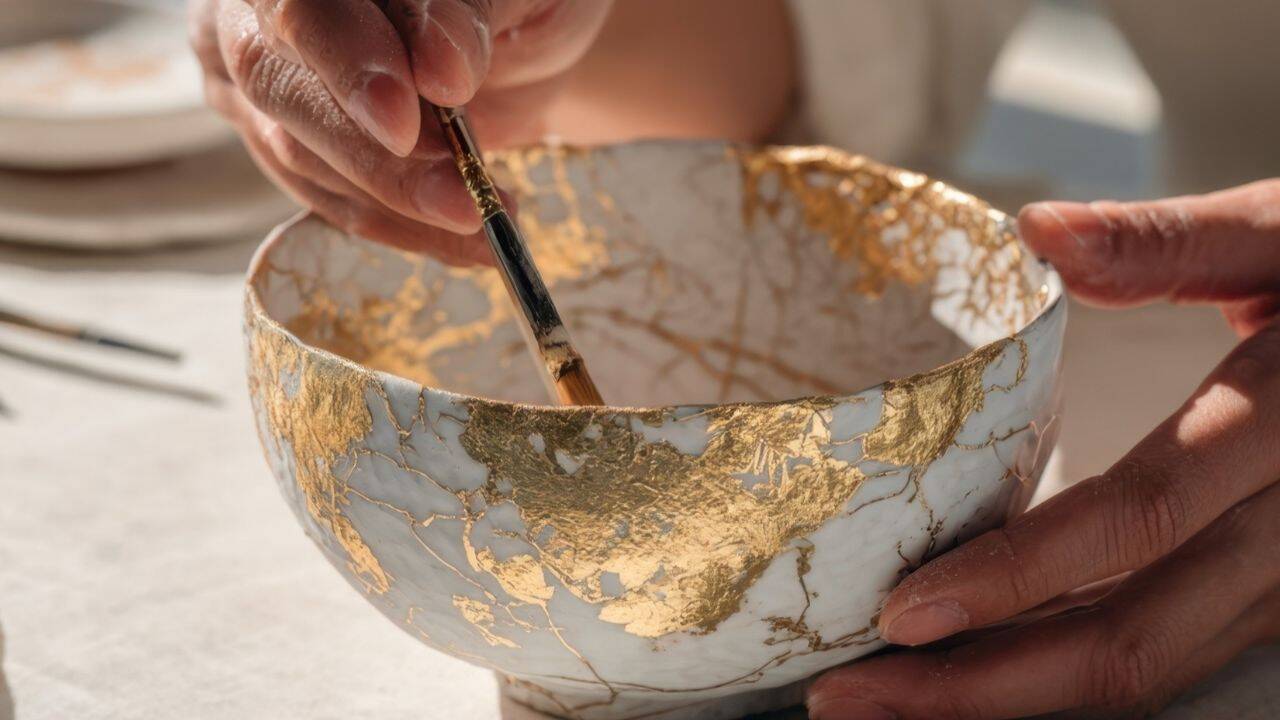
Kintsugi art (Image Credit: Canva)
The process is more intricate than it seems while looking at the finished piece. It involves carefully collecting the ceramic fragments to combine them using the sap of the Japanese lacquer tree. The completed product seems almost intentional with unique gold designing over the cracks.It takes patience, precision and considerable skill. Traditional lacquer repairs can involve multiple stages, with time needed for each layer to cure.
The result is a piece that retains its original form while wearing its repair openly, like a delicate golden map of everything it has been through.And gold is not the only possible finish. There are artisans that use silver, platinum and even mismatched ceramic fragments to create an entirely new appearance. This creates every piece with its own character, holding the artisan's vision at the forefront.
Why highlight the cracks instead of hiding them?
The idea behind embracing antiques like an old wooden table or a handwritten letter with faded ink is that they hold a story and human connection within their material existence.
People often adore books that have turned yellow over the years, exchanging hands and locations because they have transformed minds over generations. These objects cannot be replaced by new collections as they lack history. Kintsugi applies that same sentiment to broken pottery.The golden seams do not attempt to conceal the cracks, rather they embrace the accident that happened. They become a beautiful part of the object’s identity even if the pottery may not return to its original shape and form.
Kintsugi transforms the joints into an integral part of its appearance, giving it a new life while retaining the history behind it. And since no two broken objects fracture in exactly the same way, no two repairs can ever look alike.
The philosophy behind the golden seams
Kintsugi is often associated with wabi-sabi, a Japanese belief that finds beauty in imperfection and values simplicity. Instead of perfection, this philosophy allows us to embrace irregularities.
This doctrine particularly holds importance in the traditional Japanese tea ceremonies where ceramic bowls have an important role to play. They have long been valued for their distinct character. A bowl's irregular glaze, handmade shape or visible signs of age can contribute to its appeal.
Kintsugi extends that appreciation to breakage itself.
Kintsugi art (Image Credit: Canva)
There is an important distinction, though: kintsugi is a traditional craft with its own history and technical discipline, not simply a motivational metaphor.
Its deeper meaning has been interpreted in different ways, and not every Japanese person or artisan necessarily understands it identically.
A lesson in sustainability, too
In an age when replacing a damaged object can seem easier than repairing it, kintsugi offers a quieter alternative: give something a second life.The technique comprises the spirit of reusing even when markets are flooded with new replacements. It encourages people to preserve objects rather than discarding them the moment they get a defect.
With the world gaining a consciousness towards sustainability, the art has gained a renewed interest. Therefore, there are kintsugi workshops being held in recent times.The involvement of gold and intricate craftsmanship makes traditional kintsugi expensive and time-consuming. It is not necessarily the quickest or cheapest way to mend a broken cup. But its value lies partly in the decision to invest time and care in something that might otherwise be considered replaceable.
KioskNews shows a cleaned-up reading view extracted from the publisher’s page — the original always lives on their site, not ours.