Asia's best university makes ChatGPT access available to all students, mandates AI course for freshmen
The National University of Singapore (NUS) will provide students with ChatGPT access and require all freshmen to complete a foundational AI course starting this academic year.
NUS, which holds the top spot among Asian institutions in the 2027 QS World University Rankings by British analytics firm Quacquarelli Symonds, announced a new partnership with OpenAI on Aug. 11 via its website.
Under the agreement, faculty and staff will gain access to ChatGPT Edu beginning Aug. 31. This platform is a specialized version of ChatGPT designed specifically for the higher education sector.
Unlike the free version of the chatbot, ChatGPT Edu grants NUS broader access to OpenAI's core capabilities within a secure, university-managed environment. It features enhanced privacy, security, and administrative controls.
 |
|
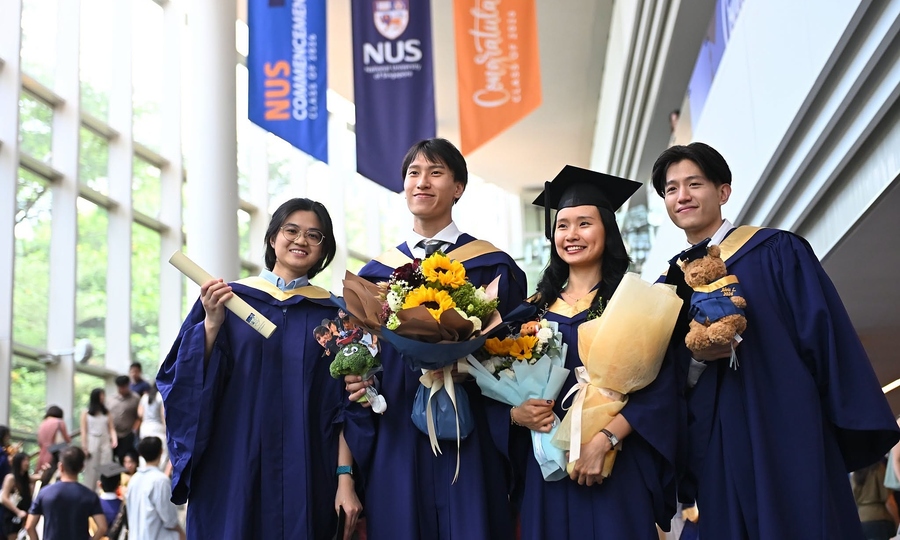
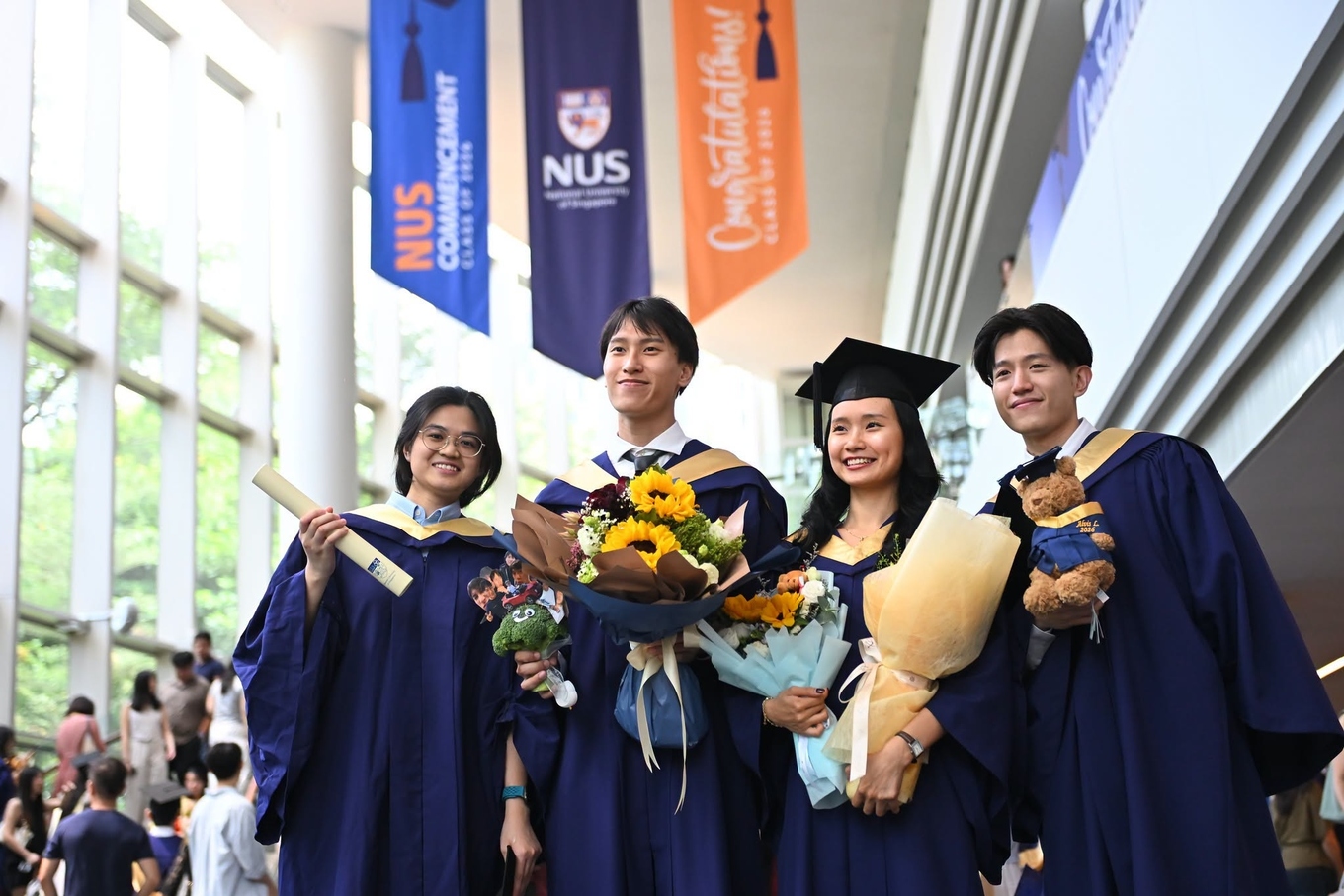
Graduates pose for photos after a commencement ceremony at the National University of Singapore (NUS) in Singapore, July 23, 2026. Photo from the university's Facebook page |
The university emphasized that data and conversations within the NUS workspace will not be used to train OpenAI's models.
More advanced AI tools will undergo testing in selected courses before being gradually rolled out to undergraduate programs where they can best enhance learning and support academic goals, it said.
"As AI becomes increasingly embedded in how NUS operates, it is critical that we adopt it in a secure, scalable and sustainable way," Tan Shui-Min, NUS Chief Information Technology Officer and Vice President, said in a university's statement.
Professor Aaron Thean, Deputy President (Academic Affairs) and Provost of NUS, said: "We aim to leverage these advanced AI technologies not as replacements, but as powerful amplifiers of human intellect, creativity and judgement. By providing direct, hands-on access, we empower our students, faculty and staff to develop the critical thinking and ethical discernment essential to innovate and lead in an AI-driven world, ensuring human capabilities remain at the forefront."
AI course compulsory for all freshmen
Starting in the 2026/27 academic year, all first-year undergraduates at NUS will be required to complete a foundational course on generative artificial intelligence.
The compulsory module, titled "THE1008 Applied Generative AI: From Prompting to Evaluation," will be introduced under the university's Transition to Higher Education (T.H.E.) Program.
Before they dive into their core coursework, students will use this module to build practical skills with large language models and multimodal AI tools. The curriculum focuses on interacting with these technologies effectively and accurately evaluating their outputs.
This initiative fits into a broader strategy to weave AI competencies throughout the NUS curriculum. Beyond the freshman requirement, the university intends to build students’ AI capabilities over the course of their studies through both the common curriculum and individual majors.
By the time they graduate, students are expected to use AI tools strategically, critically assess AI-generated information, and apply the technology appropriately within their specific fields of study.
The university noted that this approach will also reinforce human-centered skills, including critical thinking, judgment, and sense-making. The ultimate goal is to prepare graduates to utilize AI for analysis, problem-solving, and creative work across diverse disciplines.
Its long-term plan involves diversifying its AI partnerships, Channel News Asia reported.
Rather than relying on a single provider, NUS intends to collaborate with multiple companies to expose students to a variety of AI platforms.
KioskNews shows a cleaned-up reading view extracted from the publisher’s page — the original always lives on their site, not ours.