A disease cocktail killed 32 children in an MP district. The story of Patient No. 32
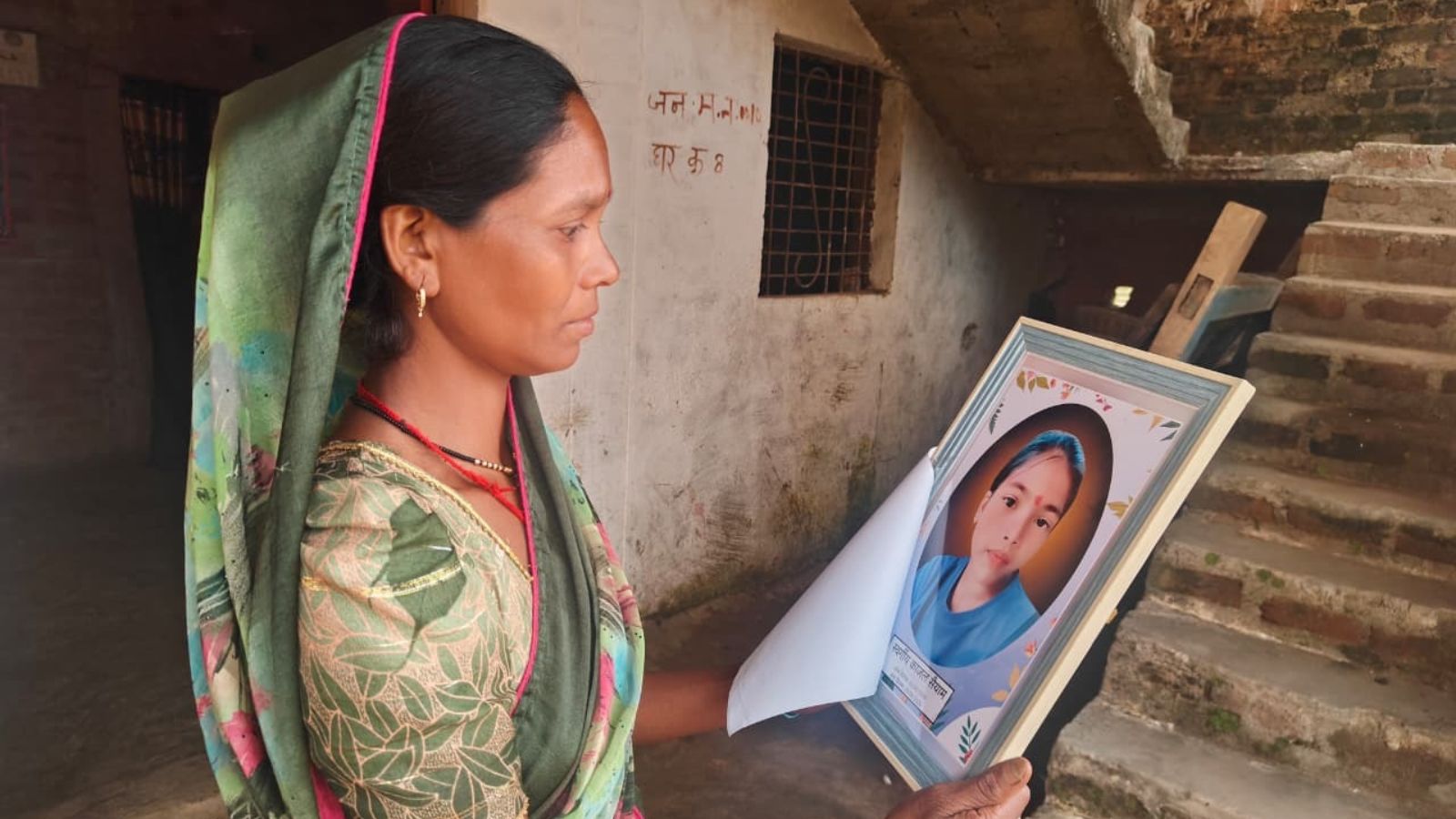
There was something about Kajal Saiyyam. Something so remarkable that she filled the desolate tribal homes in her Mohanpur village, in Madhya Pradesh’s Balaghat, with a rare kind of hope. The girl with a head for mathematics, the girl who helped her elder siblings with their textbooks, the girl who stood up “boldly” in class one day and said she wanted to become a doctor while the others around her giggled shyly, the girl who wrote and read out her Independence Day speech without a fault.
The 10-year-old had faced the school assembly that day, August 15, in her coffee brown school uniform, her braided pigtails held up with white ribbons, and delivered the speech, not once looking at the rolled up piece of paper that she clutched tightly in her right hand.
Now, as Kajal’s mother Usha frantically looks for that paper, she empties out a plastic bag and her daughter’s hospital discharge papers — detailing how the 10-year-old died of plasmodium falciparum malaria, septic shock and plummeting oxygen and sugar levels — tumble out.
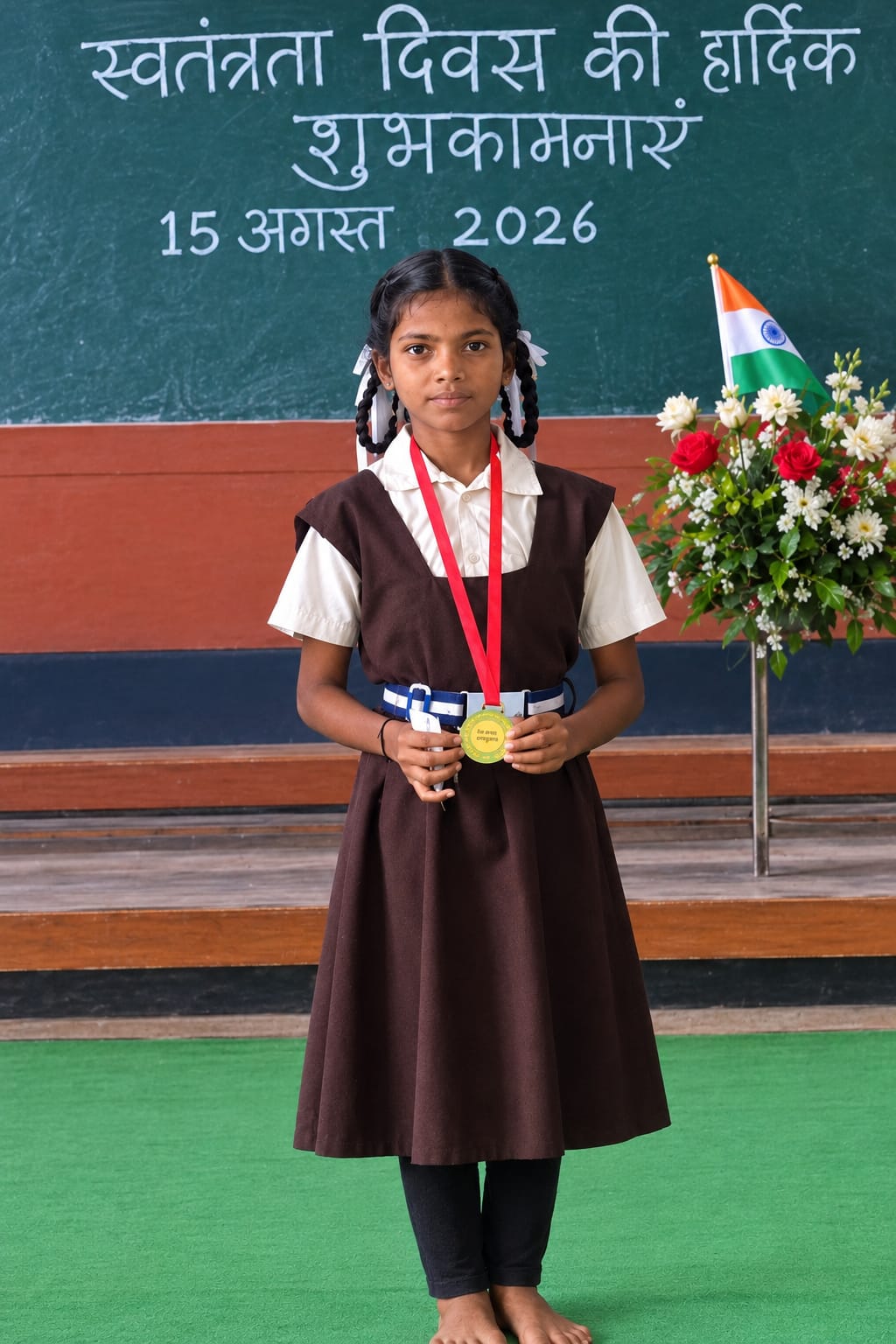 Kajal Saiyyam delivered an Independence Day speech at her school earlier this year
The speech is soon found, just the way Kajal had left it, tucked away in a notebook. Usha smiles briefly at the recovery, before the pain takes over. “I never went to school, so I can’t read what she wrote… Meri pyari Kajal (my precious Kajal),” Usha says, handing over the paper to her eldest daughter, Payal, 14.
“Aap sabhi ko mera namaskar. Mera naam Kajal hai (My greetings to all of you. My name is Kajal),” Payal begins. It’s a short speech about national pride, courage, patriotism and sacrifice. “Mujhe apne desh se bahut pyaar hai. Mujhe apne Bharatiya hone par garv hai (I love my country. I am proud to be Indian). Jai Hind, Jai Bharat.”
Usha listens with a mix of pride and bewilderment, using her saree pallu to wipe the tears that flow freely.
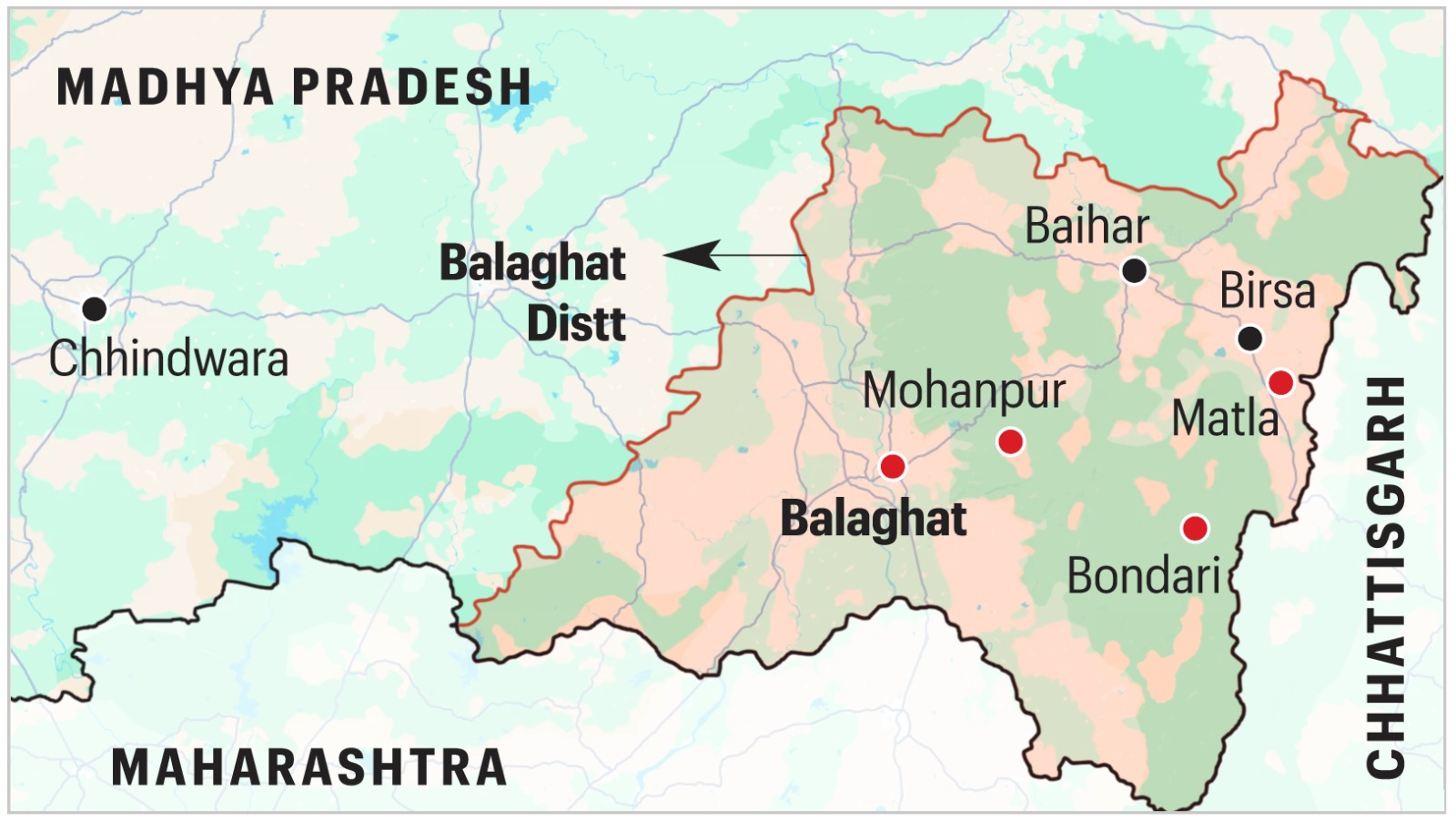
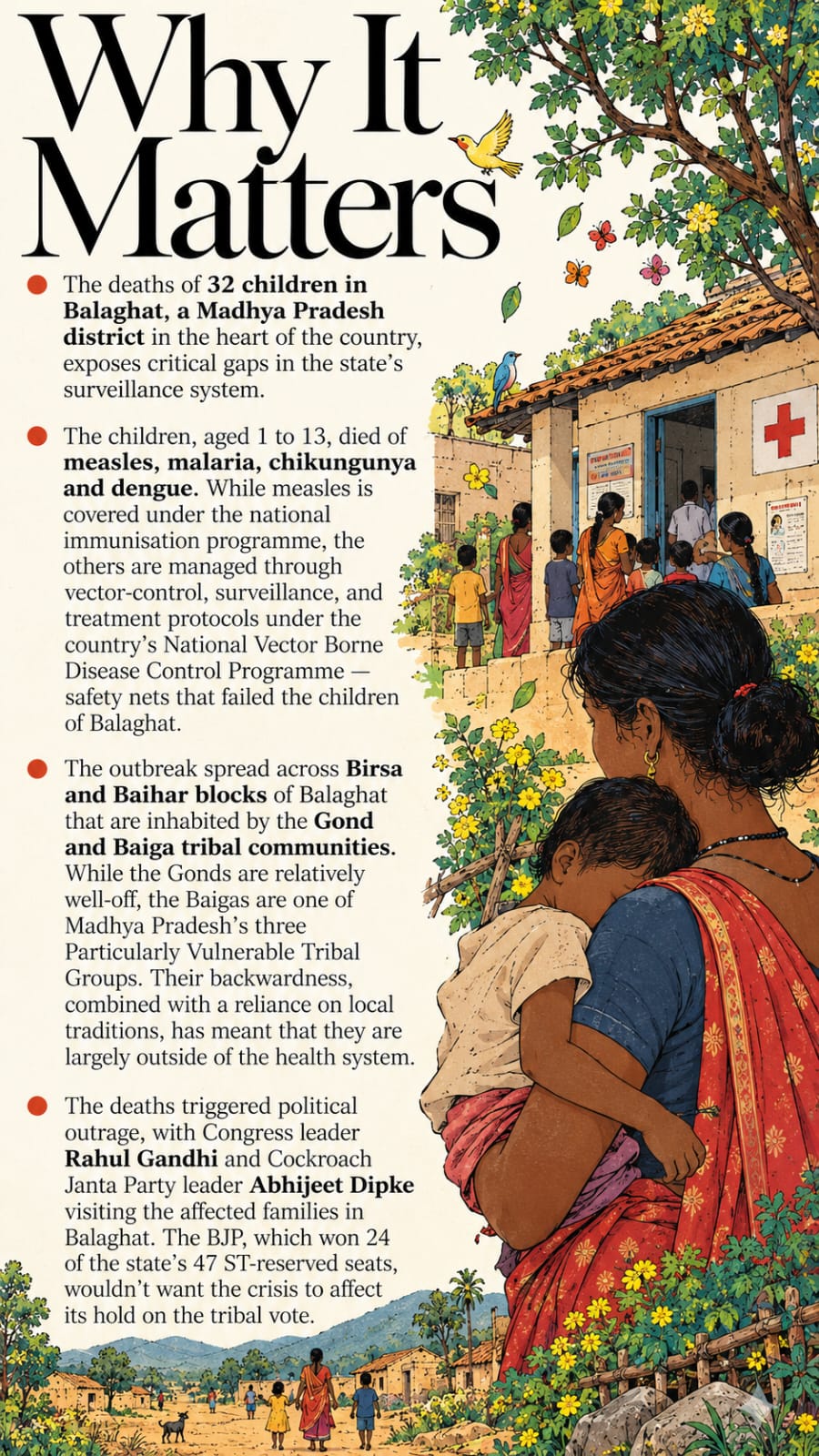
On August 29, Kajal ended up as Patient Number 32, the last of the children on the Balaghat health department’s list of those who died after a cocktail of deadly diseases descended on the tribal villages in the lush green hills of eastern Madhya Pradesh, near the state’s border with Chhattisgarh. The 32 victims, between 1 and 13 years, had reported high fever, rashes, red spots, stomach pain and ulcers.
Story continues below this ad
With the deaths sparking political outrage, an investigation by the Centre’s National Joint Outbreak Response Team found that between June and August, as measles, malaria, chikungunya and dengue coursed through a region with severe malnourishment levels, Balaghat district’s disease surveillance system fell woefully short. The investigation found that Balaghat didn’t have a public health laboratory, and the crucial posts of district epidemiologist and microbiologist lay vacant, with a data operator running the surveillance system.
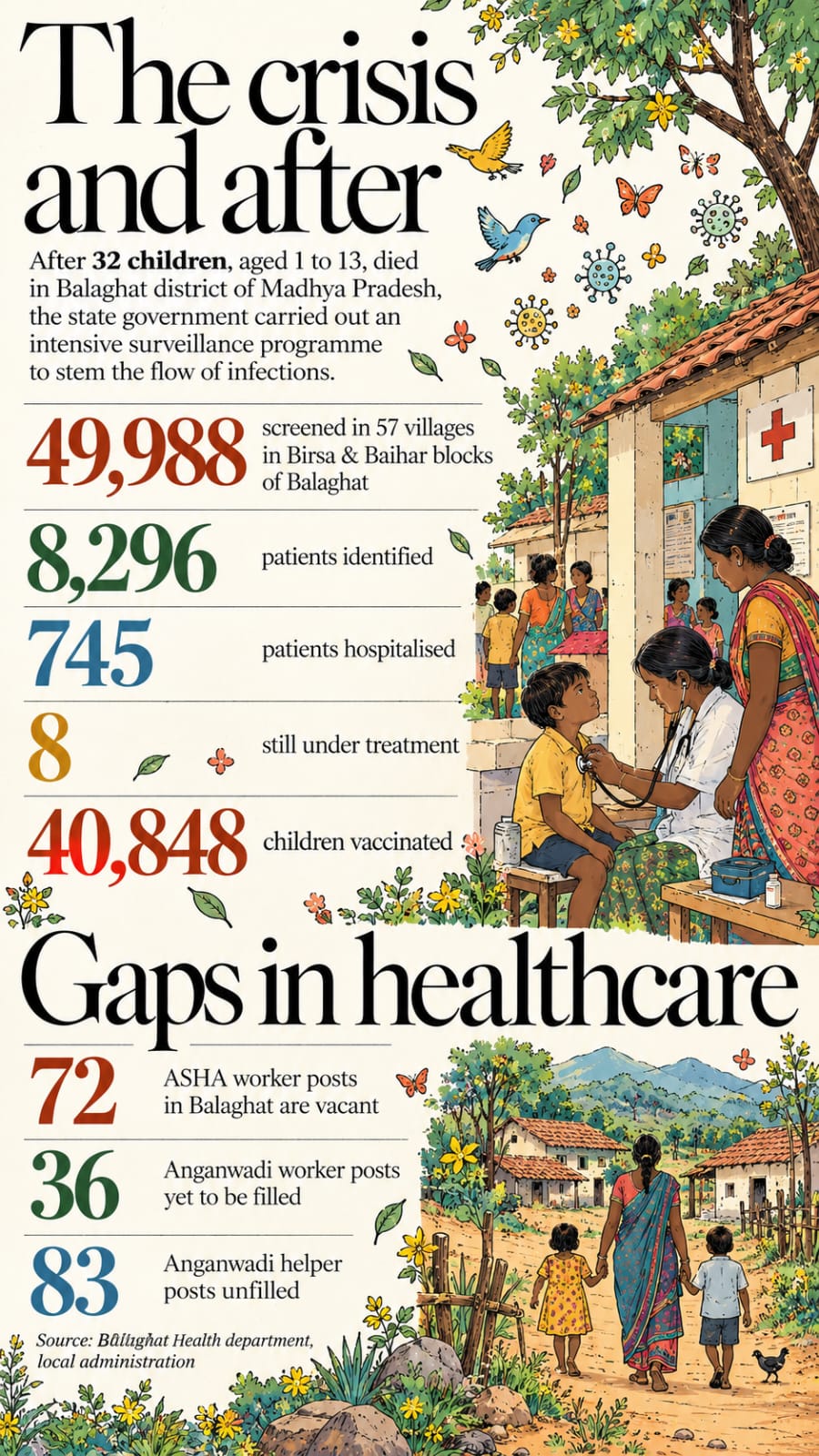
Since then, the state has attempted to control the damage, with the Mohan Yadav-led BJP government suspending the district vaccination and malaria control officers. The government has now mobilised an army of health workers to stem the flow of the infections, vaccinating 40,000 children, identifying over 8,000 patients and admitting 745 of them to hospitals.
Emerging out of a gruelling meeting with officials of the health department, Dr Shatrughan Dahiya, Chief Medical and Health Officer of Balaghat, says, “There are gaps in manpower which we are working on.”
 ⠀
⠀
Deep inside Balaghat
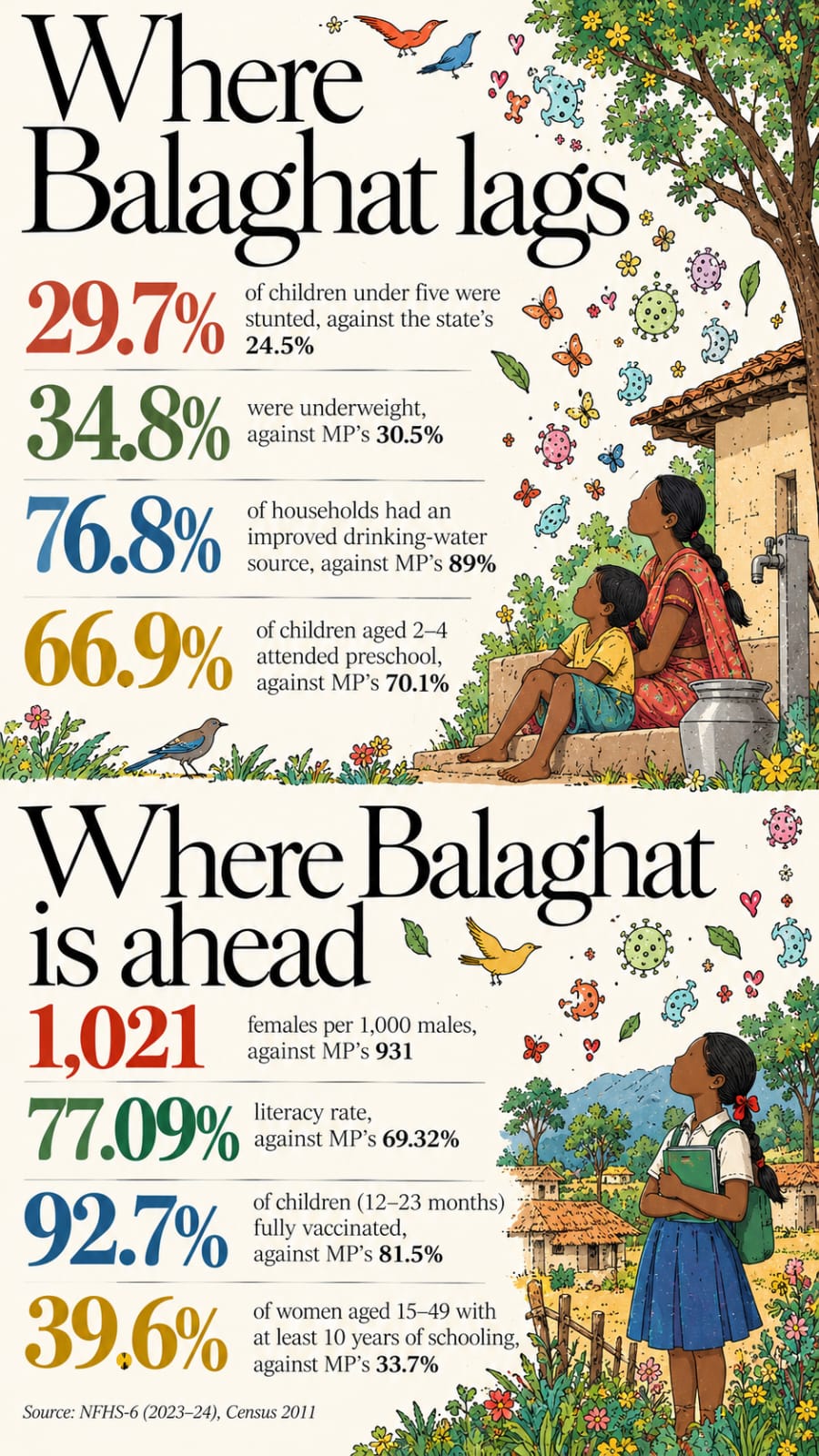
The outbreak spread primarily across Birsa and Baihar blocks of Balaghat that are inhabited by the Gond and Baiga communities. While the Gonds, the community to which Kajal belongs, are among the largest and relatively well-off tribes in the state, the Baigas are one of Madhya Pradesh’s three Particularly Vulnerable Tribal Groups. Their backwardness, combined with a reliance on local traditions, has meant that they are largely outside of the health system.
Story continues below this ad
With no early warning systems in place, the health department missed the first few infections that broke out among Baiga children growing up in the isolated, rugged terrain of Matla village, on the fringes of the Kanha national park.
Health workers say the first deaths were in Mahasingh Parte’s house, a one-room, anthill-like structure that appears in sight at the end of a difficult uphill trek. The houses in Matla, part of Adori panchayat in Birsa block, are scattered across forested slopes and fields, about 20 km from the primary healthcare facility at Songudda.
 Kajal Saiyyam delivered an Independence Day speech at her school earlier this year
Mahasingh’s children, three-year-old Ruhi and Ram, a little over a year old, died on May 18 after their bodies broke out in painful rashes. The same morning, a third child from the village, 10-year-old Sadesh, died after developing similar symptoms.
All three children had been taken to a panda pujari, a faith healer who sprinkled ‘holy water’ on them to appease “Choti Mata”, as the Baiga tribals believed the infections to be the wrath of the local deity.
Story continues below this ad
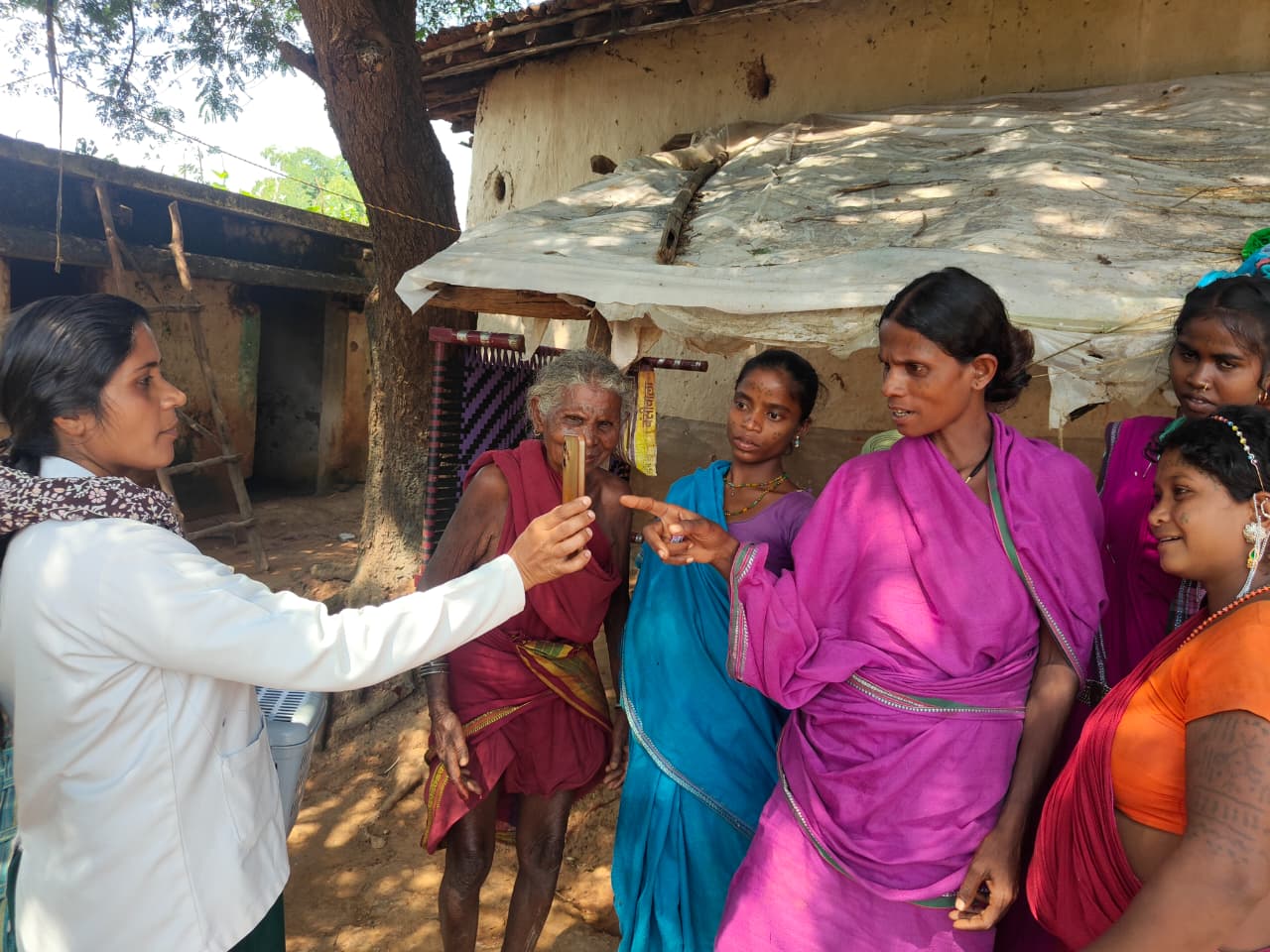
In Matla, like in Korka, Bondari and Kondekasi villages that The Indian Express visited in Adori panchayat, the post of ASHA workers and ANMs — community workers at the frontline of the health system — lay vacant.
“Most ASHA workers are from the Baiga tribe. It’s difficult for them to attend to calls for help… How can they, for instance, take a pregnant woman or a sick child to a hospital 40 km away in the dead of the night? Their husbands usually forbid them from working because of these challenges,” says ASHA supervisor Vimla Yadav, who, since the outbreak, has been trying to reach out to Baiga families, document children left out of health records, identify symptoms and persuade parents to vaccinate them.
As more children started falling ill in these parts, on July 22, Parshuram Dhurwey, sarpanch of Adori panchayat, alerted then sub-divisional magistrate Arpit Gupta of three children dying in Bondari village.
“Until then, we thought the fever was just seasonal flu. A panchayat sachiv said he saw two children being buried. That’s when we got alarmed,” says Gupta, who sent a team to the village the following day.
Story continues below this ad
Over the next few days, as health officials went house to house, they found sick children in nearly every home. By the end of July, the administration suspected the illness had spread far wider than it had feared.
Bondari, where at least one child was sick in each of 103 homes, became the focal point of the response.
 ⠀
⠀
Baihar’s Congress MLA Sanjay Uikey said the children could not be saved “because there is no healthcare system in Balaghat”. “All the healthcare centres are 40-50 km away, and the ASHA and ANM posts are vacant. Many of the children were not given measles vaccine. Malnutrition was a big factor in the deaths, and the take-home ration that anganwadis give has been on hold for months now,” he says.
Under the Centrally sponsored Integrated Child Development Services (ICDS) scheme, anganwadis are supposed to distribute nutritional premixes to children and pregnant and lactating women. However, officials said, take-home rations had not been supplied in these parts for over six months. Dr Dahiya, the Chief Medical and Health Officer of Balaghat, said, “We are resuming take-home ration packets.”
Story continues below this ad
The ‘sabse alag’ child
Forty-five kilometres away, in Kajal’s Mohanpur village, there was no hint of the gathering storm.
She would walk to school with her sisters Payal and Aanchal, 12, while the family’s youngest, three-year-old Abhi, attended the local anganwadi. Her father Prabhulal, who worked as a labourer, says, “I had to leave school after Class 5 and work for my family. But I ensured my children studied.”
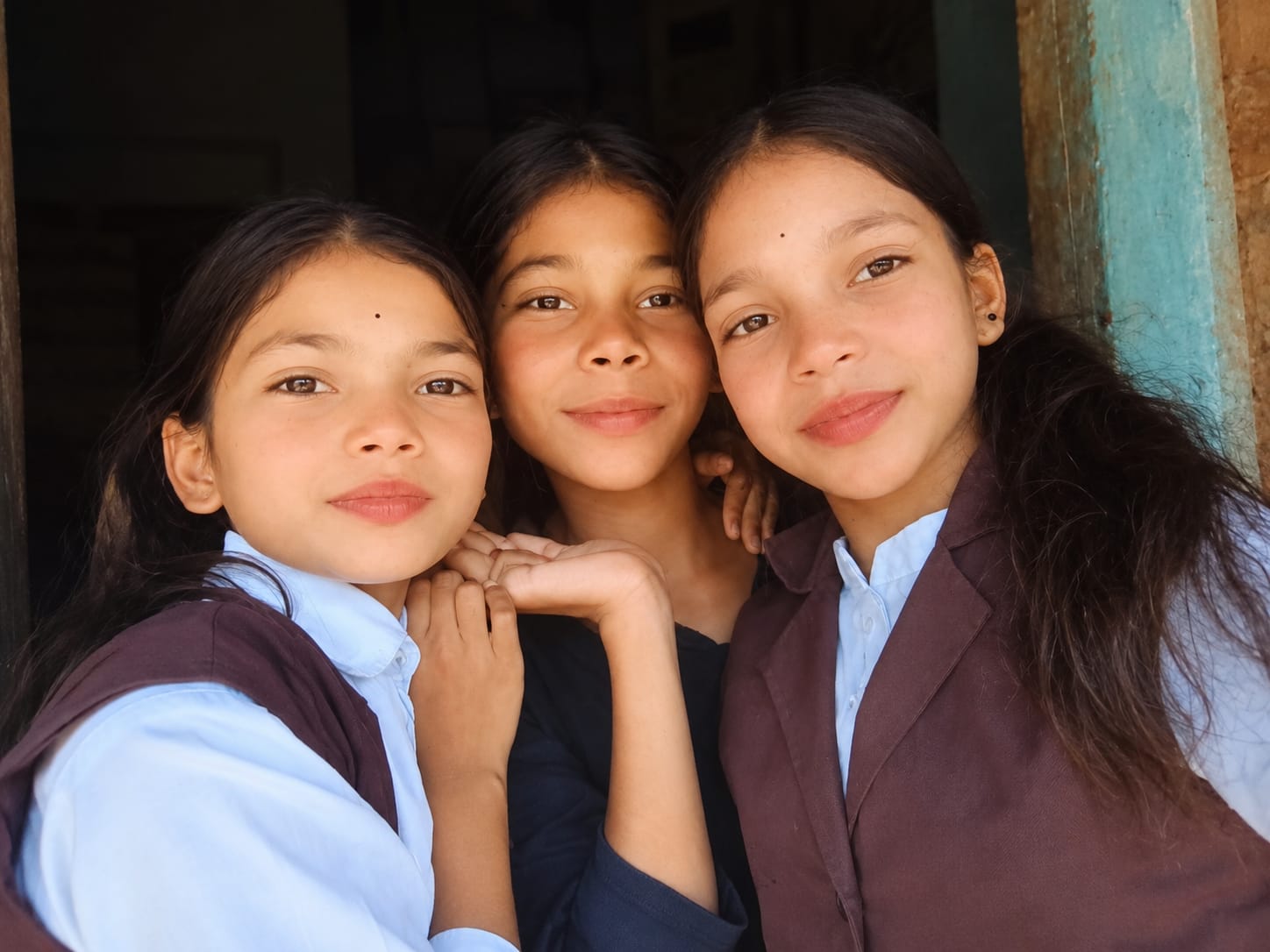 Kajal (left) with her siblings Aanchal and Payal
Prabhulal says he knew his second child was “sabse alag (different)”. While most children her age spent hours playing hide-and-seek in the lush sal forests, Kajal spent hours solving sums from her mathematics books — first her own and then her sister Payal’s, four levels higher.
The family was stumped when the girl cracked a block-level Math Olympiad conducted by the state government. “The teacher told us she cleared the block-level exam, but not the district level. She said some tuitions will help, but I couldn’t afford that,” says Prabhulal.
Story continues below this ad
The family lives in a bare, two-room, unplastered house in Mohanpur. Outside, green fields stretch towards a row of trees and scattered houses. Like most tribal families, the Saiyyams do not own the plot on which they live.
In one of the two rooms, schoolbags and books are stacked on a wooden table that’s pushed against the brick wall. It was here that Kajal spent hours studying or playing with her siblings, her favourite accessory a torch her father bought her recently. “Power cuts are a big problem here. Kajal would cry every time the lights went out and then use the torch on my husband’s phone to study. One day, he bought her a small torch,” says Usha.
Kajal loved the torch, using it to study for two hours in the evening, before she and her sisters goofed around with it, flashing it in each other’s faces.
But of late, says Prabhulal, Kajal had been obsessed about getting into a “bada (bigger) school” — the Jawahar Navodaya Vidyalaya in Warseoni, 45 km away.
Story continues below this ad
At the Government Higher Secondary School in Mohanpur village, Sunita Pardi, Kajal’s classteacher, says she would burst into her classroom every morning and ask her if she had filled the form for the Navodaya examinations to be held in November — “Ma’am, mera form bhara kya?.” Sunita says they finally submitted the form a few days after August 15.
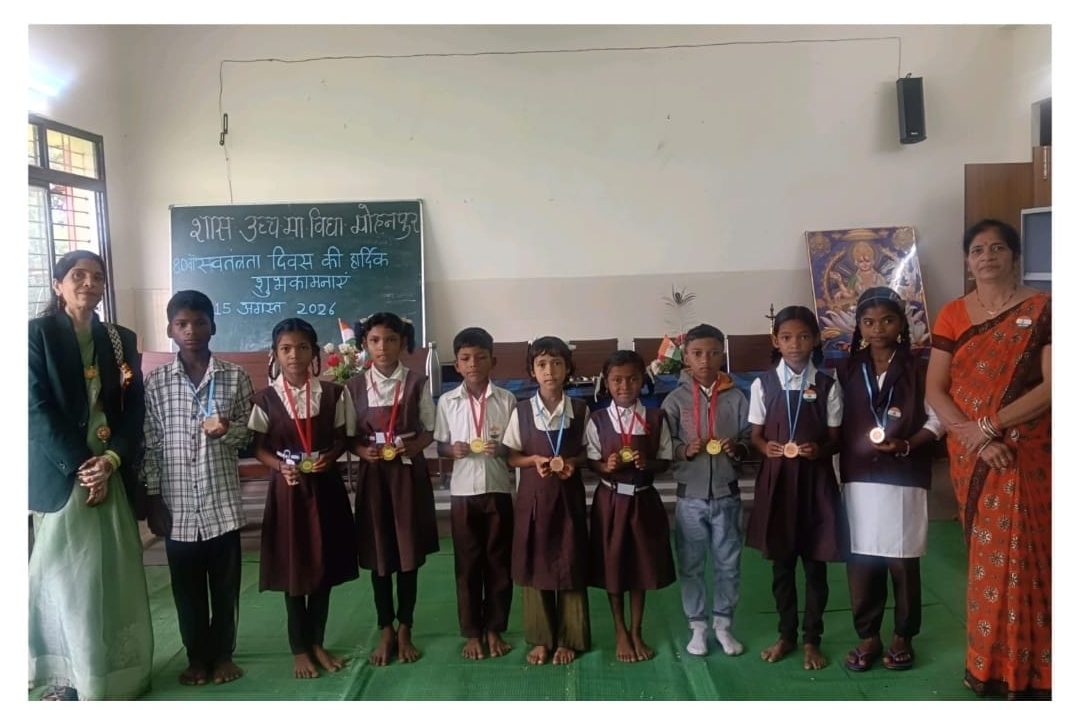 Sunita Pardi (left), Kajal’s teacher at her school in Mohanpur, with the children who had cracked a block-level Math Olympiad. Third from left is Kajal
Talking about her “favourite student”, Sunita says, “Kajal sometimes took classes when there were no teachers. That’s how brilliant she was. She won a gold medal this August 15 for scoring the highest marks in her class. It’s impressive for a girl growing up in these parts. Children here can barely read a simple passage or even do basic mathematics. They are enrolled very late in anganwadis or the primary school. Their parents are almost all uneducated, and many take their children with them when they leave for temporary work outside the state,” she says.
Sitting with her books on the terrace of their home, Payal, the eldest of the Saiyyam sisters, recalls how she would hang out here with Kajal for hours. “She wrote her Independence Day speech here. We would also click pictures together on my father’s phone. I would edit the pictures with funny filters and make her laugh,” says the 14-year-old.
Payal opens her English literature book, haltingly reads out from a page, before giving up. “Kajal used to teach me every evening,” she says.
 ⠀
⠀
Her last words: ‘Papa, I’m alive’
On a rainy August morning, Kajal and her siblings were walking to school, a 15-minute trek through the forests, when they noticed ambulances wailing in and out of homes. “We had never seen ambulances here… that too so many,” recalls Anchal, Kajal’s younger sister.
By then, children had been falling ill in Mohanpur and nearby villages. Payal fell ill, too, but she recovered.
Kajal was focused on writing her Independence Day speech and preparing for the Navodaya entrance exam.
The family had managed to borrow a guidebook from Punaram Bhalavi, who cracked the Navodaya entrance exam many years ago. Bhalavi, who eventually dropped out of his BSc course and now tutors children in his village, says, “I gave Kajal my copy. I had heard so much about her from our teachers. I wanted her to do well. It’s not easy for children here to succeed. So many dreams get crushed.”
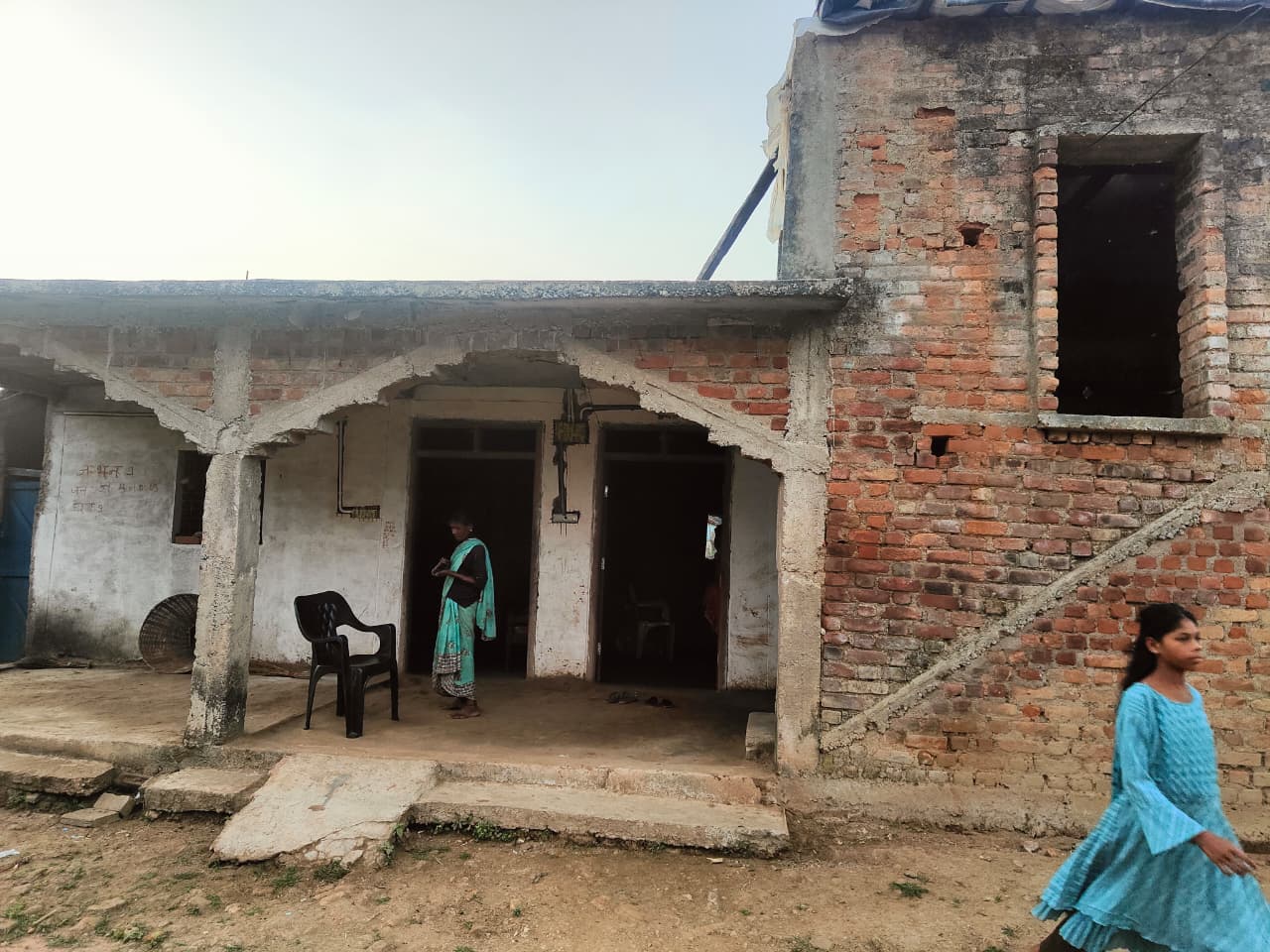 Kajal’s house in Mohanpur in Madhya Pradesh’s Balaghat
When the old guidebook arrived, Kajal quickly got to work, making notes and studying into the night, her torch beside her.
Then, on August 23, Kajal fell ill.
The family missed the danger signs. They allege no health workers visited them either. Kajal’s teacher Sunita says, “The family did not take it seriously because Kajal has had malaria three times in the past and recovered each time. Which is why they kept sending her to school even after she fell sick. That was such a big mistake.”
Prabhulal says they didn’t think much of the fever. “She had a fever but was active and talking, excited about her exam,” he says.
On August 27, things turned. “She told me, papa, I don’t feel well. We fed her pomegranate and let her sleep,” he says. She woke up in the middle of the night, crying, the fever splitting her head open.
The family knocked on the doors of their neighbours for help. With no mobile signal, they could not call an ambulance.
Someone brought an autorickshaw and Kajal, shivering with fever, was taken to Balaghat, 28 km away, for Rs 1,500.
At Life Care, a private hospital in Balaghat, Kajal, who had had fever for about five days, was diagnosed with malaria. She suffered seizures, vomited, and fell unconscious as her blood sugar levels dropped to a critical 12 mg/dl. Doctors admitted her to the ICU, intubated her and put her on a ventilator.
The ICU stay drained the family savings. As the hospital bills climbed to Rs 90,000, Prabhulal sold his wife’s gold bangles and mortgaged her earrings and necklaces.
For a brief while, there seemed to be hope. On August 28, as Kajal regained consciousness, Prabhulal rushed to his daughter’s bedside, hoping she would fight back one more time. “Papa, mein zinda ho gayi (Papa, I am alive),” Kajal said, her last words before she drifted into unconsciousness.
 ⠀
⠀
At 4.29 am on August 28, Kajal was referred to a private hospital in Gondia, 44 km across the border in Maharashtra. Then, early on August 29, Kajal died. She was finally laid to rest in an open field, 500 metres from her home.
At her funeral, Kajal’s relatives suggested that the family part with her belongings in line with tribal customs that mandate the erasure of physical reminders of the dead. As an inconsolable Prabhulal dropped Kajal’s uniform, bags, and books into a ritual fire, her teacher Sunita pleaded with the community elders to spare her notebooks. “We managed to save her books just in time. She had the best notes. We will show them to our students as an inspiration.”
KioskNews shows a cleaned-up reading view extracted from the publisher’s page — the original always lives on their site, not ours.