How cocaine conquered the UK: in pubs, festivals and workplaces the drug has become an everyday habit

Lisa* is watching Scissor Sisters at a festival in the Lake District, a can of cider in hand, dancing along to the music on a sunny afternoon.
The 30-year-old has a few days off from her job as a veterinary nurse in Gateshead, where she lives with her fiance. She loves going to festivals, especially as “I love meeting new people,” she says.
She is confident and makes friends at the festival very easily. The reason for that? “I’m on a bit of coke,” she says.
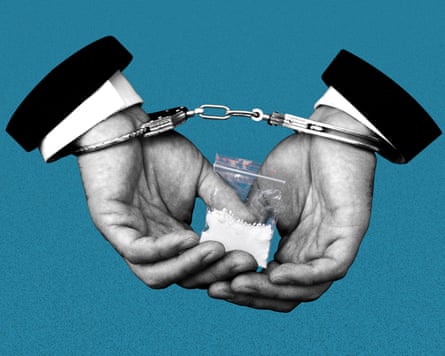
It is a crime largely hidden in plain sight – and one many people would barely consider a crime. However, it could land her a maximum sentence of seven years in prison, though for a first offence it is more likely to be a police caution. But she’s unlikely to be caught, especially at a festival, where over the course of the weekend numerous people admit to the Guardian to taking cocaine – or trying to get hold of it – and are seen openly taking it.
By many estimates, use of the class A drug is soaring. Wastewater analysis suggests people in England consumed 123,000kg of cocaine in 2024-25, a rise of 26% since 2021. That’s equivalent to roughly 2.5bn lines of cocaine, at an estimated street value of almost £10bn.
Cocaine and crime
Cocaine is a powerful and addictive stimulant that causes euphoria, overconfidence, restlessness and paranoia. A Guardian investigation has found a 10% rise in recorded crimes where the drug was mentioned since 2019.
Research from wastewater samples in 2022 carried out by Imperial College London and released earlier this year found that cocaine use spiked during major sporting and music events, heatwaves and bank holidays.
Its reputation as a middle-class drug still stands, though it has become more available across different demographics, as prices have dropped year-on-year and reached “historically low levels” last year. That wider use brings wider problems.
Cocaine was thought to have been a major factor in the 2021 widespread disorder at Wembley stadium during the Euro 2020 final, when thousands of ticketless fans breached safety barriers to get access to the ground. Lady Casey’s independent review later that year found that “excessive consumption of alcohol and cocaine” were fuels of a “febrile atmosphere”.
More than half of fans who responded to a survey in the aftermath of the incident said they had seen open drug use at Wembley stadium or on the way from the station.
“People were taking cocaine in front of us [and] my sons cried for most of the game,” one person quoted in the report said. A safety official was quoted as saying: “Drug usage was noticeable. It took four or five stewards to try and hold someone down – more than the number it usually takes when fans are drunk.”
It has also become a drug of choice for the far right.
Cocaine was a factor in the 2024 summer riots when some of the perpetrators of violence were found to be in possession of it or have taken it before the riots erupted. Two rioters also later pleaded guilty to selling it. Open cocaine use was also seen at the Unite the Kingdom rally, a far-right anti-immigration protest in London last year.
The party drug
But cocaine was – and still is – a party drug, popular at nightclubs, student house parties, middle-class dinner parties and now in the pub.
At a West Ham pub in east London, a pub manager explains she cleans cocaine residue off surfaces in the toilets most mornings. It is a pub for people who live and work in the area and for West Ham fans who are regulars on match days.
“It is just staggering the amount and the accessibility of it,” she says.
“It seems to be so blended with the concept of a night or even a day out for a lot of people ... It has been very normalised [and it’s] just a thing that you can quite blatantly and overtly do.”
She says the ubiquity of cocaine has become “significantly worse” over the past five years.
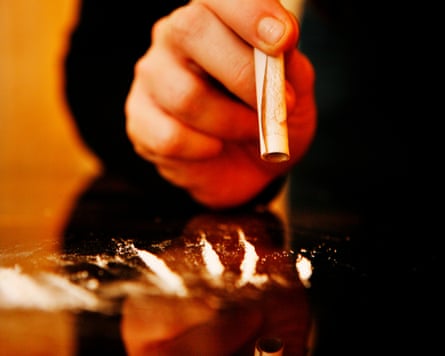
While other drugs are more obvious – they have a strong smell or leave their users visibly intoxicated or even incapacitated – cocaine can be harder to spot, which is a problem for publicans.
There can be telltale signs though, she says, such as when a punter appears to be getting agitated, leaves the pub and then comes back some time later, going straight to the toilets. “I’ve had real idiots, and they’ve been very blatant, and it’s been easy to kick them out.”
The manager believes people often take cocaine in an effort to “sober up” so they can continue drinking, “which obviously does not actually work but a lot of people believe it does”.
“Now you’ve got the impaired judgment from alcohol but you’ve also got the alertness from cocaine. That for me is a really big problem because that’s when you get potentially very volatile behaviour. That’s probably the point that I would call the most dangerous, both in terms of people behaving erratically, but also because they don’t realise how drunk they are. They are – at that point – a danger to themselves in terms of me having to call an ambulance or something.”
Cocaine use becomes particularly obvious when punters get into fights. “I had a 60-something-year-old man beat up a 70-something-year-old man in the toilet, knock his teeth out, because he said that the other guy had allegedly called him a cunt,” she says. “Now I understand that there are egos involved and that people can be volatile – and there’s all kinds of silly petty rivalries going back decades amongst some of the customers – but you’re not telling me that’s a normal reaction.”
She says she has spent years working in hospitality, managing different venues, and she thinks the problems that come from cocaine use can be seen in both cheap chains and expensive country gastropubs.
“But technically none of us can talk about it because none of us can admit that drug-taking takes place on our premises,” she says. “Everyone’s scared of losing their licence.”
Coping mechanism
What wastewater analysis cannot reveal is whether more people are taking cocaine, or more is being taken by those who are habitual users, or both.
For some people, cocaine is simply a part of life, something taken every day, even while at work.
The first time Will* took cocaine was at about the age of 15. “I remember it being stimulating, like I felt kind of chatty. I felt a lot of my social anxiety-based inhibitions fade away and, in the space of that, I was really confident and felt kind of unstoppable, in a sense.”
Things quickly escalated to him dealing the drug. “I was a 16-year-old with like half a fucking kilo of cocaine in my bedroom.”
He began selling to friends and friends of friends, though he admits he was an “atypical” dealer. He was from a relatively wealthy family in Essex, surrounded by teenagers with a lot of disposable income.
“That would pay for my usage of it,” he says, earning as much as £7,000 in a weekend.
“But then over the last like 20 years, it has developed much more into a coping mechanism,” the 37-year-old says.
A carpenter in TV and film, he has used it to help with long hours, being the first on set and the last to leave. It is so common among his colleagues that he says parts of the industry “basically run themselves on cocaine”.
He has “successfully hidden it from professional relationships so easily” and says people he interacted with at work would have no idea he was taking coke in the workplace.
“It can really seem like a good idea but it ultimately isn’t. [It’s fine] until you realise that you’ve built the physical dependency and then you go a day without it and you’re like dragging yourself through mud.”
At one point he counted up and realised he had spent £35,000 in one year on cocaine. He says: “I was like, oh my god, that’s a lot of money.”
He has managed to cut down on his use substantially, from “spending thousands of pounds a week doing cocaine every single day to someone who’s spending maybe £120 to £180 a weekend”. But even still, he thinks he will probably never stop taking it.
“I’m trying to be in control of it as opposed to being fully sober, because I don’t really see myself as someone who is ever gonna be fully sober.”
*Lisa’s name has been changed. Will spoke to the Guardian on the condition of anonymity. His name has also been changed.
KioskNews shows a cleaned-up reading view extracted from the publisher’s page — the original always lives on their site, not ours.