How Brad Bird & Michael Giacchino Developed The Rich Musical World For Netflix's Ray Gunn

As a graduate of Columbia University in New York City, Tatiana studied theater and comparative literature. She has been passionate about all manner of storytelling from Jane Austen adaptations to anime. Aside from writing for Screen Rant, she co-hosts podcasts: The Flash Podcast and Ladies With Gumption.
Sign in to your ScreenRant account
Netflix's Ray Gunn is a marvelous medley of various genres, part crime thriller with film noir stylings, part sci-fi story filled with alien creatures, and even part musical. The new animated movie takes place in the elaborate, futuristic city of Metropia — a world that director Brad Bird has been concocting in his mind for decades.
Ray Gunn's titular character, voiced by Sam Rockwell, is a private eye tasked with keeping scandal-prone pop star Venus Nova (Scarlett Johansson) out of trouble. He and his alien partner, Eyera (Tom Waits), have their work cut out for them when murder becomes part of the mix, and the trio are quickly caught in a web of danger and deceit that will take all their wits (and their weapons) to get out of. The stacked cast also includes Alan Tudyk, Matt Berry, Bobby Cannavale, Michelle Rodriguez, Aasif Mandvi, John Ratzenberger, Patton Oswalt, and many more vocal talents.
ScreenRant and several other media outlets had the privilege of sneaking an early peek at not just the Ray Gunn trailer, but a large chunk of footage from the film at an early press day in July. Afterwards, Bird and composer Michael Giacchino shared valuable insight into how their decades of collaboration — and one song by The B-52's — eventually evolved into Netflix's retrofuturistic crime thriller, while VFX supervisor Adel Abada and art director Wendell Luebbe unlocked some of Metropia's design secrets.
How "Planet Claire" Planted The Seed For Ray Gunn

While it's a common occurrence for a filmmaker to mull over a story for years before sending it to the screen, it's much rarer for the genesis of that story to be one eerily atmospheric song from 1979. But that’s exactly how the idea first entered Bird’s mind.
He explained that the first time he heard "Planet Claire" by The B-52's, he thought it was a version of Henry Mancini's "Peter Gunn." But the addition of outer space-themed sounds and lyrics sent him down a different path, “and I went, ‘Oh, it's not Peter Gunn. What is it?’ It's Ray Gunn. That's cool. That's the guy's name, and he's a private eye. That's how it started.”
Giacchino admitted that "There's a small amount" of that sonic inspiration still present in the finalized version of the movie, but that audiences would be hard-pressed to pick out individual chords to match: "It's more about the vibe."
As the story grows, and you start dealing with the story, it becomes so much more than just this idea. You're dealing with characters, you're dealing with emotions, and that's really what I'm there to do. I help underline all of those things: what makes the story tick and what keeps you engaged with these characters who are so different from each other, but all somehow want similar things. So, it's sort of in there in a vibing way, but it really is serving what the story is ultimately.
Ray Gunn has more than just Giacchino's score to bolster its musical bona fides, however, and Netflix is even submitting "Too Much to Ask" for Best Original Song at the Oscars. Performed by Johansson on behalf of her character, Venus Nova, the tune is penned by singer-songwriter Kimbra. Giacchino was effusive in his praise of her, stating, "She's just a consummate writer. She's so good. She's such a great artist, and she is into it. 1000% of her being is into this work, and it was really great to work with somebody like that. It's just so exciting."
Johansson getting to actually sing the song was just the cherry on top for Bird. "It was a bonus that Scarlett sings because, when I was first coming up with it, I didn't know who we were going to get." Thankfully, the Oscar-nominated actor was not only "perfect for the film," but perfect for the performance aspect of her popstar persona. In fact, "Too Much to Ask" will not be the only song on the soundtrack, as Bird teased, "There's a little bit more..."
Bird was less coy when revealing the inspirations behind Venus Nova's songs and personal struggles. While "they changed over the years because the pop stars changed, the no-brainer thing now that you would say is probably Taylor Swift." But Swift wasn't the original or even ultimate model, as he joked, "I don't even know if she was alive when I first came up with the idea!"
Rather than focusing on an artist to serve as a muse for Venus Nova's sound, the director explained, "What was more interesting to me [was] the idea of someone really talented who is also a train wreck." He pointed to Amy Winehouse, who would often make headlines for amped up, scandalous reasons exacerbated by the media machine that didn't care about her personal well-being. "But then after she died, I saw the documentary, and I was sitting there just feeling terrible. Because she was so talented, but it was impossible for her to function with people who were not looking out for her."
That became an empathetic point when I was writing the later drafts of this, because I felt empathy for that character, and for people put in that position who are just thrust into the spotlight, whether they're ready or not. That became really interesting. And it is true of a lot of [artists]. There are a lot of people who have trouble adjusting to the limelight. That part of it was interesting to me.
Creating The World Of Ray Gunn's Metropia
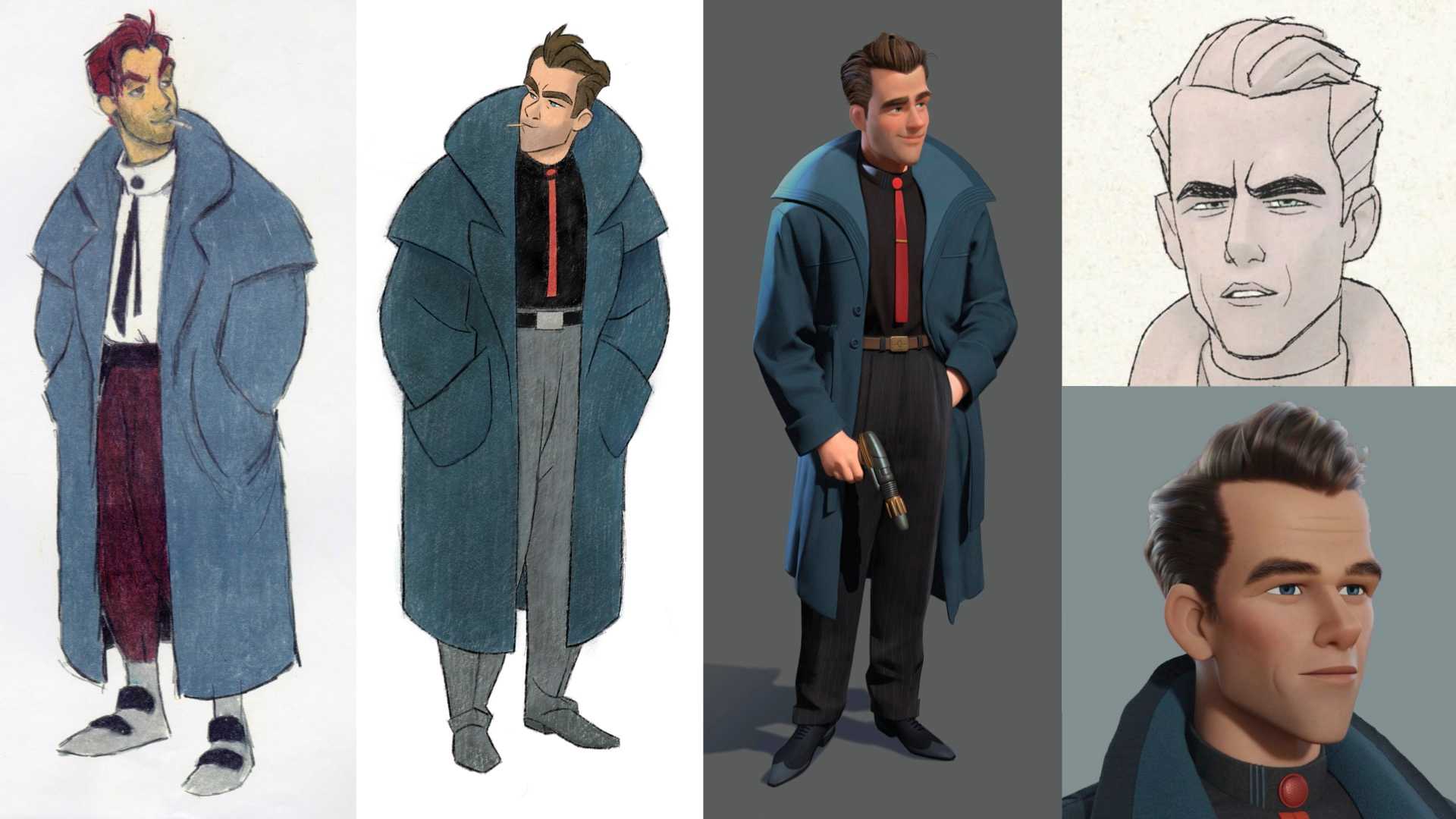
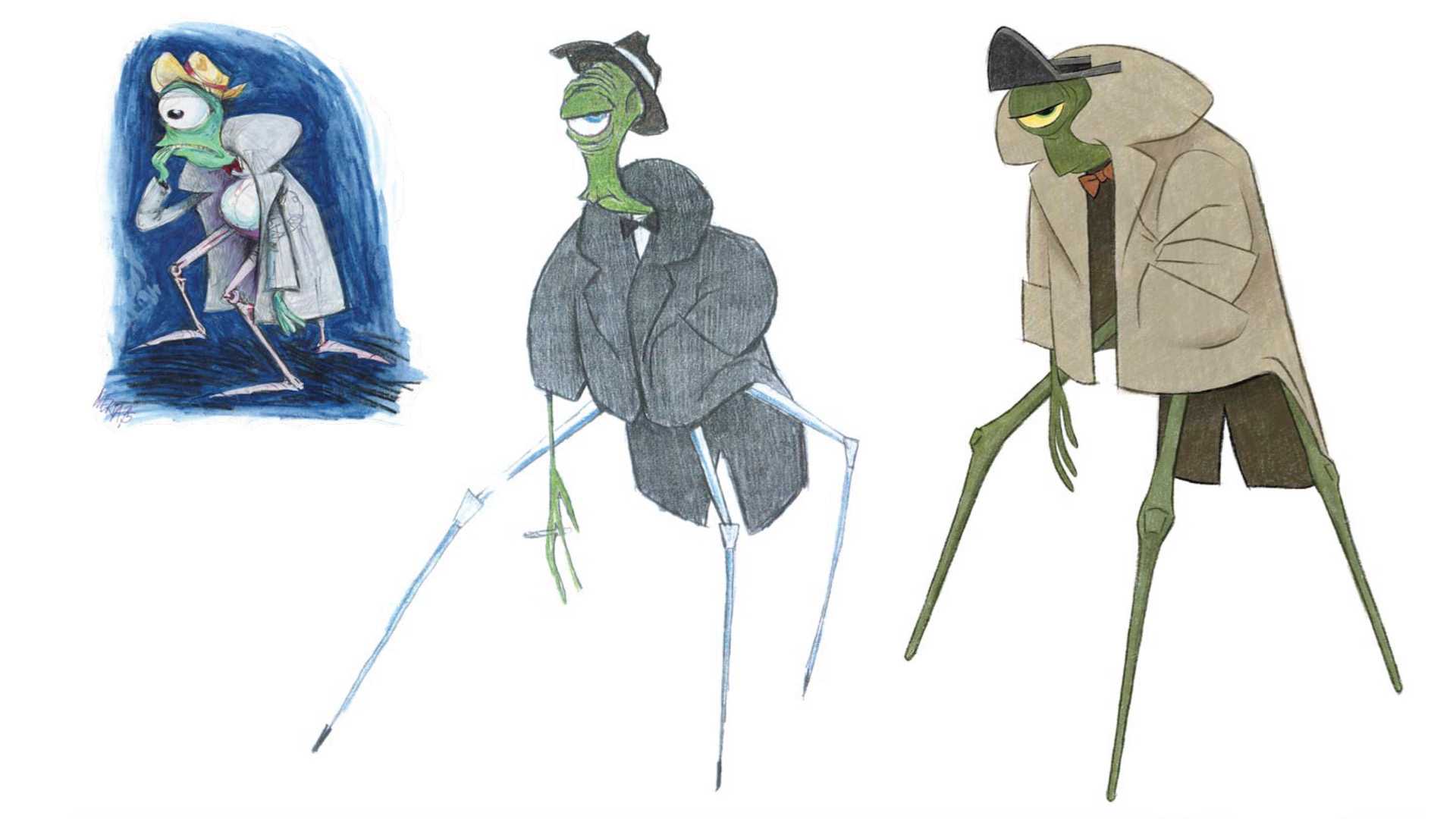
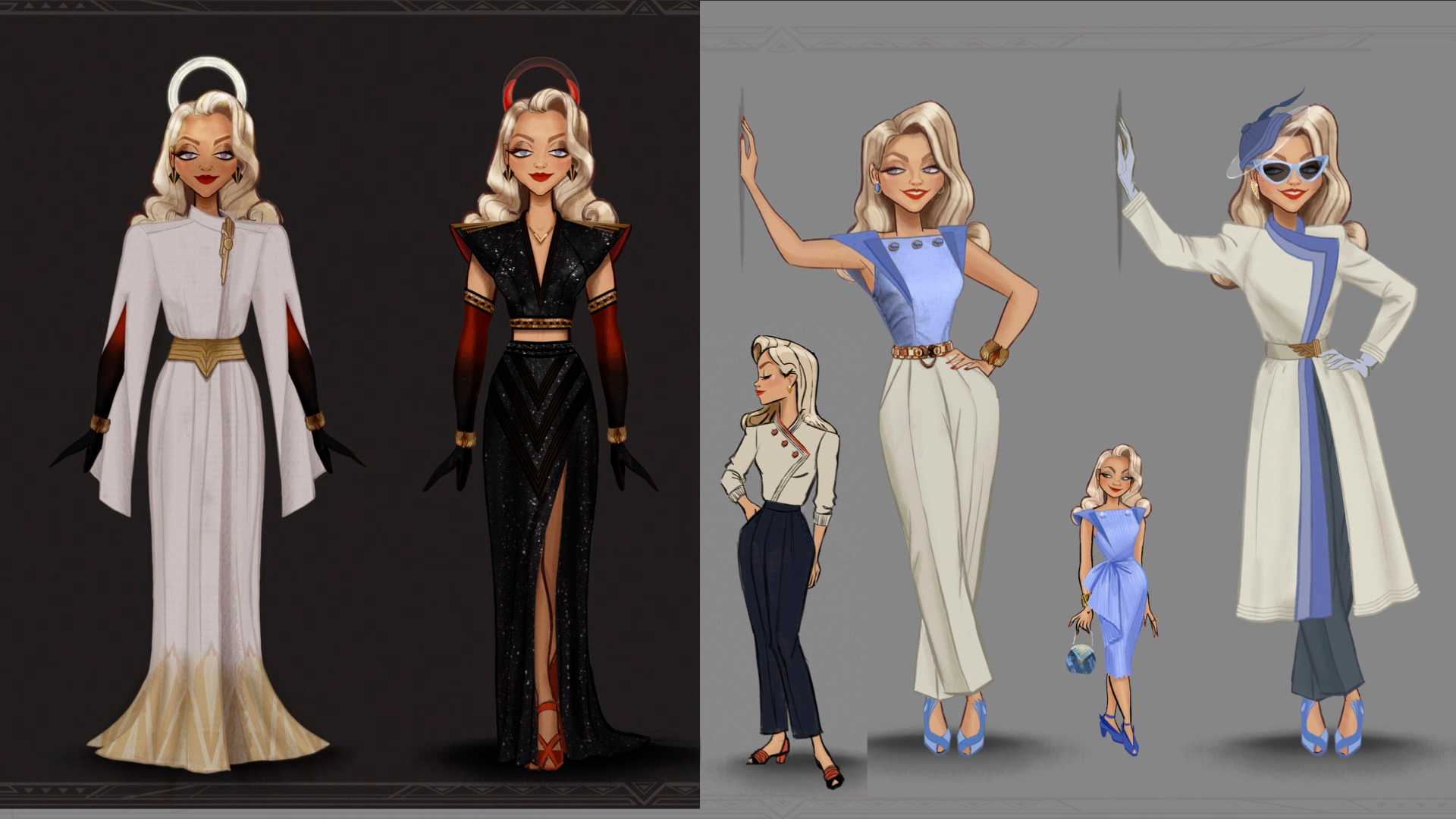
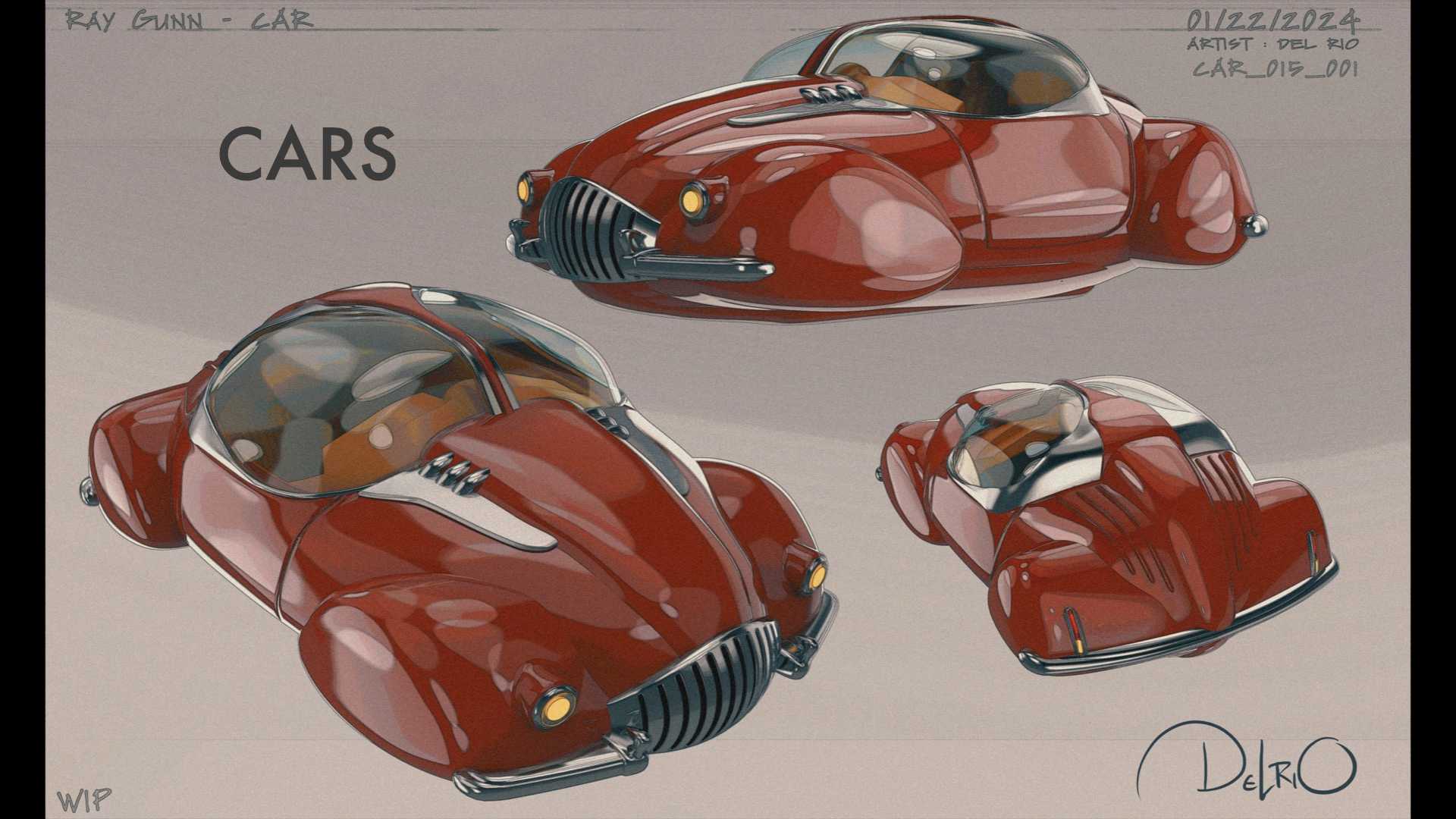
The specificity of Ray Gunn's character design and worldbuilding also benefited greatly from the longevity of its pre-production process. "Some of these characters have been gestating for quite a long time," Luebbe shared when he began discussing the art direction, explaining that the story had gone through various iterations. But when it came to Ray's design, "[Brad's] always had a specific idea of this character with this long tie and this big overcoat. His character hasn't changed a whole lot."
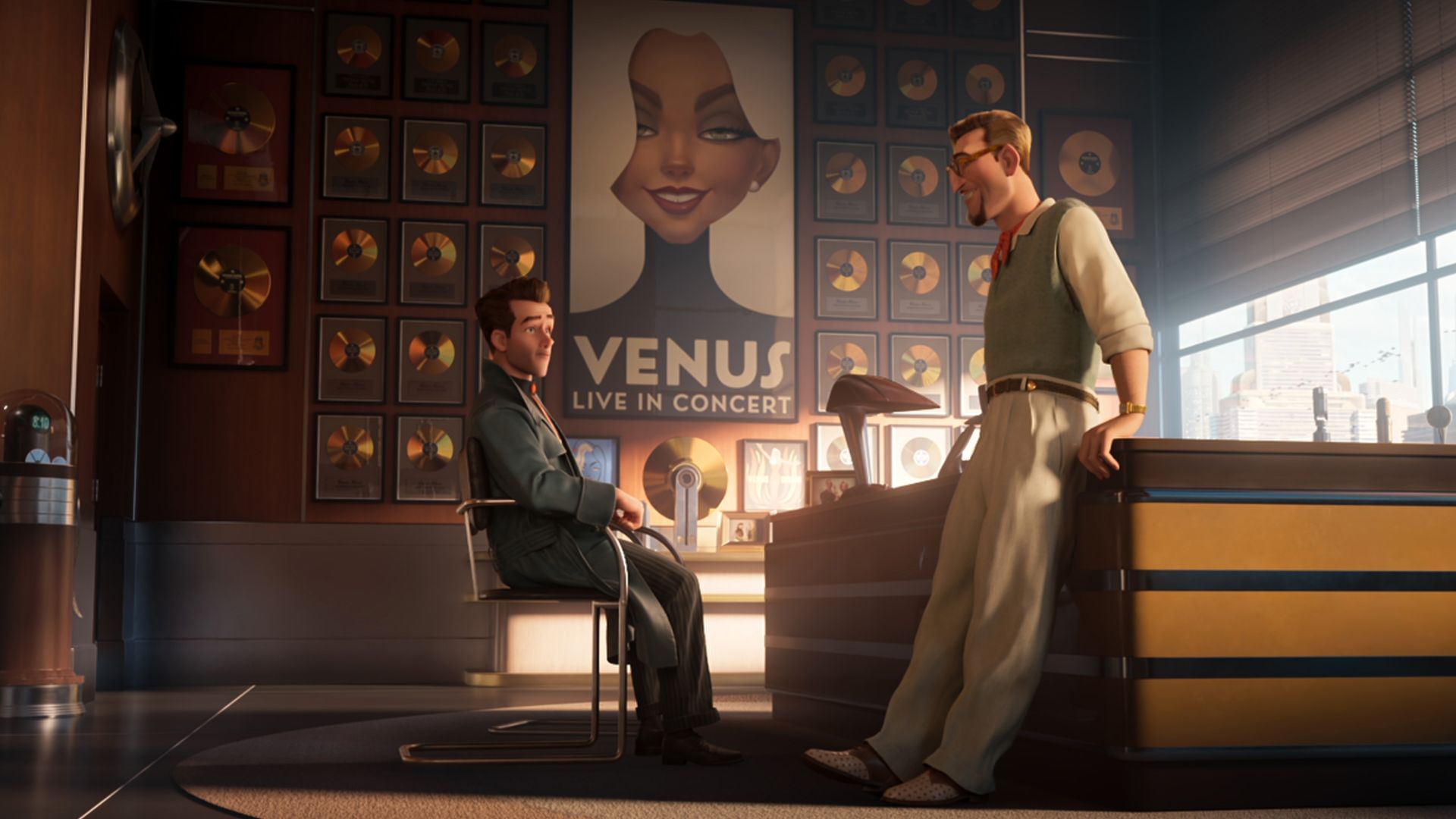
As for the bombshell that is Venus Nova, "she went through all kinds of permutations," according to Luebbe, "but ended up with a Lauren-Bacall-meets-Veronica-Lake look." Of course, executing the hair was a challenge all on its own. Venus' long hair not only goes over her shoulder and back, but it has to coordinate with 23 outfits.
Abada added some perspective on it from the VFX side, explaining the thought process that went into styling all the main characters. "It has to have tangible realities. Meaning that, if she runs through the rain, her hair gets wet. Creating all these variations added a lot of complexity, but the beautiful design done by Neysa Bove, who's our costume designer, was absolutely stunning."
Costumes were another concern for the animation and VFX departments, full of complexity due to the CG. "When you think about live-action, it's the responsibility of the costume designer. Nobody worries about how an outfit's going to behave, because you dress it, then you go and shoot it," Abada detailed. "Not in CG, where every part of it had to be designed. This goes through what we call our character pipeline. We do it early on to understand the behavior of the clothing, so we're not getting into a shot and figuring it out when shot production has started, which will be too late."
Ray, for instance, has a jetpack. As he's flying through, his hair goes over the wing, and his outfit goes [flying]. There's a lot of physics applied to it, so that adds huge complexity on top of all the variations.
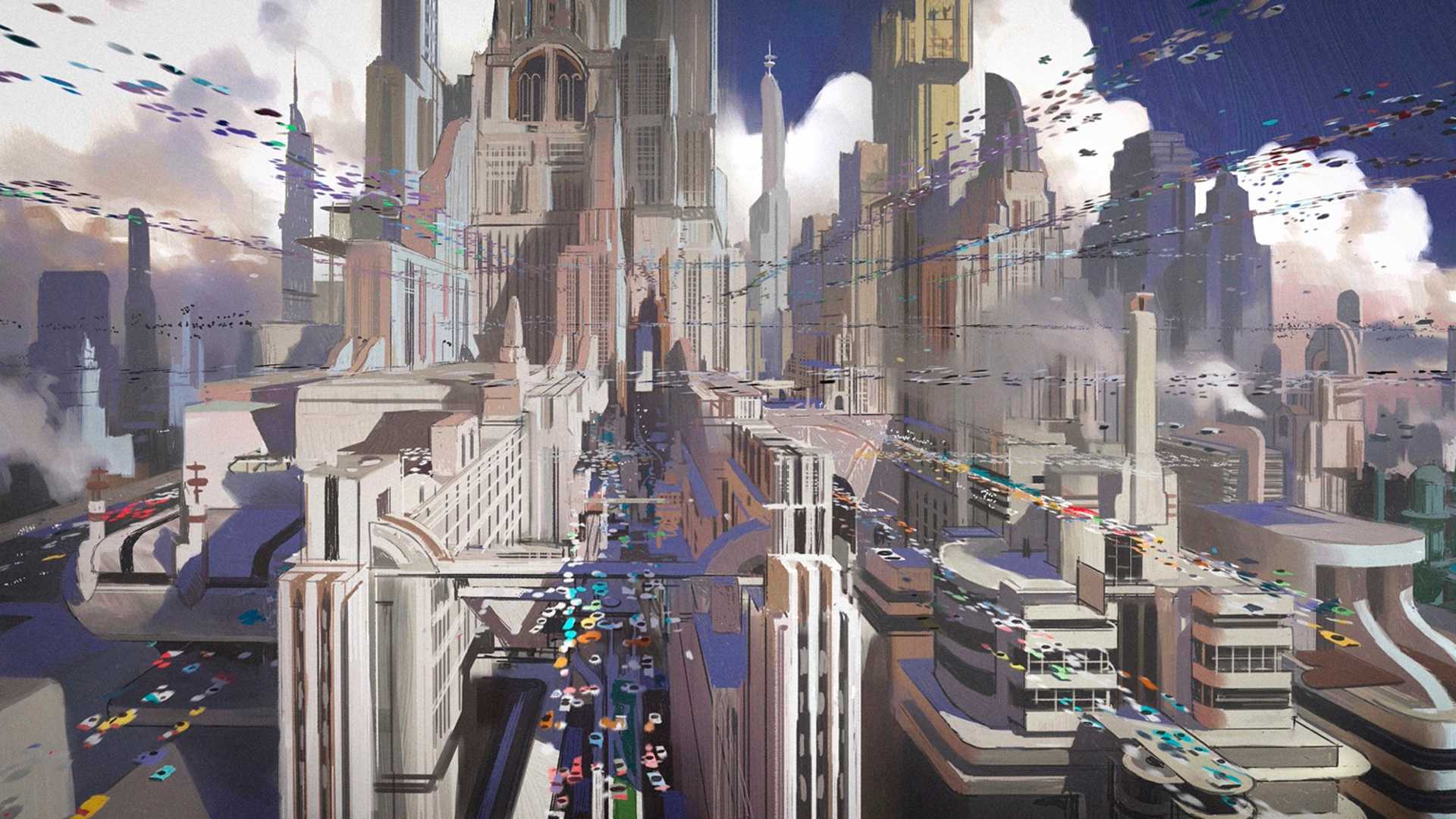
That complexity expands outwards to the entire look of Metropia, which sits perfectly in the 1939 film noir aesthetic while still calling attention to the otherworldly, sci-fi nature of the story. "Brad always wanted to emphasize the idea of this World's Fair utopia, with a positive view of the future," Luebbe shared. "He's always seen this story as being this bright utopia, but with this dark underside, which is the story that gets told in the movie."
We didn't build a city and then move a camera around it. The way Brad looks at the film is through the continuity of shots, so Cinesite would block in a shot from the storyboard, and then someone else would do drawovers of a massing of these buildings for the shot to get the composition. Then Cinesite would adjust that, so we work back and forth to get the shot composition that Brad was looking for.
Abada added, "When you look at it as a whole movie, you would believe it's a city that exists, because that's the goal. How can you create the illusion of a city without going through the entire process of building it piece by piece?" The answer lies in geometry. "When we built the city, we knew the camera was going to be very dynamic. Animators needed to know where the building is, so the geometry needed to exist. You have daytime and nighttime, meaning the building needs to be illuminated. We had our own custom shader for the windows, because they needed to have depth. All these elements made it very complex, but it was very exciting for us to achieve that."
Despite the retrofuturistic feeling of the universe, Luebbe deemed it not as based in caricature as some of Bird's Pixar collaborations, such as The Incredibles or Ratatouille. In contrast, Ray Gunn feels "more plausible, and there's a feeling of peril in the movie" because of the realism.

Cast
-
Sam Rockwell
Raymond Gunn (voice)
-

Venus Nova (voice)
-

Tom Waits
Eyera (voice)
-
Matt Berry
Francis “Slugsy” Xavier (voice)
Ray Gunn is a 2026 animated neo-noir science-fiction mystery directed by Brad Bird, set in Metropia, a retro-futuristic city where humans and aliens coexist. Private detective Raymond Gunn is drawn into a murder case involving aliens and famous multimedia star Venus Nova, pulling him into a larger mystery.
KioskNews shows a cleaned-up reading view extracted from the publisher’s page — the original always lives on their site, not ours.