WHO says Congo Ebola outbreak spreads to two new health zones
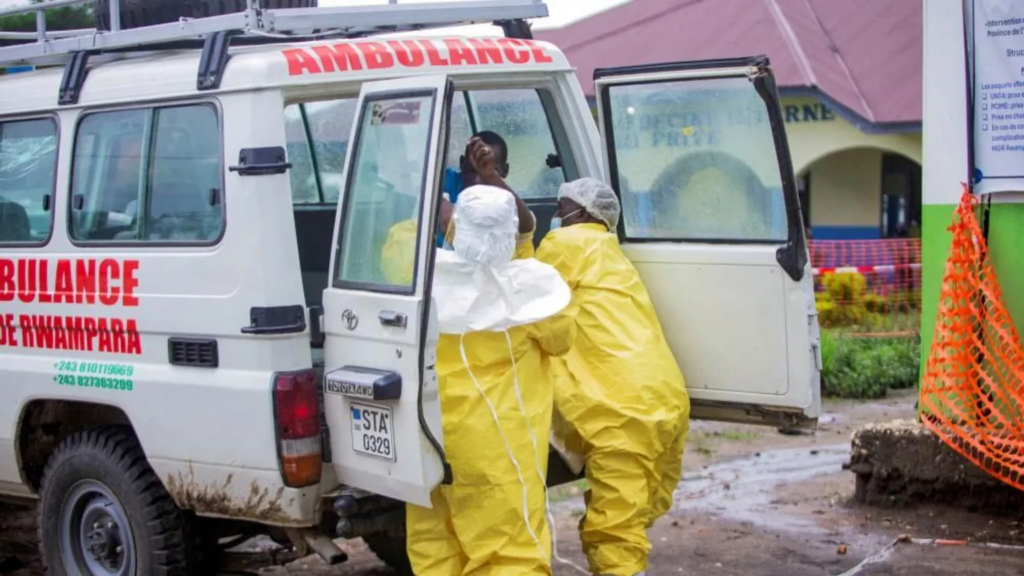
The World Health Organization said on Friday that the Ebola outbreak caused by the Bundibugyo virus in the Democratic Republic of the Congo has spread to two additional health zones, bringing the total number affected to 63 across seven provinces.
The newly affected zones are Bulu in Sud Ubangi province and Dungu in Haut-Uele province, which borders South Sudan.
As of September 23, Congo had reported 7,890 confirmed cases and 3,799 deaths, according to the WHO.
WHO Director-General Tedros Adhanom Ghebreyesus said conflict and population displacement were making it more difficult for health workers to reach affected communities and trace people who may have been exposed to the virus.
"It's very difficult to see Ebola in isolation because even our response in Ebola is affected by the conflict because there is displacement and there is access problem to some areas," Tedros said.
He said restricted access could leave contacts untraced, while displacement and crowding increased transmission risks.
Tedros said cases were declining overall and that contact tracing, safe burials and community engagement had improved, although transmission remained uneven across affected areas.
The lack of approved vaccines and treatments for the Bundibugyo strain was also complicating the response and could make people reluctant to seek care at treatment centers, Tedros said, adding the WHO was working to accelerate clinical trials of vaccines and treatments.
Turning to the risk of future global health emergencies, Tedros said countries needed to strengthen pandemic preparedness.
"Ebola will not be a pandemic, but there could be a respiratory pathogen that can become a pandemic," he said. "Before that hits, we need to prepare."
The World Health Assembly adopted the Pandemic Agreement in May 2025 to strengthen global prevention, preparedness and response to future pandemics.
"We continue to see significant mis- and disinformation about the WHO Pandemic Agreement, with false claims. It's a power grab that cedes sovereignty to WHO," Tedros said. "This is completely untrue."
DISCLAIMER: The Views, Comments, Opinions, Contributions and Statements made by Readers and Contributors on this platform do not necessarily represent the views or policy of Multimedia Group Limited.
Tags:
DISCLAIMER: The Views, Comments, Opinions, Contributions and Statements made by Readers and Contributors on this platform do not necessarily represent the views or policy of Multimedia Group Limited.
KioskNews shows a cleaned-up reading view extracted from the publisher’s page — the original always lives on their site, not ours.