Academia Historica head vows to fight historical distortion
By William Hetherington / Staff writer, with CNA


Newly appointed Academia Historica director Chen Tsui-lien (陳翠蓮) yesterday said she would prioritize research into Taiwan’s democratization, saying that historical distortion has become more serious in the past few years.
The agency held a handover ceremony yesterday for its outgoing and incoming directors.
Chen, a distinguished professor in National Taiwan University’s Department of History, said President William Lai (賴清德) unexpectedly summoned her in June and asked why, more than 30 years after Taiwan’s democratization, many people’s understanding of history remained rooted in narratives from the authoritarian era.
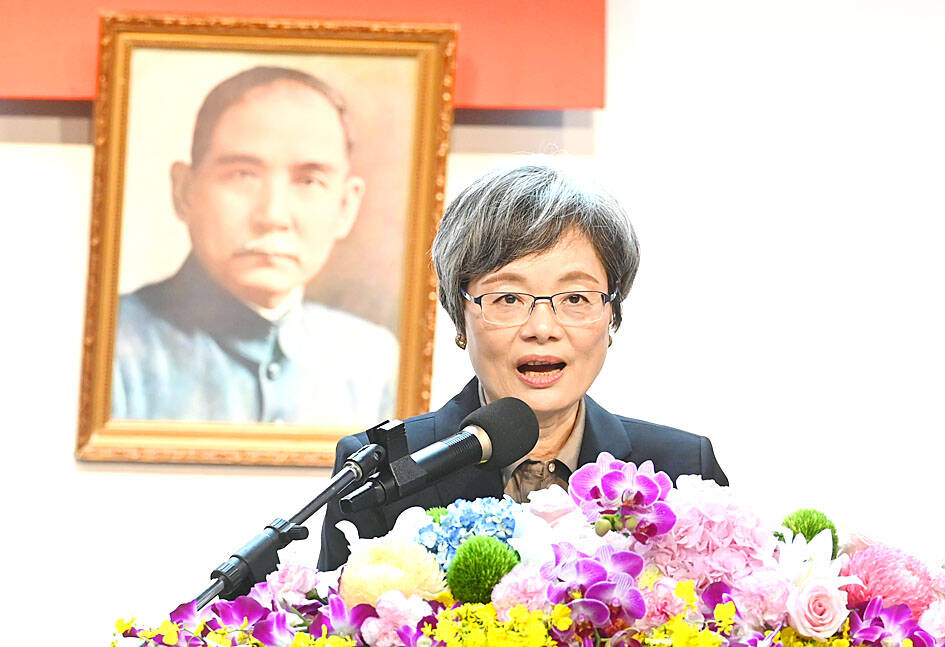
Newly appointed Academia Historica director Chen Tsui-lien speaks at the handover ceremony in Taipei yesterday.
Photo: Wang Yi-sung, Taipei Times
Lai asked why political identities remain so deeply divided and whether something had gone wrong during the transition to democracy, she said.
Chen said the invitation was unexpected, as she had been enjoying a comfortable academic career.
Moving into public service could mean having to “wear a helmet,” she said, but added that after 30 years of peaceful life and benefiting from state support for her education, she felt a responsibility to give back.
Chen said her first priority would be to continue research into Taiwan’s democratization, including examining what authoritarian rule means and why it harms society.
Such work should help society remember the struggle for democracy and freedom, and encourage people to cherish the democratic system, she said.
However, recent political events have shown a deliberate trend of bad-faith historical distortion, Chen said.
Some people have portrayed the elected government, whose powers are subject to checks and oversight, as authoritarian or dictatorial, while others have described Taiwan as a “terror state,” she said, adding that such claims could cause irreparable harm to society.
The democratic system can be defended only through continued remembrance and efforts to clarify the historical record, she said.
Chen also said the institution should promote research into Taiwan’s history and confront difficult aspects of the past.
The release of political surveillance records has helped society better understand Taiwan’s history, but has raised difficult questions, she said.
People identified as informants should not be regarded as perpetrators automatically, she said, adding that their roles, whether they harmed others and the reliability of intelligence records all require consideration.
The records contain extensive private information about people who were surveilled, she said, warning that its publication could cause harm.
Transitional justice has entered deeper and more difficult territory, she said, adding that these issues must be confronted.
KioskNews shows a cleaned-up reading view extracted from the publisher’s page — the original always lives on their site, not ours.