The 10 Best Game Boy Advance Games of All Time, Ranked

Writing from the Chicagoland area in Illinois, Robert is an avid movie watcher and will take just about any excuse to find time to go to his local movie theaters. Robert graduated from Bradley University with degrees in Journalism and Game Design with a minor in Film Studies. Robert tries his best to keep up with all the latest movie releases, from those released in theaters to those released on streaming. While he doesn't always keep up with the latest TV shows, he makes it a goal to watch nearly every major new release possible. He has been honing his craft and following any and all movie news all his life, leading up to now, where he has a vast knowledge of film and film history. He also logs every movie that he watches on his Letterboxd page, and has hosted a weekly online movie night with his closest friends for over 6 years.
Sign in to your Collider account
Released between the legendary original Game Boy and the massively successful Nintendo DS, the Game Boy Advance is largely overlooked compared to the other massively successful Nintendo handheld consoles. However, those who experienced the console at the height of its popularity will be quick to sing its praises, having one of the highest-quality lineups of video games that a handheld console has ever had. Especially when compared to the original Game Boy, whose library has certainly shown its age, many of the Game Boy Advance's best games are still considered all-time classics.
From groundbreaking new installments in already beloved franchises to the start of some of the most cult classic series that Nintendo has ever released, the Game Boy Advance exclusives have etched a special place in the hearts of many Nintendo gamers. Some of these games still haven't been remade or ported to modern consoles, making the 25-year-old handheld the only place to experience some of the best games that Nintendo has ever released.
10 'Wario Land 4' (2001)

As opposed to the traditional Super Mario 2D platformer that focuses more on precision platforming and mass-appealing gameplay, Wario Land as a series has always taken a more abstract, puzzle-centric approach to its platforming, giving it a massive niche as a platforming spinoff. All of the greatest strengths of Wario Land as a series are perfected in Wario Land 4, which has overwhelming personality and replayability as one of the very best portable platformers in the Mario series.
It uses an absolutely jamming soundtrack and top-notch sound design to amplify the strange absurdities of its levels and characters, fully embracing Wario's wild, unrestrained nature and the antics he gets up to. It makes the most of the Game Boy Advance hardware improvements, becoming one of the most beautiful sprite-based platformers of the 2000s. Especially as the Wario Land franchise hasn't had a new entry in so long, the appreciation and passion for this series grow more and more with each passing year.
9 'Kirby and the Amazing Mirror' (2004)

Kirby already had an exceptional outing on the Game Boy Advance with Kirby: Nightmare in Dream Land, a remake of Kirby's Adventure for the NES. However, Kirby and the Amazing Mirror makes use of the multiplayer possibilities of link cables to create one of the most unique Kirby experiences to date while still having the strengths of Nightmare in Dream Land. The game isn't just a multiplayer Kirby game, however, as it also takes the Kirby formula and places it in a Metroidvania-style world with branching paths and secrets.
This proves to work in tandem with the multiplayer to create a dynamic experience where players are encouraged to collaborate and explore different parts of the map, coming together for boss fights when need be and still feeling one of a kind in its execution. The only thing that held the game back for so many years was the investment of link cables and multiple consoles required to play the game, yet with the recent release of the game on Nintendo Switch Online, this cult classic can now be appreciated in the modern age with online multiplayer.
8 'Golden Sun' (2001)

The Game Boy Advance proved to be a surprisingly great console when it came to amazing JRPGs, from ports and remakes of classic RPGs now available on the go to iconic franchises experimenting with new portable entries. However, one of the biggest highlights of JRPGs on the console was Golden Sun, the hidden gem of Nintendo's library sporting groundbreaking Mode 7 visuals and extremely approachable gameplay able to be enjoyed by JRPG veterans and newcomers alike.
The combination of its clear qualities and being one of the most overlooked Nintendo franchises that hasn't had a new entry in 16 years has made it one of the definitive examples of a Nintendo cult classic. Even after multiple sequels, including Golden Sun: The Lost Age, which also released on GBA, there's something so charming and well-crafted about the original game that still makes it a highlight of the GBA library and portable JRPGs as a whole.
7 'Advance Wars' (2001)

While Intelligent Systems is more prominently celebrated for their various Fire Emblem games that they released on the GBA, the game studio actually released another turn-based strategy game even better than the GBA Fire Emblem games: Advance Wars. As opposed to so many other tactical strategy games on the console, Advance Wars employs a cartoony look at modern warfare, rife with layers of strategy and depth to its gameplay, making it an icon of 2000s strategy games.
Strategy games always have this alluring stigma of being incredibly difficult and unapproachable to average gamers. However, Advance Wars finds this perfect mixture of feeling approachable to newcomers to the genre while still having the depth and advanced elements for hardened strategy fans to enjoy. The game has a dedicated fanbase that is quick to celebrate the game as an icon of the GBA library and one of Nintendo's most underappreciated games.
6 'The Legend of Zelda: The Minish Cap' (2004)

As one of their biggest franchises, almost every console released by Nintendo is going to have a standout new entry in The Legend of Zelda series. While The Legend of Zelda: Four Swords gave gamers a multiplayer experience that tided them over at the beginning of the GBA's life, the real exceptional Zelda experience would release two years later with The Legend of Zelda: The Minish Cap. This 2000s gaming classic acts as a prequel to the Four Swords games, being a sprawling top-down adventure in the same vein as The Legend of Zelda: A Link to the Past.
The game quickly proved itself to be the best top-down Zelda experience since A Link to the Past, not at all feeling like it was held back by the limitations of a handheld console and pushing the GBA to its absolute limits as a sprawling adventure full of dungeons, puzzles, and boss fights. Its main gameplay mechanic involves that of shrinking down to the size of the Minish people, opening up the world for vast amounts of exploration and creative level designs from the perspective of a miniature hero.
Collider Exclusive · 8 Questions · 2 Minutes What Fantasy World Do You Belong To? Middle-earth · Grand Line · The Continent · Camp Half-Blood
Pick your magic, your crew, where you want to wake up and who you would rather be fighting, and we will tell you which world you actually belong in. Four are open to you: an ancient kingdom living through its last good age, an endless sea full of pirates, a continent that pays people to kill monsters, and a summer camp where the Greek gods are extremely real and mostly a nuisance.
💍Middle-earth(Rings of Power)
👒Grand Line(One Piece)
🐺The Continent(The Witcher)
🔱Camp Half-Blood(Percy Jackson)
01
What kind of power do you want? Every one of these worlds runs on a completely different sort of magic.
02
Who is travelling with you? Nobody gets through any of these stories entirely on their own.
03
Where do you want to wake up tomorrow? The best fantasy is usually just somewhere you would genuinely like to live.
04
How are you making a living out there? Even in fantasy somebody has to pay for the horse.
05
There is something in the woods. What do you do about it? All four of these worlds keep something unpleasant out there in the dark.
06
Who is the villain of your story? The enemy tells you far more about a world than the hero ever does.
07
What do you actually believe in out there? Every world hands its heroes one rule and asks them to hold onto it.
08
A thousand years from now, how are you remembered? Eight questions in, this is the one that decides your world.
The Map Is Drawn Your World Is…
Four worlds and four completely different ideas of what a good life looks like. This is where you belong, what it would ask of you, and what you would get back in return.
Middle-earth
You belong somewhere old enough that the mountains have names and somebody can still tell you who gave them. Middle-earth is for people who think the right thing is worth doing even when it will not be finished in their lifetime.
- This is the only world on the list where doing good is understood as a very long defeat, fought anyway, by people who will never see how it ends.
- You are drawn to grandeur, to white cities and deep forges and the sense that almost everything you touch is older than your entire family line.
- The Rings of Power is set in the last good age before it all goes wrong, which gives every quiet scene in it a slightly unbearable weight.
- You would take the hard road, and you would take it on foot.
The Grand Line
You want the sea, a crew, and absolutely nobody telling you where you are allowed to go. The Grand Line is the world for people whose main ambition in life is finding out what is over there.
- One Piece has run for decades on one very simple engine, which is a group of people who each want something impossible and have decided to go and get it together.
- You collect people. Your ideal crew is a set of misfits who were each written off somewhere else before you turned up and offered them a better idea.
- The world is enormous and deliberately ridiculous, and the emotional gut punches land harder because of that rather than in spite of it.
- You would set sail knowing the map runs out, which is more or less the entire point of it.
The Continent
You would rather be feared and useful than liked and useless. The Continent is a world where the monsters are the straightforward part of the job and the people are where it all gets complicated.
- Witchers get paid to do what nobody else will and resented for existing at all, which is a trade most people would refuse and you would probably accept.
- You have no real illusions about which side is the good one, largely because on the Continent that question tends to have a disappointing answer.
- The best of these stories are not about the fighting. They are about somebody with a rigid code being repeatedly cornered into caring about people.
- You would take the coin, finish the job properly, and be out of town before the story got told wrong.
Camp Half-Blood
You want the myths to be real and loose in the actual world, and you want to find out at about thirteen that you were never anywhere near as ordinary as everybody kept telling you.
- Percy Jackson takes the oldest stories we have and drops them into car parks and diners, which makes the gods considerably funnier and a great deal worse.
- You would be the kid every school gave up on, who turns out to have been built for something nobody thought to test for.
- The series is genuinely about friendship rather than destiny, and it says so out loud every time a prophecy tries to get in the way.
- Camp Half-Blood is the real fantasy here: a place where the thing that made you difficult everywhere else is the thing that makes you belong.
5 'Castlevania: Aria of Sorrow' (2003)

The Castlevania franchise proved to be one of the most consistent offerings of greatness from third parties on the GBA, with three exceptional games in the franchise finding success on the console. However, it's the third and final Castlevania game that was released on GBA, Castlevania: Aria of Sorrow, which is the clear standout highlight, as it built upon the strength of previous entries to create one of the best games in the Castlevania series.
It recaptures a lot of the same dungeon-crawling exploration elements of previous Castlevania games into this perfect portable package, being not just one of the best Metroidvania experiences on the console, but one of the most important Metroidvania games ever released. Many of the greatest Metroidvania games of all time have a legacy tracing back to the strengths of Aria of Sorrow, with it still garnering respect and appreciation over 20 years after its release.
4 'Mario & Luigi: Superstar Saga' (2003)

Mario has been no stranger to turn-based RPG gameplay before, as games like Super Mario RPG and Paper Mario proved the potential of turn-based combat in the Mushroom Kingdom. However, the dynamic of playing as both Mario and Luigi on a quest in a brand-new kingdom and utilizing their partnership as brothers made Mario & Luigi: Superstar Saga the must-play Mario experience for the handheld. The game is also distinctly different from other RPGs, with a battle system largely focused on timing for both dodging attacks and landing your own powerful attacks.
The Mario & Luigi series as a whole is ironically cited quite a bit for its Action Command system being considered an inspiration for Clair Obscur: Expedition 33, yet this first entry in the series is still in contention for one of the best Mario games. It also helps that Superstar Saga is overwhelming with personality and charm from beginning to end, with the enemies, world-building, and overwhelming amount of humor giving the game that signature touch that made it such a memorable experience.
3 'Metroid Fusion' (2002)

A triumphant return to the Metroid franchise, released 8 years after the previous entry (as well as releasing the same day as Metroid Prime), Metroid Fusion is still considered by many fans the greatest 2D entry in the series to date. It pushes the franchise forward with exceptional polish and action, building upon the strengths of Super Metroid before it to create the definitive Metroid experience. While slightly more linear than other Metroid titles, its action gameplay is still second to none and some of the best that the GBA has to offer.
So much of what sets Metroid Fusion apart from previous entries in the Metroid series is how much more it focuses on a more dynamic storyline and characterization, playing a pivotal role in shaping Samus Aran into the iconic heroine she is known as today. The game also features one of the most haunting and effective villains in Nintendo history in SA-X, a parasite that replicates Samus's appearance and makes for the game's most tense and memorable moments.
2 'Mother 3' (2006)

Mother 3 has a painful history for many Nintendo fans, as this final entry in the beloved Mother franchise has seen unanimous praise and appreciation despite never actually having an official release in North America. One of the last games released by Nintendo on the console, Mother 3 is massively celebrated thanks to its timeless RPG gameplay and features one of the greatest, most emotional video game stories of the 2000s.
Unofficial English translations have been the only way for fans to experience this masterpiece outside of Japan, yet even then, it has still amassed an overwhelming reputation as one of Nintendo's greatest games. It does an amazing job of balancing the signature quirky humor and wit that made Earthbound so effective while also not shying away from painful, emotionally heartbreaking moments when the story needs to. Fans have been begging for an official English translation for 20 years now, as so many more people deserve to be able to experience one of the GBA's greatest masterpieces.
1 'Pokémon Emerald' (2004)
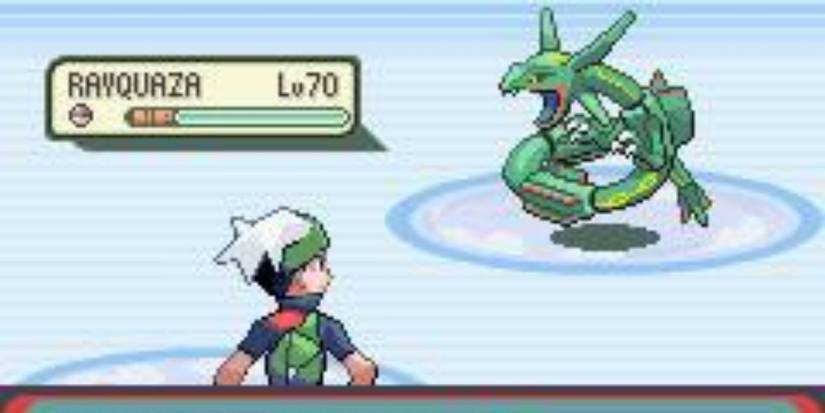
It's impossible to discuss the impact and legacy of the GBA without bringing up Pokémon, as the GBA Pokémon games were undeniably the most successful games on the console as well as massive improvements upon the original formula that are still celebrated and played to this day. However, the undeniable highlight of the GBA's Pokémon offerings is, without question, Pokémon Emerald, the definitive sister game that expanded upon the strengths of Pokémon Ruby and Sapphire.
More than just a rehash of the previous Hoenn adventures, Pokémon Emerald combines elements of both games, fixing story elements and adding more post-game content to create the definitive way to experience the third generation of Pokémon. It has more replayability than any other game on the console, with hundreds of hours of content in what is still the golden standard for Pokémon games in the eyes of many fans. With rumors of the game getting a re-release on the Nintendo Switch, a new generation of gamers is going to witness the greatness of this GBA classic.

Pokémon: Destiny Deoxys
- Release Date
- July 22, 2004
- Runtime
- 98 Minutes
- Director
- Kunihiko Yuyama
- Writers
- Hideki Sonoda
-

Rica Matsumoto
Satoshi
-
Ikue Otani
Pikachu
-
KAORI
Haruka
-
Yuji Ueda
Takeshi
KioskNews shows a cleaned-up reading view extracted from the publisher’s page — the original always lives on their site, not ours.