Amid drought-like conditions, Mumbai ends monsoon season on a deficit note
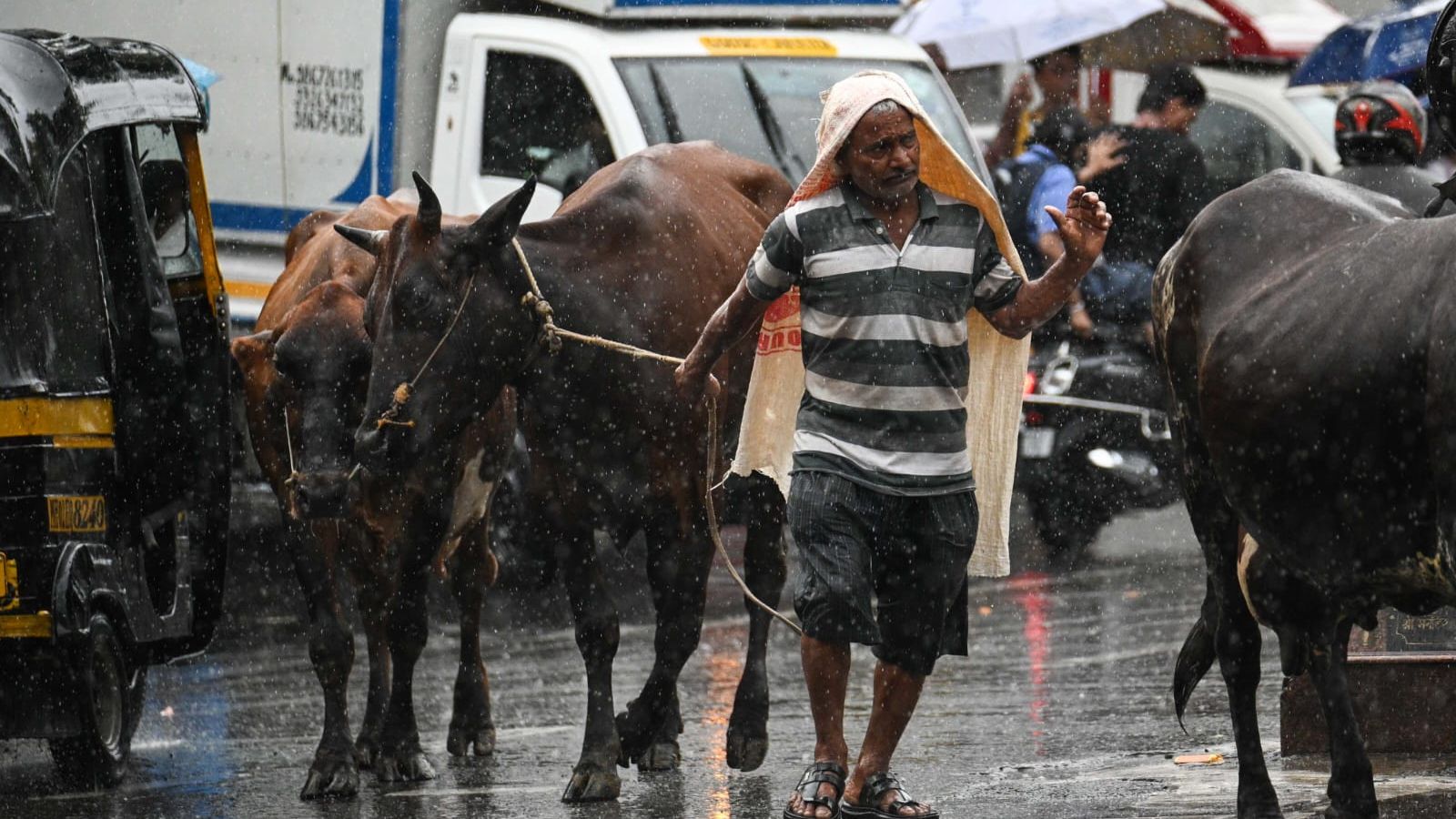
With the start of October, the city is now bracing for the withdrawal of the monsoon. The official date of monsoon withdrawal in Mumbai is October 10, and the city is set to witness further rollback of rain activity. (File)
Mumbai has experienced another month of rain deficit, with strong monsoon currents eluding the region and the suburban station recording below-average showers of 308 mm throughout September. As the southwest monsoon enters its final leg, the India Meteorological Department (IMD) has forecast only light showers in the upcoming week.
Typically, the Mumbai suburbs receive 2,390 mm of rainfall during the monsoon season, which spans from June to September, while Colaba coastal station receives 2,102 mm of rain. But amid intensifying El Niño weather patterns – a phenomenon in the eastern Pacific Ocean that influences global weather patterns – the monsoon season this time was characterised by a rain deficit – barring July, when Mumbai clocked above-average rainfall by a margin of 66 percent.
After recording below-average rainfall in June and August, Mumbai recorded deficit showers even in September. The IMD data shows that between September 1 and September 30, the Santacruz suburban station recorded 304.2 mm of rainfall, marking a departure of 20 percent below normal rainfall in September, when the Santacruz observatory records an average of 383.5 mm of rainfall.
In some respite, moderate spells of rainfall lashed parts of Mumbai and its neighbouring districts on Tuesday night. However, the showers remained concentrated in suburban pockets, which recorded 31.2 mm of rain between Tuesday and Wednesday morning, while the island city division remained dry.
Previously, in August too, Mumbai received only 318 mm of rainfall, accounting for only 57 percent of its actual monthly average of 560.8 mm.
With no heavy downpour throughout the monsoon season, Mumbai’s island city division has failed to surpass its average monsoon quota. Since the monsoon onset in June, Colaba station has received only 1,957 mm of rainfall. By contrast, buoyed by above-average showers in July, Santacruz station surpassed its seasonal monsoon average, recording 2,530 mm of rainfall between June and September.
The deficit showers align with the IMD’s forecast of below-average monsoon showers across the country owing to the developing El Niño.
Story continues below this ad
According to weather observers, Mumbai did not experience heavy showers due to favourable, rain-inducing systems evading the region throughout the monsoon season.
With the start of October, the city is now bracing for the withdrawal of the monsoon. The official date of monsoon withdrawal in Mumbai is October 10, and the city is set to witness further rollback of rain activity.
© The Indian Express Pvt Ltd

Nayonika Bose is a Senior Correspondent with The Indian Express’ Mumbai bureau. While in the early stages of her career, her focused reporting on local governance and community welfare already demonstrates clear Expertise and Trustworthiness in covering essential civic issues impacting Mumbai's residents. Expertise & Authority (E-E-A-T) Specialized Focus: Nayonika's reporting is dedicated to civic and community issues, providing readers with highly relevant, ground-level information about the functionality and administration of India's largest metropolitan area. Core Coverage Areas: Her articles highlight a strong focus on the fundamental quality of life and public safety in Mumbai, including: Civic Infrastructure: Reports on critical failures and initiatives related to public works, such as the recurring problem of unauthorized building collapses in Navi Mumbai, the construction of new infrastructure projects (like the Dahisar-Bhayandar Link Road and the Mahalaxmi cable-stayed bridge), and the maintenance of essential city services (e.g., manhole cover theft). Urban Governance & Crisis Management: Provides detailed coverage of the Brihanmumbai Municipal Corporation's (BMC) response to major crises, particularly during the monsoon (e.g., heavy rainfall, water cuts, and public health concerns like dengue and malaria) and large-scale public safety incidents (e.g., the hoarding collapse fallout). Community Welfare & Rights: Reports on key social issues, including the financial aid scheme for persons with disabilities, the struggles of Mumbai's hawkers protesting eviction drives, and the dangers faced by workers due to the continuation of manual scavenging in water tanks. Cultural & Heritage Reporting: Covers significant community stories, including the restoration of British-era fountains and the history of institutions like the 126-year-old Chinchpokli cemetery, showing a breadth of interest beyond pure administration. Tweets @nayonikakb ... Read More
Stay updated with the latest - Click here to follow us on Instagram
KioskNews shows a cleaned-up reading view extracted from the publisher’s page — the original always lives on their site, not ours.