Every Chronicles Of Narnia Book, Ranked From Worst To Best

Once head of Screen Rant's Star Wars coverage and co-lead of Superheroes, Tom Bacon now works with the movies and books teams. He's a lifelong fan of the fantasy and sci-fi genres, and loves franchises such as Doctor Who and Marvel. You can find him on Twitter @TomABacon, on LinkedIn @tabacon, or on Muckrack under tombacon.
Tom has a wide range of interests, and he continues to serve his university as a volunteer chaplain. He's heavily involved with his local church, and anyone who checks him out on Twitter will swiftly learn he's into British politics too.
C.S. Lewis' The Chronicles of Narnia is one of the greatest fantasy series of all time. In the 1950s, C.S. Lewis and his friend J.R.R. Tolkien essentially reinvented the entire fantasy genre. As close as they were, though, the two authors took a radically different approach; Tolkien disliked Narnia because of its inconsistent world-building, the effortless way it blended nymphs and dwarves with Father Christmas, and an allegorical style much more overt than anything Tolkien was comfortable with.
Like so many children, I grew up with The Chronicles of Narnia. I still have my childhood collection, and during the pandemic I had the joy of introducing the most famous story — The Lion, The Witch and the Wardrobe — to one of my nephews as I read chapters to him over an evening Zoom call. And yet, as much as I love The Chronicles of Narnia, every reader has to admit not every story is equal. Here are the Narnia books, ranked from worst to best.
7 The Horse and His Boy

Published in 1954, The Horse and His Boy stands out from all the other stories of Narnia. Tonally, it's very different; it's more of a high fantasy than anything else, and the main characters of the Narnia books (who traditionally serve as audience surrogates) barely appear. It's set during the reign of the Pevensie children, starring two children and two talking horses who flee into Narnia bearing news of a Calormen plot. Aslan is present (as ever), and is explored in a fascinating way. It's a good story, but an odd fit.
The overall tone of The Horse and His Boy is odd, because Lewis deals with real-world issues like slavery, forced marriage, and even attempted suicide, making this surprisingly adult. The Calormen material has aged particularly poorly, and is now seen as quite a racist caricature. Despite this, many have praised The Horse and His Boy for a consistency of world-building that differentiates it from the rest of the series. Personally, I'll always consider it the weakest book in The Chronicles of Narnia, but it still has a lot to praise.
6 The Silver Chair

Published in 1953, The Silver Chair is the third book in a loose "Caspian Trilogy." It brings back Eustace Scrubb, setting up his classmate Jill Pole as another frequent Narnia visitor, as they pursue a quest to discover the fate of King Caspian's son, Prince Rilian. Again, stylistically there's something unusual about The Silver Chair; the whole quest has a bleakness to it that's a little overwhelming, rather than the typical Narnian sense of wonder and adventure. The book's villain, the Lady of the Green Kirtle, is frustratingly undeveloped.
Again, though, there are still some fantastic elements to The Silver Chair. It introduces Puddlegum, a gloomy Marsh-wiggle who's become one of Lewis' most beloved characters. Thematically, The Silver Chair is unusually focused for Lewis; it's an interrogation of faith in fictional form. This is a book that has improved in my view as I grew older, more ready to hear its message. Still, I can only rank it lower because of the lesser amount of wonder.
5 The Magician's Nephew

Modern readers often go through the Narnia books in timeline order, which is a shame; published in 1955, The Magician's Nephew is one of Lewis' weaker books. Part of the problem is that it suffers from what you could call the "Prequel Curse," in that any prequel story tends to explain too much and thus detract from the strangeness and beauty of a fantasy world. The Magician's Nephew is the Genesis of Narnia, meaning it's essentially the ultimate prequel. By the end, it's all a little bit too neat and tidy.
Digory and Polly feel less compelling than some of Lewis' other protagonists (although Digory at least had a strong motivation). The titular magician is intentionally ridiculous, giving the whole story something of an air of absurdity. Greta Gerwig's upcoming Narnia series is beginning with The Magician's Nephew, likely because it's a story viewers will be less familiar with, and I can't help feeling that's something of a gamble.
4 The Last Battle

If The Magician's Nephew is the Genesis of Narnia, The Last Battle is Revelation. Lewis literally handles the end of the world, using Narnia to confront the religious question of whether all faiths lead to God, and the Calormen problem becomes increasingly overt. Published in 1956, this is one of the more overtly allegorical tales, so much so that excerpts are regularly used by Christian preachers to help describe heaven. As with The Silver Chair, this is one of Lewis' bleaker books, which makes it a challenging read.
As a Christian, though, I have to say that The Last Battle has become one of my most beloved books. The "false Aslan" subplot is Lewis at his wisest, a warning to readers that not everything that dresses like Christ is actually Christian — a caution that seems particularly timely right now.
3 The Voyage of the Dawn Treader

Now we come to one of the more fantastical Lewis books, The Voyage of the Dawn Treader, second in the loose "Prince Caspian" trilogy. This is basically Lewis' version of The Oddyssey, as Prince Caspian sails for the end of the world but finds himself accompanied — as ever — by a group of children from our world. Published in 1952, it presents Narnia at its most wondrous, as Lewis takes his heroes from one magical island to another.
The addition of Eustace is absolutely genius, because we see the transformative effect of wonder in real-time. "There was a boy named Eustace Clarence Scrubb, and he almost deserved it," Lewis writes in his first line. The book's episodic structure allows readers to enjoy Eustace's growth as a character, until he ends up as a true Narnian hero. The Voyage of the Dawn Treader is, quite simply, a delight.
2 Prince Caspian

Published in 1951, Prince Caspian is the perfect sequel. It returns to Narnia in all its wonder, but it also expands the story and the world, introducing whole new characters and giving the narrative an edge that was lacking in the fairytale style of The Lion, the Witch and the Wardrobe. Yes, Narnia is recognizable and familiar, but Prince Caspian turns that familiary on its head; the Narnia readers loved is ancient history, and this feels more like an echo than the same thing.
The narrative of Prince Caspian is a work of genius. The book has a simple adventure premise; the rightful king must regain his throne, and is tempted into evil alliances as he tries to figure it out. He's assisted by heroes summoned from the past by blowing a horn (a classic fantasy idea later used in Robert Jordan's Wheel of Time), and Lewis pens one of his best ever action sequences in a striking duel involving Peter.
1 The Lion, the Witch and the Wardrobe

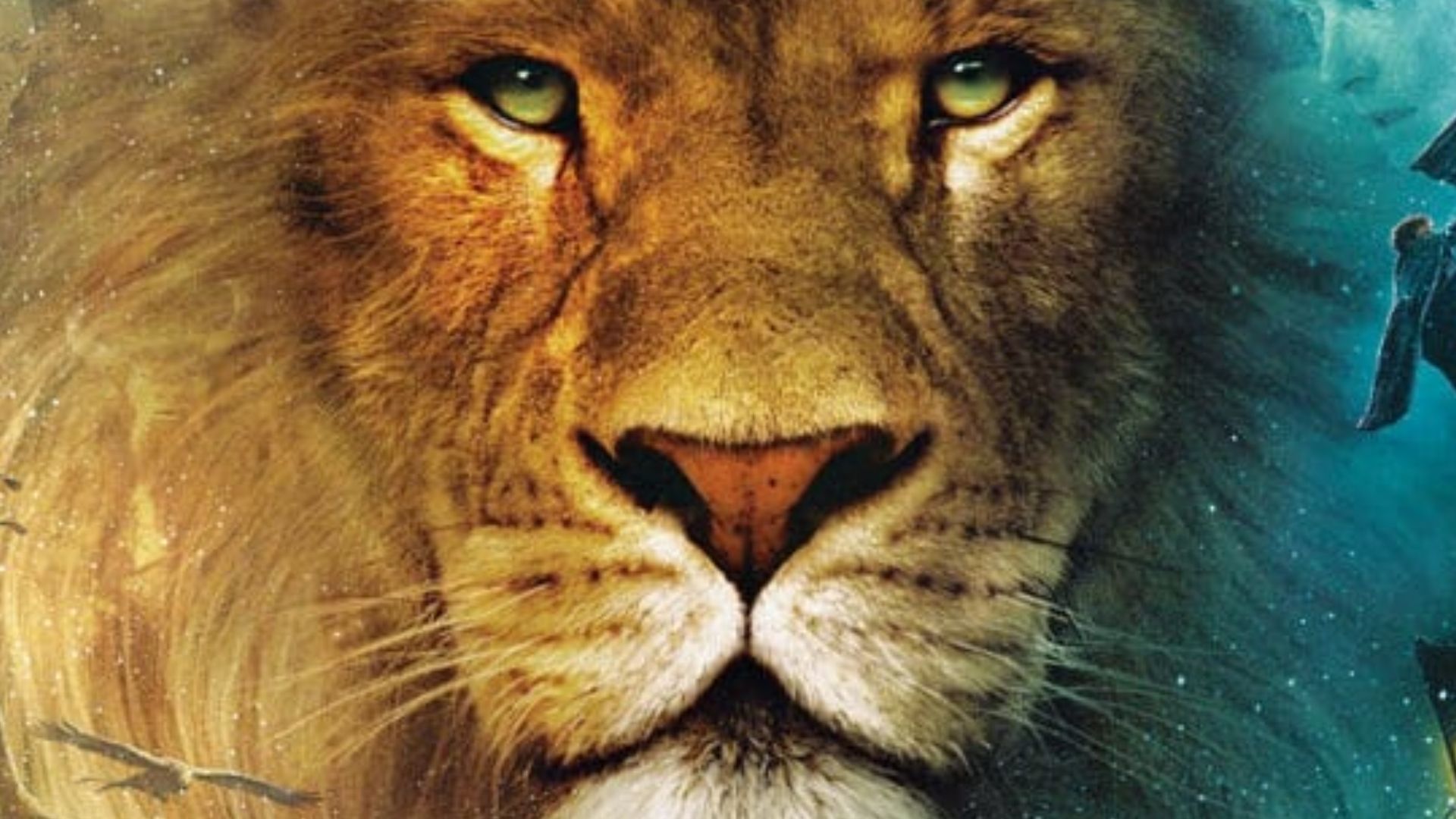
Ultimately, though, only one book can ever be ranked first in The Chronicles of Narnia: Lewis' masterpiece, The Lion, the Witch and the Wardrobe. Published in 1950, this was the book that started it all; it introduced readers to the Pevensie children and, through them, to Narnia itself. The Lion, the Witch and the Wardrobe is a fairytale adventure that doesn't really care about world-building, sacrificing internal consistency to simply tell a wonderful story full of joy and wonder.
It's true The Lion, the Witch and the Wardrobe is hardly subtle in its allegories; Aslan literally has a death and resurrection, which is about as explicit a type of Christ as you can get. But that's simply what The Chronicles of Narnia is at heart; a Christian allegory, a joyful retelling of the Bible story in a fantasy setting, with memorable characters like the White Witch and Aslan. There can be no better story in this series.
KioskNews shows a cleaned-up reading view extracted from the publisher’s page — the original always lives on their site, not ours.