China puts DF missiles on display as flight bans fuel speculation about ICBM test
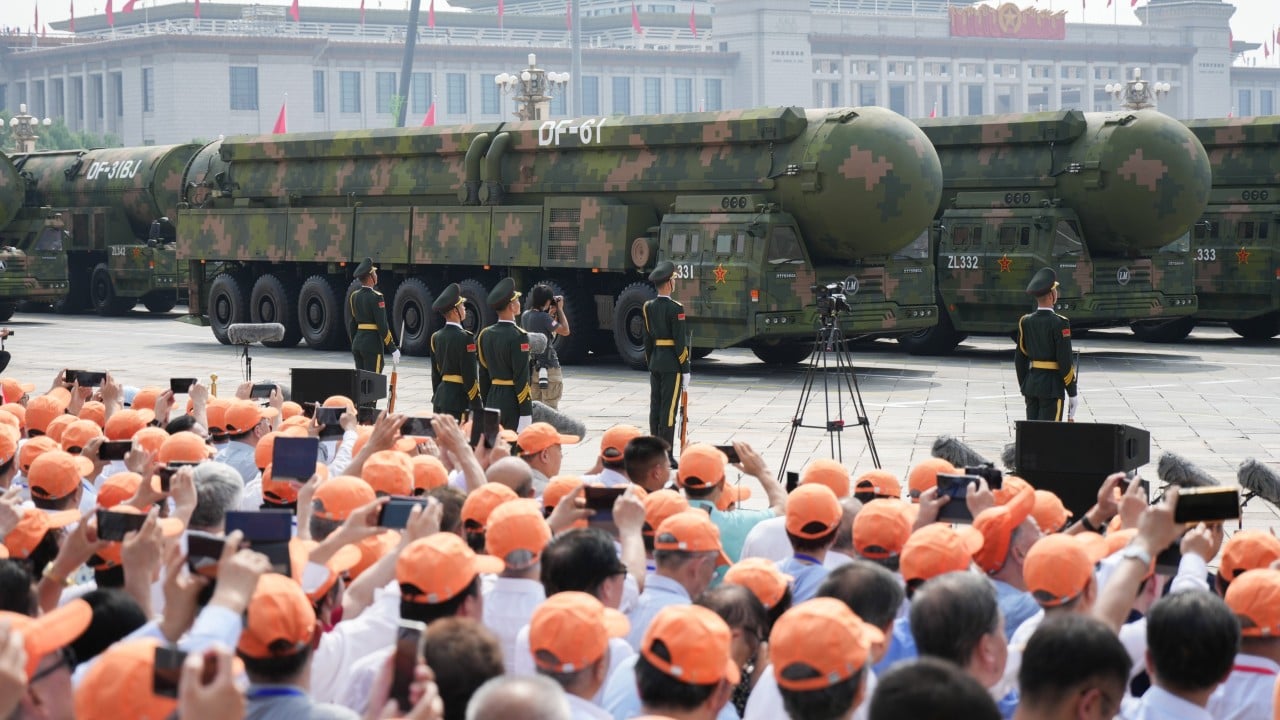
Chinese state media showcased several Dongfeng-series missiles on Thursday to mark a key anniversary, including the nuclear-capable DF-61 intercontinental ballistic missile (ICBM) and the rarely seen DF-100 long-range supersonic cruise missile.
The coverage coincided with social media reports suggesting that the People’s Liberation Army Rocket Force might have conducted an inland ICBM test, potentially involving a ground-based mid-course missile interception, although neither activity has been officially confirmed.
The developments came as China marked the 66th anniversary of the DF-1, the first missile in the Dongfeng series, amid growing emphasis on the rocket force’s combat readiness and strategic deterrence capabilities.
Chinese state broadcaster CCTV, citing military expert Shao Yongling, said the DF-61 had been used in routine rocket force training and had progressed from debut to regular training much faster than the traditional timeline for an ICBM.
China showcases its DF-61 ICBM and DF-100 cruise missile in display of rocket force capabilities
The DF-61 is a strategic nuclear platform designed for intercontinental strikes and is part of China’s nuclear deterrent and retaliatory capabilities, according to CCTV.
Shao attributed the DF-61’s rapid integration to the rocket force’s well-established equipment support and training systems, noting the missile is fully compatible with existing command, communications and logistical support networks.
Being a part of routine training means the DF-61 has entered practical combat-oriented training programmes involving field manoeuvres and repositioning between launch sites, according to Shao.
Eight notices to airmen issued on Wednesday designated four temporary danger areas across northern and northwestern China for Thursday, pointing to a possible rocket force ICBM test, according to a post on Sino Defence Forum.
The post also included a map showing a possible missile flight path from the central Shanxi province to Xinjiang Uygur autonomous region in the far west.
The aviation notices prohibited civilian aircraft from entering the designated airspace, which was restricted from the surface to unlimited altitude.
According to another Chinese social media post, the notices suggested that the PLA had probably simulated an ICBM attack followed by a mid-course interception.
The notices did not specify the purpose of the restrictions, but their location and timing aligned with a possible ballistic missile test. The South China Morning Post cannot independently verify these social media posts.
China has in the past conducted inland missile tests without officially announcing them.
China issued no-fly zone notices when it test-flew the DF-41 ICBM in 2017 and 2018, according to the Washington Free Beacon. The report said the DF-41 missile was launched from Taiyuan, Shanxi on May 27, 2018, and travelled thousands of miles before it hit a simulated target in western China’s Gobi desert – a trajectory similar to the one shown in the Sino Defence Forum map.
China rarely reports its missile tests and has publicly acknowledged very few landmark long-range strategic ballistic missile tests. The latest announced was in July, when China launched a ballistic missile – believed to be the JL-3 – from a nuclear-powered submarine into the deep Pacific.
However, it has announced seven land-based, mid-course antiballistic missile technical tests before, with the latest one in April 2023.
In another CCTV report from Wednesday, China showed rare footage of DF-100 long-range supersonic cruise missiles. Also known as the CJ-100, the DF-100 first debuted at a military parade in 2019 and has rarely been seen since.
The DF-100 complements China’s arsenal of ballistic missiles, including the DF-21D anti-ship missile, forming part of China’s broader anti-access and area-denial strategy.
November 5 marked the 66th anniversary of China’s first successful launch of the DF-1, a short-range surface-to-surface ballistic missile, from the Jiuquan launch site in 1960.
Developed using Soviet missile technology, the DF-1 marked the beginning of China’s Dongfeng ballistic missile programme, which has since evolved to include nuclear-capable intercontinental missiles.
KioskNews shows a cleaned-up reading view extracted from the publisher’s page — the original always lives on their site, not ours.