Japan launches new national agency to deal with disasters
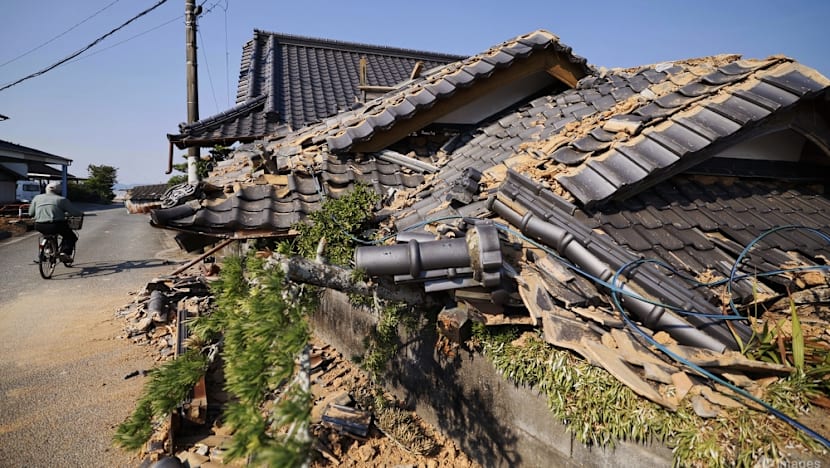
TOKYO: Japan on Monday (Nov 2) launched a new national agency focused on disaster management with the goal of making the country better prepared if there's a megaquake along the Pacific coast or in Tokyo, or an eruption of Mount Fuji.
More than 350 workers at the National Disaster Management Agency will oversee preparedness, emergency response and reconstruction efforts.
The agency is not being created in anticipation of any specific calamity, but rather is meant to fill a gap amid worries about whether the nation is prepared for a crisis along the lines of the 2011 quake and tsunami in northern Japan, which killed nearly 20,000 people, and the subsequent Fukushima nuclear disaster.
Japan, which is part of the Pacific "Ring of Fire", is one of the most disaster-prone places on earth, but it has never had an agency dedicated to dealing with disasters.
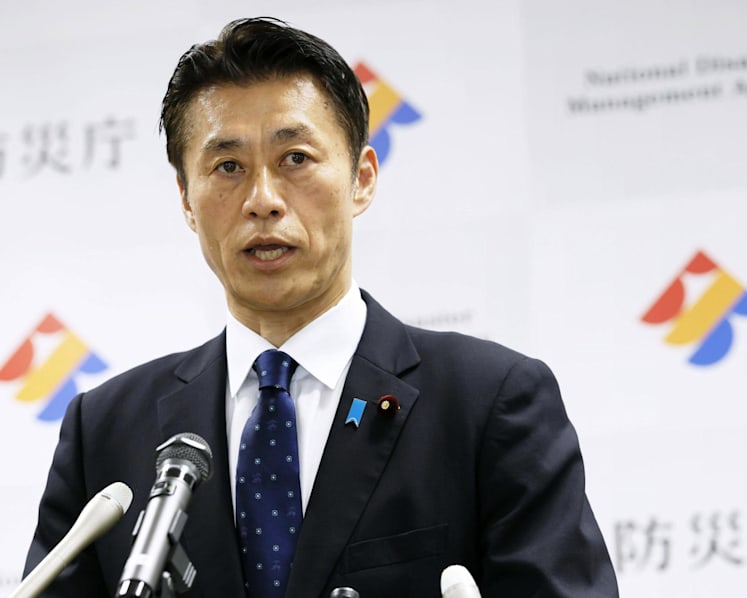
“As the command centre of disaster response, we will do everything to strengthen our preparedness to protect people's lives and properties ... and aim to become the world's most prepared,” Reconstruction Minister Goshi Hosono said.
Hosono will manage the agency headed by Japanese Prime Minister Sanae Takaichi.
THE AGENCY URGES PREPAREDNESS REVIEW NATIONWIDE
Hosono on Monday issued “emergency requests” for both municipalities and Japanese citizens to check the quake resistance of their homes, make sure their furniture is safely anchored, evaluate their evacuation procedures and stock up on water and portable toilets for at least three days.
“Please think about it for yourself and take action,” he said.
Hosono, who was the minister in charge of the Fukushima nuclear crisis, said he wants to use his expertise from the 2011 disaster to strengthen the agency.
But there are worries that the nation is unprepared for future disasters.
A reconstruction agency was established to help northern Japan's recovery from the 2011 disaster, including the Fukushima nuclear plant's decontamination and decommissioning effort, something that required long-term support, but there was no centralised disaster agency.
Less than half of municipal officials in Japan have received disaster management training in the past five years. Only 15 per cent of Japanese municipalities have evacuation contingency plans for elderly and handicapped residents requiring assistance, Hosono said.
Japan used to have reactive disaster response units, with officials from different ministries and departments gathering and working as a temporary team, without a cross-departmental command centre.
JAPAN WANTS TO ADDRESS EXISTING RISKS
Experts have cautioned about the possibility of major quakes in the coming decades and, although specific timing and locations cannot be predicted, officials want people to be prepared.
The biggest worry is a megaquake linked to the Nankai Trough, an undersea trench in the Pacific off southeastern Japan, which could cause an estimated 298,000 deaths, 6.5 million evacuees and 2.35 million lost homes, according to government assessments.
“If this actually hits, our future will be at stake,” Hosono said.
The government also estimates nearly 200,000 deaths could result from a megaquake from two troughs off Japan’s northern coasts. A separate major quake striking metropolitan Tokyo could cause an estimated 18,000 deaths, 4.1 million evacuees and the loss of 400,000 homes.
A Mount Fuji eruption could affect 790,000 people and their homes, while disrupting transportation, power lines and key infrastructure.
NEW AGENCY AIMS TO IMPROVE CONDITIONS AT EVACUATION CENTRES
Japan has long been criticised for its poorly equipped evacuation centres, where people are typically pushed into gymnasiums, community centres and classrooms that lack adequate privacy, bedding, clean toilets or hot food — harsh environments that experts have linked to health problems or even deaths.
The agency aims to change that by bringing in clean portable toilets, kitchens that can serve hot food, facilities for hot baths and cardboard beds.
The magnitude 9 earthquake and massive tsunami that hit northern Japan in March 2011 killed nearly 19,800 people, including 3,810 deaths linked to subsequent harsh living conditions.
In July, a magnitude 7.1 earthquake that struck the southwestern prefecture of Kumamoto killed 38 people and destroyed or damaged more than 69,000 homes, leaving wide areas without water and power for weeks.
Under punishing heat, gymnasiums and community centres often lacked air conditioning. Many people shunned the shelters and stayed in their vehicles outside their homes or in parking lots.
KioskNews shows a cleaned-up reading view extracted from the publisher’s page — the original always lives on their site, not ours.