NO DEAL: Longest-ever UN climate talks collapse over fossil fuels and funding
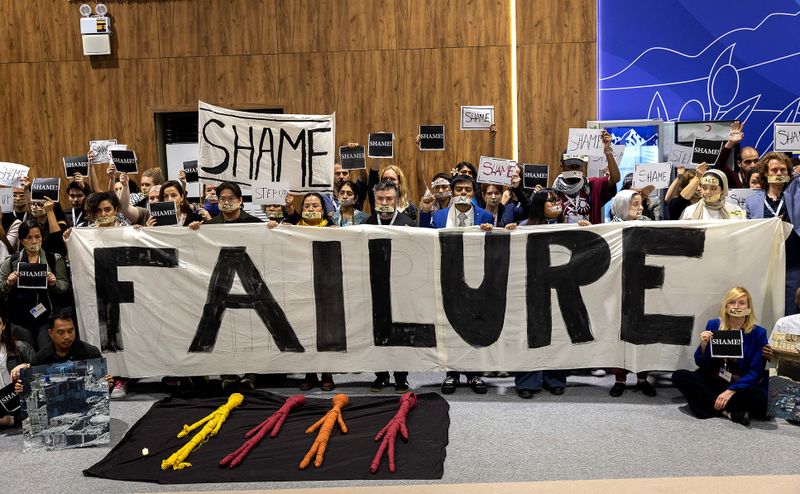
COP31 President Murat Kurum struck the final gavel in the afternoon on Sunday, 22 November, concluding what many have called the most contentious, divisive and disappointing UN climate talks to date.
The conference was meant to conclude on Friday, but it ran well into the weekend as impasses over fossil fuels and finance turned COP31 into the longest climate conference ever.
The Antalya pact, drafted by the Turkish and Australian joint presidencies and the deal countries would have accepted had consensus been reached, called on countries to minimise the 1.5°C overshoot, which scientific reports have found is inevitable. The pact also called on developed countries (the EU, UK), historically responsible for higher emissions fuelling the climate crisis, to provide fair finance to developing nations to help them adapt to the impacts of climate change. The pact also invited countries to electrify their economies.

But the text failed to make mention of the transition away from fossil fuels for the EU and UK. Even at the start of the process, there was no mention of a fossil fuel phase-out from the COP co-presidencies. The first draft of the cover decision released earlier in the week called for a faster phasing out of fossil fuels; however, that too was removed after pushback from oil-producing countries like Saudi Arabia, India and China.
“It fails to meet the moment… We will not endorse a cover decision or an Antalya pact that does not even mention fossil fuels, which is the key driver of climate change,” said Darragh O’Brien, Ireland’s environment minister, speaking on behalf of the EU.
In the end, the EU, UK and several developing nations rejected the deal because it failed to mention fossil fuels.
“I am deeply disappointed that Cop31 has ended without consensus on an overarching outcome. I share the very profound frustration of all those who expected governments to rise to the moment the climate crisis demands. But this setback does not change the facts. There may be no consensus in the negotiating room. There is no ambiguity in the science,” said UN Secretary-General António Guterres.
The quiet part
The question of climate finance, and the lack of willingness from developed nations to make new finance available, also caused some deadlocks during the climate conference.
One of the African Group of Negotiators’ key negotiating priorities was the tripling of adaptation finance to at least $120-billion delivered to developing nations annually by 2035. Coming in, the African group wanted a clear baseline and pathway that would explicitly detail how this goal would be reached. That was not included in the final text.
Under Article 9 of the Paris Agreement, developed nations have an obligation to provide climate finance to help developing countries cut their emissions and adapt to climate change.
While financial flows can come from multilateral development banks (private, interest-bearing loans), the majority of the money is expected to come directly from developed countries in the form of grants.
In the final days of the climate talks, dissatisfaction over how developed nations approached Article 9 emerged from negotiators, observers and civil society organisations alike.
From the perspective of the COP31’s President of Negotiations, Chris Bowen, reaching a consensus has never been easy.
“This is my fifth COP. No COP I’ve been to has been easy. No COP I’ve been to has reached agreement immediately, or even at the second go. This is a consensus party-driven process. We’re guiding the parties towards consensus, and we’ll continue to do that, be very clear. Because this is worth working for and fighting for,” Bowen said.
African Group of Negotiators sound alarm
However, during a media briefing on Thursday, the African Group of Negotiators sounded the alarm on threats to the multilateral process of the climate negotiations.
“We came to this COP with the understanding that this COP will deliver for implementation. In lieu of that, our slogan to the core presidency is implementation means, means of implementation,” said Dr Nana Antwi-Boasiako Amoah, the African Group of Negotiators’ chairperson.
The African Group of Negotiators’ lead negotiator on the climate finance track, Debbie Swanepoel, told Daily Maverick that developed nations were trying to renegotiate the Paris Agreement while also calling on developing nations to be more ambitious without the means of implementation.
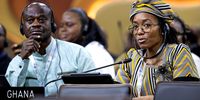
Speaking on behalf of the African Group of Negotiators, Dr Zanetor Agyeman-Rawlings, Ghana’s Minister of the Environment, Science and Technology, delivered a powerful statement during the closing, criticising the text for falling short on Africa’s priorities.
These include:
Adaptation finance: Reaffirms the goal to triple adaptation funding by 2035, but sets no baseline and no concrete figure.
Antalya-Addis Ababa roadmap: Produces another report rather than actual delivery.
Loss and damage: Welcomes and encourages support, but includes no resource targets.
Trade and unilateral measures: Offers dialogue without a dedicated agenda item or firm pushback against unilateral cross-border trade measures.
Just transition: Reduces the issue to a single generic sentence that ignores African development realities and lacks a backing work programme.
“These are no small gaps, for millions of children, youth, women and men in communities are already facing floods, droughts and food insecurity. A commitment without a baseline cannot be called finance. It is unconscionable to place the disproportionate burden on those who contributed the least and yet are suffering the most,” Agyeman-Rawlings said.
She added that even as these tensions unfolded, Africa had chosen to build multilateralism rather than walk away from it.
“The group will therefore not stand in the way of adopting this cover decision. We are allowing this text to be adopted in the interest of, and for the protection of, multilateralism. We do so in good faith and in the spirit of the Paris Agreement, and we will defend against any attempt to reopen the Paris Agreement,” Agyeman-Rawlings said.
Civil society calls out COP31 hypocrisy
While the EU and its allies took the moral high ground with their rejection of the Antalya Pact, civil society organisations have increasingly come out to accuse the bloc of deep hypocrisy.
Activists from Climate Action Network International said that the EU’s rejection of the final text served as a “fossil fuel smokescreen” to obscure the bloc’s systematic obstruction of funding obligations.

“Before we even arrived in Antalya, the EU’s Climate Commissioner, Wopke Hoekstra, had ruthlessly declared discussions on new climate finance as ‘dead in the water’. Rejecting the text because it does not include language on fossil fuels is the height of hypocrisy. Deeds, not words, are what matter. They have failed to phase out their own fossil fuels, and they have failed to meet their obligations to provide finance to developing countries,” said Tasneem Essop, Executive Director of Climate Action Network International.
Agyeman-Rawlings said that the African Group of Negotiators’ acceptance of the final text was not the end of the negotiating bloc’s task, and that Africa would continue fighting for tripling adaptation finance, a replenishment of the loss and damage fund, and a functioning just transition mechanism at COP32 in Addis Ababa in 2027.
“We will bring these demands to every negotiating room until they are met. Africa came to COP31 for delivery, and we leave it ready to move forward, still fighting for delivery,” Agyeman-Rawlings said. DM
This story was produced as part of the COP31 Climate Change Media Partnership, a journalism fellowship organised by Internews’ Earth Journalism Network, Informed Earth and the Stanley Centre for Peace and Security.
KioskNews shows a cleaned-up reading view extracted from the publisher’s page — the original always lives on their site, not ours.