South Korean probe concludes Pyongyang planted DMZ mines
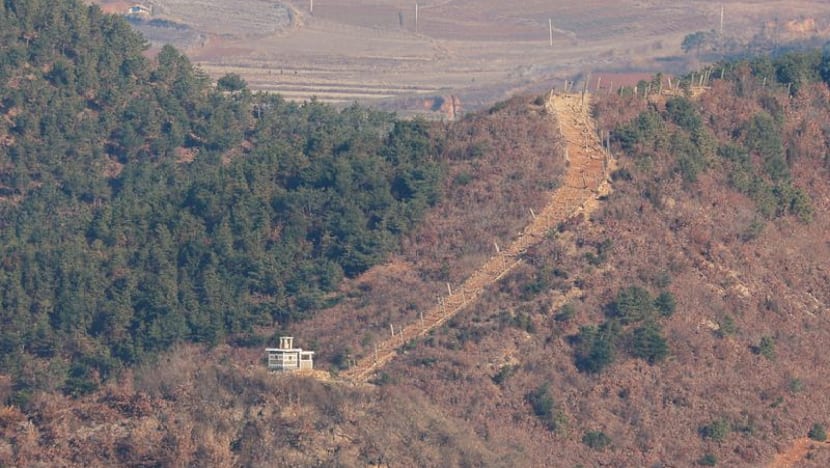
SEOUL: South Korean and UN investigators have concluded that two landmines that exploded inside the Demilitarised Zone (DMZ) last month and injured three soldiers had been planted by North Korea, Seoul's military said on Monday (Oct 5).
The findings by the military and the US-led United Nations Command were consistent with a preliminary probe that indicated North Korean troops had crossed the Military Demarcation Line - an accusation Pyongyang denies.
The DMZ, one of the world's most heavily fortified and mined frontiers, has divided the Korean Peninsula since the 1953 armistice. Landmine incidents have previously heightened tensions between the two Koreas, which remain technically at war.
"Given the significance of the incident, the National Forensic Service conducted several rounds of forensic analysis," Kwon Dae-won, vice chairman of South Korea's Joint Chiefs of Staff, said at a briefing to present the findings.
"The first and second rounds of testing detected TNT, brown foreign material and thermosetting resin components, identifying the device as a North Korean-made plastic anti-personnel mine," he said.
Fragments from last month's blast were also compared with previously recovered North Korean landmines, Kwon said, adding that "forensic analysis reconfirmed that they were identical".
Three South Korean officers were severely injured in the Sep 21 explosion, including one who lost his foot.
The investigation also found a third, unexploded landmine near the site of the incident, Kwon said, leading the South Korean military and UN Command to determine that the incident "constituted a violation of the Armistice Agreement".
The mines were assessed to have been planted about a year ago, he said.
Kwon said South Korean forces would continue mine-clearance operations south of the Military Demarcation Line, which runs through the middle of the DMZ.
The senior military official urged the North to "immediately remove the mines it had laid in violation of the Armistice Agreement".
"Our military strongly urges North Korea to offer a sincere apology."
Pyongyang has denied responsibility for the blasts, with Kim Yo Jong, the powerful sister of the North Korean leader, calling Seoul "despicable" after an earlier demand for an apology.
South and North Korea technically remain at war as the 1950 to 1953 Korean War ended in an armistice, not a peace treaty.
KioskNews shows a cleaned-up reading view extracted from the publisher’s page — the original always lives on their site, not ours.