The world comes to New York: What’s at stake at UN General Assembly high-level week
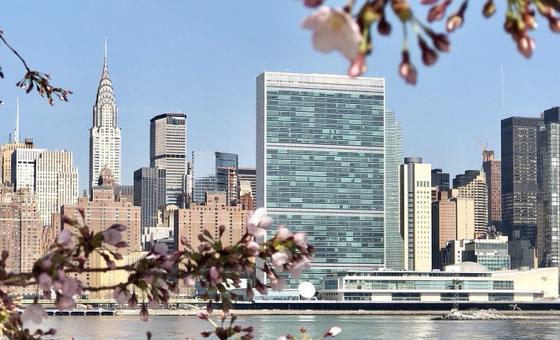
Each September, New York becomes the centre of global diplomacy as presidents, prime ministers, ministers and diplomats from around the world gather at United Nations Headquarters.
At a time of mounting geopolitical tensions and overlapping global crises, leaders will tackle a packed agenda that includes conflicts and international security, climate change, pandemic preparedness, sea-level rise, the fight against racism and progress towards the Sustainable Development Goals (SDGs).
The high-level week of the UN General Assembly’s 81st session unfolds against a backdrop of growing divisions between countries and pressure on the multilateral system. The session will be presided over by newly elected Assembly President Khalilur Rahman of Bangladesh under the theme: “Restoring trust, managing transformation: A United Nations that delivers for all.”
The world’s biggest diplomatic gathering
The centrepiece of High-Level Week is the General Debate, which begins on 22 September. Over several days, presidents, prime ministers and senior representatives of all 193 UN Member States will address the General Assembly from its iconic green marble podium.
The speeches provide a global snapshot of national priorities and concerns, with conflicts, economic challenges, humanitarian crises, climate change, development and emerging technologies expected to feature prominently.
Yet much of the diplomacy takes place behind closed doors, where hundreds of bilateral and multilateral meetings offer leaders a rare opportunity to meet allies, partners and rivals in one place.
Can the world still meet the 2030 deadline?
Ahead of the General Debate begins, leaders will gather on 18 September for the annual SDG Moment.
In 2015, countries adopted 17 Sustainable Development Goals aimed at tackling challenges ranging from poverty and hunger to education, clean water and access to energy by 2030.
With less than five years remaining, the meeting will focus not only on assessing progress but also on highlighting practical solutions that can be expanded and replicated elsewhere.
Climate action in a warming world
On 23 September, UN Secretary-General António Guterres will convene world leaders for a High-Level Event on Climate Action and the Just Transition.
With global temperatures continuing to rise, discussions will focus on accelerating the shift to renewable energy, expanding climate finance for developing countries and strengthening support for communities already experiencing the impacts of climate change.
The following day, leaders will turn their attention to sea-level rise, one of the most visible consequences of global warming. For many small island developing States and low-lying coastal communities, rising seas are already threatening homes, infrastructure and freshwater supplies.
The meeting aims to strengthen international cooperation and mobilize support for countries most at risk.
Preparing for the next pandemic
On 25 September, Heads of State and Government will revisit the lessons of COVID-19.
The pandemic demonstrated how quickly a local outbreak can become a global emergency and exposed major inequalities in access to vaccines, medicines and other essential resources.
Leaders meeting on pandemic prevention, preparedness and response will discuss how to strengthen health systems, improve readiness, and ensure a more equitable international response to future health crises.
Rights, equality and inclusion
Another major meeting on 23 September will mark the 40th anniversary of the Declaration on the Right to Development, adopted by the General Assembly in 1986. The declaration established that development is about more than economic growth, emphasizing participation, opportunity and equity.
On 28 September, the UN will also commemorate the 25th anniversary of the Durban Declaration and Programme of Action, one of the principal international frameworks for combating racism, racial discrimination, xenophobia and related intolerance.
The anniversary provides an opportunity to assess progress and examine why discrimination remains a persistent challenge in many parts of the world.
Keeping nuclear disarmament on the agenda
The series of major meetings concludes on 29 September with a high-level plenary meeting marking the International Day for the Total Elimination of Nuclear Weapons.
Nuclear disarmament was among the first issues addressed by the United Nations, yet nearly eight decades later nuclear weapons remain part of the global security landscape. The UN continues to regard their complete elimination as its highest disarmament priority.
‘We the peoples’
This year's High-Level Week takes place at a moment when international cooperation is under strain. From armed conflicts and climate change to widening inequality, countries face a growing number of challenges that no nation can solve alone.
Reflecting on the opening words of the UN Charter, Secretary-General António Guterres recently offered a reminder of the organization's founding purpose:
"Not we the powerful. Not we the victorious. We the peoples – all of us – bound by a single conviction: that we are safer, stronger and more human when we stand together."
Over several days in September, world leaders will have an opportunity to demonstrate how far they are prepared to turn that principle into action.
A changing of the guard
The 81st session will also be the final General Assembly session to begin under António Guterres as Secretary-General. His second and final term ends on 31 December 2026, concluding a decade at the helm of the Organization.
The process of selecting his successor is already under way. The next Secretary-General will take office on 1 January 2027, inheriting an Organization confronting many of the same challenges likely to dominate this year's High-Level Week.
♦ Receive daily updates directly in your inbox - Subscribe here to a topic.
KioskNews shows a cleaned-up reading view extracted from the publisher’s page — the original always lives on their site, not ours.