Trump claims US will have enough rare earths in 10 months; experts call it unrealistic
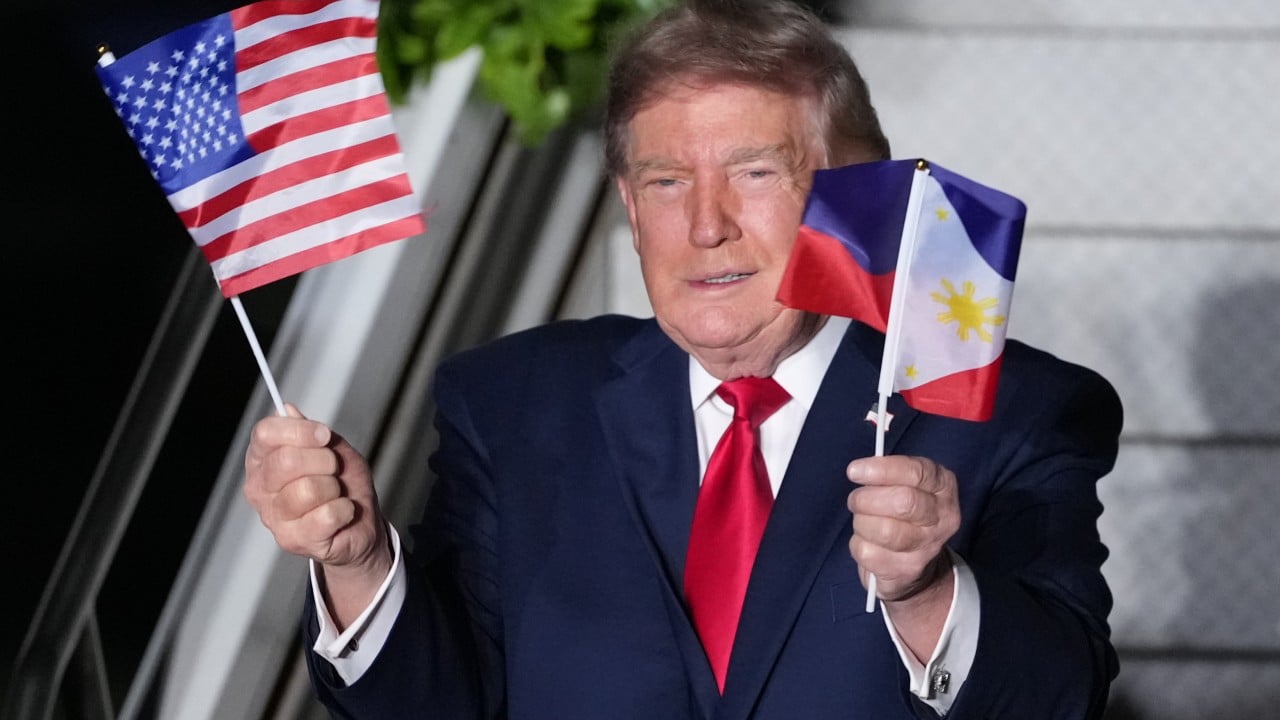
US President Donald Trump’s claim on Tuesday that Washington would catch up to China on rare earth supplies “within 10 months” is “unrealistic” and “diplomatic bluster”, given Beijing’s decades-long dominance in supply chains, experts say.
“The US will not catch up with China in rare earths production, processing or end-user rare earth-enabled product manufacturing in the next 10 months or the next 10 years,” said Jack Lifton, co-chairman of the Critical Minerals Institute, a global think tank.
“I think the president is just voicing diplomatic bluster,” he said, adding that his administration has “failed to create a path to rare-earth-enabled products self-sufficiency for the United States any time in the next decade”.
The US is “making rare earth at a level that we have never made before”, Trump said, when asked for his message to China. The US president was speaking during a media photo-op with Quadrilateral Security Dialogue, or the Quad, leaders in Manila.
“We are gonna catch [up to] them within 10 months, they say,” Trump said, without specifying who “they” refers to. “Everything that we need will happen in 10 months. We are producing major numbers when it comes to rare earths,” he said.
28:34
Live: Donald Trump arrives at Asean summit
Industry analysts pushed back against that forecast, calling the goal unrealistic.
“It’s like trying to get kids to compete in basketball against the NBA,” said David Abraham, principal at Materium Strata, a specialist advisory firm focused on critical mineral supply chains.
“The kids will get there eventually. They’re not going to win tomorrow, no matter how good they are.”
Rare earth issues set to be discussed at Apec summit in Shenzhen
Trump’s statement came just two days before he was scheduled to meet Chinese president Xi Jinping on the sidelines of the Asia-Pacific Economic Cooperation (Apec) summit in Shenzhen. Both leaders are expected to discuss the flow of China’s rare earth exports to the US – a major concern for Washington.
While US rare earth mine production rose 12 per cent to an estimated 51,000 metric tonnes in 2025, it remained heavily dependent on China for rare earth compounds and metals, which accounted for 71 per cent of US imports in 2021–24.
China is also the sole source of US imports of several heavy rare earths – a subcategory of metals critical for military applications.
“The American production of rare earth-enabled products is now in its infancy,” Lifton said.
“I cannot imagine how it can reach a level where it’s independent of the need for Chinese supply any time in the near future.”
SCMP Plus is a new premium news platform that gives you an
all-inclusive edge to stay ahead on China news.
To access our exclusive content you’ll need to subscribe.
Already a subscriber?
LOG IN
He added that creating a total supply chain in the US would take “another generation”.
For Abraham, the issue was not simply whether the US could produce what it needed but whether it could ensure a reliable supply chain.
“I do not see that happening within the next year.”
China currently dominates the global rare earth processing – a group of 17 critical metals vital for high-performance magnets used in vehicles, electronics, wind turbines and robotics.
“China has the advantage of 25 years of dedicated investment of capital and specialised manpower creation, along with the development of an extensive rare-earth-enabled products industrial base,” Lifton noted.
In recent months, rare earth supplies have remained one of China’s biggest leverage tools. Beijing’s export controls on seven rare earths last April, in retaliation for US tariffs, forced temporary factory closures worldwide and exposed deep supply chain vulnerabilities.
00:59
Trump says he might meet North Korean leader Kim Jong-un in China
Under the one-year deal, Washington reduced tariffs on certain Chinese imports and suspended additional trade restrictions in return for a pause on China’s rare earth export controls. The agreement was extended by two months, to January 10, 2027.
Washington has repeatedly pressed Beijing to increase rare earth shipments, urging faster approval of export licences for the strategic minerals.
“While we are getting rare earths and derivative products from China, we are not getting them at the pace and at the level that we would like to be receiving them at,” a senior US official said on Friday.
US imports of rare earth compounds and metals plunged nearly 75 per cent after the Busan deal, averaging just 19.3 metric tonnes a month from November 2025 to September 2026, according to an analysis by the Centre for Strategic and International Studies.
“I expect the president will raise it with President Xi,” the official added.
Beijing has defended its mineral policy, saying that it followed a “responsible and non-discriminatory approach”.
To reduce its dependence on China, the Trump administration has spent billions on domestic and foreign mining projects, taking equity stakes in US miners and striking international deals to build China-free supply chains.
Washington has also signed bilateral and multilateral deals, launching both the 55-nation Forum on Resource Geostrategic Engagement (Forge) initiative to create preferential mineral trade zones and the 26-member Pax Silica coalition to build AI-related supply chains across critical minerals, advanced manufacturing and semiconductors.
The Quad – an informal grouping of four countries – the US, India, Japan and Australia – also announced a US$20 billion “Critical Minerals Initiative Framework” in May.
Quad leaders meet for first time in two years
On Tuesday, the Quad leaders met for the first time in two years and expressed “grave concerns about economic coercion, including through arbitrary export restrictions”.
Even if the US boosts raw output, Abraham said it still lacks the downstream factories needed to absorb those supplies.
“I don’t see a strategy to create the products that use these materials – EVs, wind turbines. We are not creating markets; we’re trying to produce material,” he noted.
Washington’s broad tariff regime is also alienating the very allies it needs to build alternative supply chains, Abraham said.
“It seems to them like we’re using them,” he said. “We want to take your minerals. But then we’re going to tax you for everything that you produce and send to our country by 20 per cent.”
“It doesn’t bode well for us,” he warned.
For Lifton, the US election cycle also creates policy uncertainty that undermines long-term industrial planning.
“Since American priorities seem to change every two or four years, I doubt that self-sufficiency can ever be attained again,” he said.
KioskNews shows a cleaned-up reading view extracted from the publisher’s page — the original always lives on their site, not ours.