Before ‘Widow’s Bay,’ Matthew Rhys’ 3-Part Mystery Gave a Literary Classic a Dark Twist

Jasneet Singh is a writer who finally has a platform to indulge in long rants about small moments on TV and film in overwhelming detail. With a literature background, she is drawn to the narrative aspect of cinema and will happily rave about her favorite characters. She is also waiting for the Ranger's Apprentice novels to be adapted... but the cycle of hope and disappointment every two years is getting too painful to bear.
Sign in to your Collider account
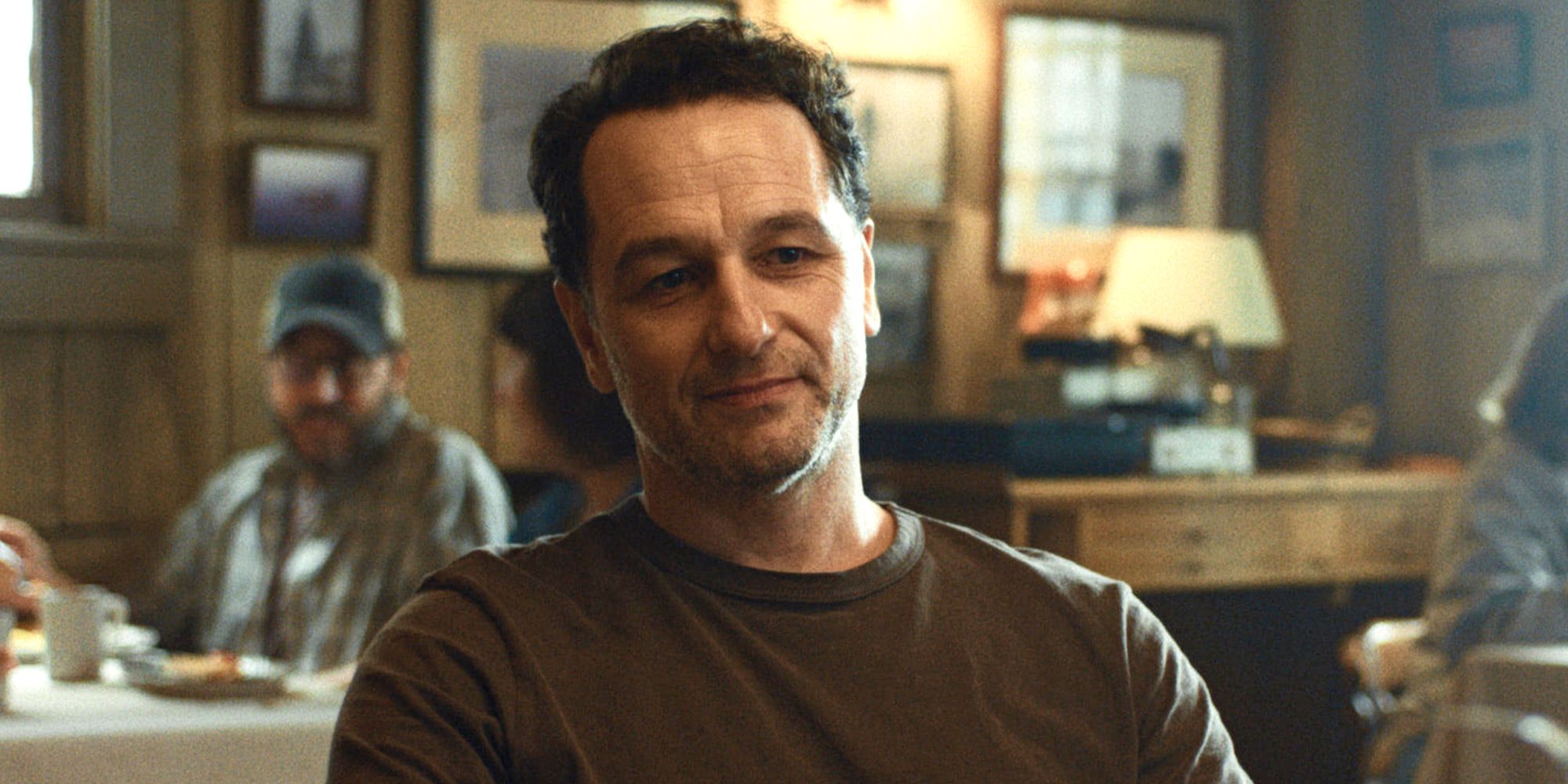
Matthew Rhys is having quite the 2026. The actor is back in the awards conversation thanks to Apple TV's Widow's Bay, earning an Emmy nomination for Outstanding Lead Actor in a Comedy Series as the genre-bending series heads into television's biggest night with plenty of momentum. But long before Rhys was dealing with a cursed island as Mayor Tom Loftis, he stepped into one of literature's most intimidating roles: Fitzwilliam Darcy. And for anyone looking to revisit another side of the actor, Death Comes to Pemberley gives Rhys a very different mystery to unravel.
Jane Austen fans have seen their beloved Elizabeth Bennet and Fitzwilliam Darcy go through it all: illustrious TV shows, languid modernization, even good old zombies. Pride and Prejudice has even torn its fandom apart by inciting two particular adaptations that each deserve a crown. So, when other adaptations begin weaving in different genres, many devout fans scream sacrilege. Despite the many misgivings about genre-bending a timeless classic, Death Comes to Pemberley proves there is a fun and tasteful way to collide worlds, making it a must-see for bookworms who can’t get enough of Austen and a bit of Agatha Christie.
Death Comes to Pemberley is a delight for both longtime fans and newcomers. Featuring Elizabeth's and Mr Darcy's post-Pride and Prejudice life, the British miniseries allows us to soak in their idyllic little world for an extra three hours. Adapted from PD James' murder mystery novel of the same name, the storyline veers away from the expected "Regency-era CSI" conceit and instead revels in the rich culture and essence of the original tale. Director Daniel Percival, alongside the wealth of British acting talent, manages to echo the intensity and idiosyncrasies of the characters and relationships that we love in Austen's original novel. The whodunit plot is simply a stage for the characters to shine — yet it also intensifies the emotions and traits we have seen in them before, from the rivalry between the iconic couple to the less savory inclinations in others.
What Is 'Death Comes to Pemberley' About?
Set six years after the story in Pride and Prejudice, Death Comes to Pemberley opens with the mysterious appearance of a ghost and the prospect of a ball. Elizabeth (Anna Maxwell Martin) takes on the role of lady of the house while Mr. Darcy (Matthew Rhys) struggles to reign in his sister's, Georgiana's (Eleanor Tomlinson), two courtships. We also see Elizabeth's sister, Lydia (Jenna Coleman), who embarks on a carriage to the ball alongside the husband she eloped with, Mr. Wickham (Matthew Goode), and his friend, Mr. Denny (Tom Canton). However, the carriage ends up rushing headlong onto the sprawling estate with Lydia as its sole occupant. Just as Lydia arrives at Pemberley's doorstep uninvited and mysteriously, death arrives alongside her.
Collider Exclusive · Oscar Best Picture Quiz
Which Oscar Best Picture
Is Your Perfect Movie?
Parasite · Everything Everywhere · Oppenheimer · Birdman · No Country
Five Oscar Best Picture winners. Five completely different visions of what cinema can be — and what it can do to you. One of them is the film that was made for the way your mind works. Ten questions will figure out which one.
🪜Parasite
🌀Everything Everywhere
☢️Oppenheimer
🐦Birdman
🪙No Country for Old Men
01
What kind of film experience do you actually want? The best movies don't just entertain — they leave something behind.
02
Which idea grabs you most in a film? Great films are driven by a central obsession. What's yours?
03
How do you like your story told? Form is content. The way a story is shaped changes what it means.
04
What makes a truly great antagonist? The opposition defines the protagonist. What kind of opposition fascinates you?
05
What do you want from a film's ending? The final note is the one that lingers. What do you want it to sound like?
06
Which setting pulls you in most? Where a film takes place shapes everything — mood, stakes, what's even possible.
07
What cinematic craft impresses you most? Every great film has a signature — a technical or artistic element that makes it unmistakable.
08
What kind of main character do you root for? The protagonist is the lens. Who you choose to follow says something about you.
09
How do you feel about a film that takes its time? Pace is a choice. Some films sprint; others let tension accumulate slowly, deliberately.
10
What do you want to feel walking out of the cinema? The best films leave a mark. What kind of mark do you want?
The Academy Has Decided Your Perfect Film Is…
Your answers have pointed to one Oscar Best Picture winner above all others. This is the film that was made for the way your mind works.
Parasite
You are drawn to films that operate on multiple levels simultaneously — that begin in one genre and quietly, brilliantly migrate into another. Bong Joon-ho's Parasite is a film about class, desire, and the architecture of inequality that manages to be darkly funny, deeply suspenseful, and genuinely shocking across a single extraordinary running time. Your instinct is for cinema that hides its true intentions until the moment it's ready to reveal them. Parasite is exactly that — a film that rewards close attention and punishes assumptions, right up to its devastating final image.
Everything Everywhere All at Once
You want it all — and this film gives you all of it. The Daniels' Everything Everywhere All at Once is one of the most maximalist films ever made: action comedy, multiverse sci-fi, family drama, existential crisis, and a genuinely earned emotional core that sneaks up on you amid the chaos. You are someone who responds to ambition, who doesn't want cinema to choose between being entertaining and being meaningful. This film refuses that choice entirely. It is overwhelming by design, and its overwhelming nature is precisely the point — because the feeling of being crushed by infinite possibility is exactly what it's about.
Oppenheimer
You are drawn to cinema on a grand scale — films that understand history not as a backdrop but as a force, and that place their characters inside that force and watch what happens. Christopher Nolan's Oppenheimer is a film about the terrifying gap between what we can do and what we should do, told with the full weight of one of the most consequential moments in human history behind it. You want your films to feel important without feeling self-important — to earn their ambition through sheer craft and the gravity of their subject. Oppenheimer does exactly that. It is enormous, complicated, and refuses easy comfort.
Birdman
You are drawn to films that foreground their own construction — that make the how of the filmmaking part of the what it's about. Alejandro González Iñárritu's Birdman, shot to appear as a single continuous take, is cinema examining itself through the cracked mirror of a fading actor's ego. You respond to formal daring, to the feeling that a film is doing something that probably shouldn't be possible. Michael Keaton's performance and Emmanuel Lubezki's restless camera create something genuinely unlike anything else — a film that is simultaneously about creativity, relevance, self-destruction, and the impossibility of ever truly knowing if your work means anything at all.
No Country for Old Men
You are drawn to cinema that trusts silence, that refuses to explain itself, and that treats dread as a form of meaning. The Coen Brothers' No Country for Old Men is a film about the arrival of a new kind of evil — implacable, arbitrary, and utterly indifferent to the moral frameworks we use to make sense of the world. It is one of the most formally controlled films ever made, and its controlled restraint is what makes it so terrifying. You want your films to haunt you, not comfort you. You are not interested in resolution if resolution would be dishonest. No Country for Old Men is honest in a way that most cinema never dares to be.
After discovering Denny's corpse, the Pemberley household enlists the help of magistrate Sir Selwyn (Trevor Eve), who conducts a preliminary investigation and quickly deduces Mr Wickham as the primary suspect. As Mr. Wickham is unceremoniously carted off, everyone knows there is something more sinister afoot, and we watch in excitement as Elizabeth and Mr. Darcy pursue their own line of questioning whilst recreating the torrid tension that pervaded the beginning of their relationship. After a brutal trial based on social perception rather than facts, and a heartbroken Georgiana who is caught up in her family's new financial problems, the killer's real identity is revealed and peace is bestowed upon Pemberley once again.

Adding a murder mystery to a classical romance seems like a recipe for disaster. As mentioned before, there was a high likelihood that Death Comes to Pemberley would end up becoming a rip-off, Regency-era CSI where men in top hats and women in corsets scurry around searching for clues to a murder. However, Percival remains faithful to his source material and inspiration, and instead decides to focus on the cultural and social atmosphere of the era, just as Austen would have. This is particularly pertinent during Mr. Wickham's trial, which is filled with dread, especially as we take fleeting glimpses at the gradual construction of the hanging platform. This culminates in the scene of Elizabeth rushing in to save the day, hurriedly gathering Mr. Wickham from his noose and bundling him off the platform as the sudden chorus of snapping necks freezes the screen and their hearts for a moment.
Like Austen's novel, Death Comes to Pemberley heavily comments on the influence of social perception at the time. Mr. Wickham's trial is never really about the facts, but rather burying his unsavory secrets, like his illegitimate child, to alleviate his already poor reputation. Eve particularly brings this to life in his role as the magistrate, especially in one of his final damning lines when he is asked why he didn't reveal Mr Wickham's affair: "I knew by that point he'd almost certainly hang." Interestingly, Lydia's reaction to her husband's affair — claiming she would rather swat away rumors than face the truth — rounds off the commentary of social perception, suggesting that true love (or even just the idea of it) is enough to stand against the pressure. Coleman's incredible, poignant, and tear-jerking performance during this faux-lighthearted scene even made us believe true love could win.
Elizabeth and Mr. Darcy's Love Story Continues in 'Death Comes to Pemberley'
Capturing the marital bliss we imagine Elizabeth and Mr. Darcy would experience after the original story is one of the best fan services this British miniseries could have done. Death Comes to Pemberley even takes this a step further and recreates the rivalry between them, reminding us of the early days. However, with the stakes even higher this time, we get a deliciously intensified version of tension between the two, as Mr. Darcy is quick to dismiss Elizabeth's concerns while Elizabeth is wrought with frustration and insecurity. She is reminded of the days when whispers down the hall of their mismatched pairing would disturb her, especially since she was lower in class and wealth in comparison to the Lord of Pemberley. Yet, being the strong and stubborn Austen heroine we know, she doesn't let her feelings of inadequacy prevent her from seeking out the truth.
It wouldn't be an Austen story without a hint of feminism in it. Whilst the loudest note is when Elizabeth saves the day and the most subtle is Elizabeth being wrought by her duties as a wife and her investigative side, the most distinct reminder of Austen herself is in Georgiana's storyline. Held hostage in a love triangle, Georgiana relinquishes her feelings to uphold her duty as a woman in a financially stricken household. Mr. Wickham's trial places an undue monetary burden on the Pemberley household, and as such, Georgiana's only way to contribute to her family's future legacy and stability is to marry rich. It's very pertinent to Austen's most famous line: "It is a truth universally acknowledged, that a single man in possession of a good fortune, must be in want of a wife."
However, as Mr. Darcy discovers Georgiana's wealthier suitor's true perception of her (as tainted due to her momentary history with Wickham), he convinces her to wed for love. It is Georgiana's storyline that resolves Elizabeth and Mr. Darcy's conflict, as he wretchedly falls into her arms and begs for forgiveness while Elizabeth realizes she no longer has to doubt herself because she truly has found her match. Death Comes to Pemberley reinforces their romance, reassuring fans that although the pages of the novel have ended, their favorite couple will always achieve a happy ever after.
Murder Brings Out the Worst in Some 'Pride and Prejudice' Characters

While Elizabeth and Mr. Darcy's relationship only temporarily suffers during the series, some characters leave the screen with a more permanent stain. Mr. Wickham, in particular, was initially impulsive, selfish, and deceivingly charming in the original novel. While he is still impulsive and selfish in Death Comes to Pemberley, it is to a more destructive and distasteful degree. His worst crime used to be defaming Lydia by eloping with her; now, it is misleading Miss Bidwell (Nichola Burley) into an affair and abandoning her with a child she has no means to take care of. Adding salt to fresh wounds, after his trial, he promptly takes off to America under the guise of being a "better husband" to Lydia and leaves his illegitimate child to Mr. Darcy to "deal with." Goode truly nails Wickham's charming exterior while leaving his sins implicit.
Similarly, Colonel Fitzwilliam (Tom Ward), Darcy's cousin and Georgiana's undesirable suitor, had his traits from the original story amplified in this adaptation. In Austen's novel, he makes it abundantly clear he only has monetary motivations. Now, to secure his family's wealth and line, he is willing to wed Georgiana despite his contempt for her past. Ward's ability to capture the essence of such a minor character in the original story is impressive, from his matter-of-fact attitude to the almost sinister undertones in his voice. But to end on a lighter note, for every distasteful character, there is an undercover MVP who lightens the atmosphere with ridiculous one-liners. While Mr. Bennet (James Fleet) makes few appearances in the series, as a typical Austen father, every scene including him warms our hearts a little bit.
These mere three hours of the miniseries feel like we're tumbling into the world of Pride and Prejudice tenfold. Death Comes to Pemberley keeps the spirit of the book alive by staying true to and at times magnifying the era's culture, the relationships, and the characters. It is a truth universally acknowledged that an adaptation is rarely better than its original, and as such, Death Comes to Pemberley knows its place while still holding a candle up to its predecessor.
Death Comes to Pemberley is available to stream on PBS.org and the PBS app in the U.S.
KioskNews shows a cleaned-up reading view extracted from the publisher’s page — the original always lives on their site, not ours.