Supreme Court pushes back against Trump and GOP ahead of the midterm elections
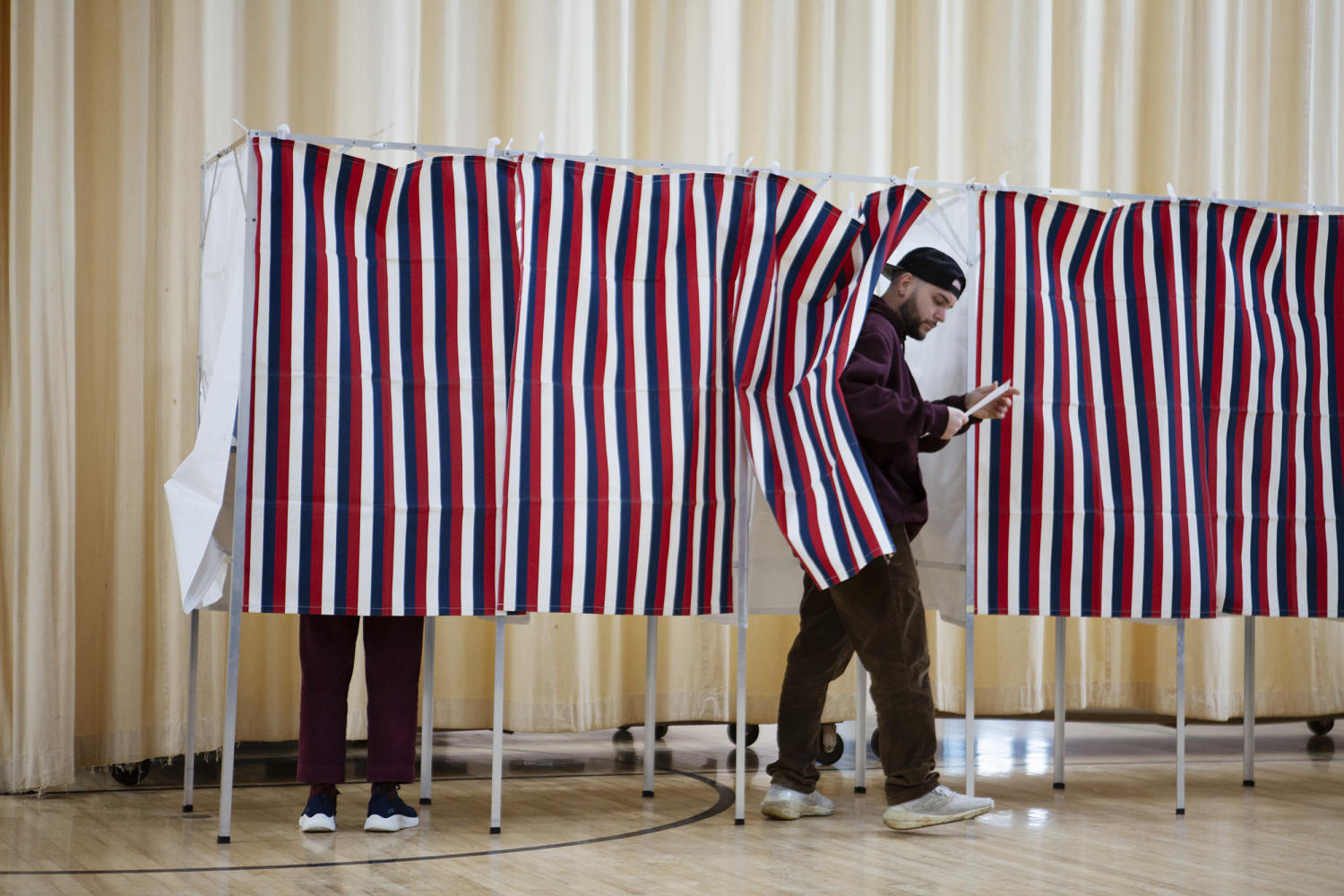
WASHINGTON — The Supreme Court in the last week has delivered major blows to President Donald Trump and his fellow Republicans that suggest the justices will not be receptive to last-minute efforts to change election rules heading into the midterms.
With control of Congress at stake, the court on Monday night blocked Trump’s plan to exert federal control over mail-in ballots via a Postal Service regulation.
The decision came after the court twice last week ruled against Republicans by declining to revive a new congressional map in Missouri that would have eliminated one of two Democratic-held districts.
While the court has a 6-3 conservative majority that often rules for Republican priorities, there are limits to how receptive some justices are to more extreme requests, election law experts told NBC News. That’s especially true for cases that could disrupt voters when an election is close or already underway.
02:19
Justin Levitt, an NBC News contributor and election law expert at Loyola Law School in Los Angeles, said the recent decisions show “there aren’t five votes for abject chaos.”
“I think the court is going to pay very close attention to any extraordinary actions that destabilize the electoral process,” said Bob Bauer, who served as White House counsel under President Barack Obama. “There’s a signal here that this sort of late intervention is going to receive scrutiny.”
On the left, the Supreme Court has been viewed with particular distrust and alarm as it relates to election issues following a major ruling in the spring that further weakened the landmark Voting Rights Act.
In the aftermath, the court quickly allowed Republican states to draw new congressional maps that eliminated majority-Black, Democratic-held seats.
But now it is Trump who appears angered and frustrated by the court’s actions.
“It is a big loss for Republicans, and America itself, and makes cheating by the Radical Left ‘Dumocrats,’ on Mail-In Ballots, a much easier thing to do — And now they have an open field to do so!” he said in a Truth Social post on Tuesday, repeating his unfounded claims about widespread election fraud.
With some states already sending out ballots for the midterm elections, timing was an issue for Republicans in both cases.
The Missouri Supreme Court faulted Republican Secretary of State Denny Hoskins for delaying a decision on whether the new map could be challenged, ultimately finding him in contempt for defying its ruling in favor of plaintiffs.
As for the Postal Service, it pushed through the new regulation despite concerns raised by election officials that they would be unable to implement it in time.
“In both instances, the court said we’re not going to countenance that,” said Travis Crum, an NBC News contributor at Washington University School of Law in St. Louis. “I do think that the Missouri case is going to send the message that dragging your feet like this is not going to be rewarded by the Supreme Court.”
As the November elections loom, efforts to make late changes to the rules, including any new proposals from the Trump administration relating to mail-in ballots, are likely to meet with a similarly frosty reception from the justices, experts said. They cautioned, though, that it is too early to say what new litigation could arise ahead of or after Election Day.
Among the concerns that have been raised by some election officials are that the Trump administration could post federal immigration agents near polling places, although officials have said they have no current plans to do so.
As he has done previously, Trump might also complain about mail-in ballots being counted after in-person votes, claiming voter fraud because the outcome might appear to change, even though it is customary for various jurisdictions to continue counting ballots after Election Day under state law.
States with competitive elections, especially those that could determine control of the Senate, could be a particular focus for any Election Day or post-election litigation. These include Texas and Georgia, two states under Republican control with competitive races. Alaska, where votes often take a long time to count, is another state that could attract litigation, with Democrats hoping to win the Senate race there.
One fear among election administrators is that the federal government could try to seize ballots and other voting records over claims of election fraud similar to those Trump and his allies raised, and courts rejected, following the 2020 presidential election. In January, the FBI searched an election office in Georgia, seizing 2020 election ballots.
But as the Supreme Court has shown in other cases, the conservative majority follows its own agenda, not Trump’s, and has delivered him major defeats this year on his sweeping tariffs and plan to roll back birthright citizenship.
“This court is radically conservative,” Levitt said, “but not actually in the tank for Trump’s particular version of personalist chaos.”
KioskNews shows a cleaned-up reading view extracted from the publisher’s page — the original always lives on their site, not ours.