China-linked critical minerals price swings delay 1 in 4 energy-storage projects: report
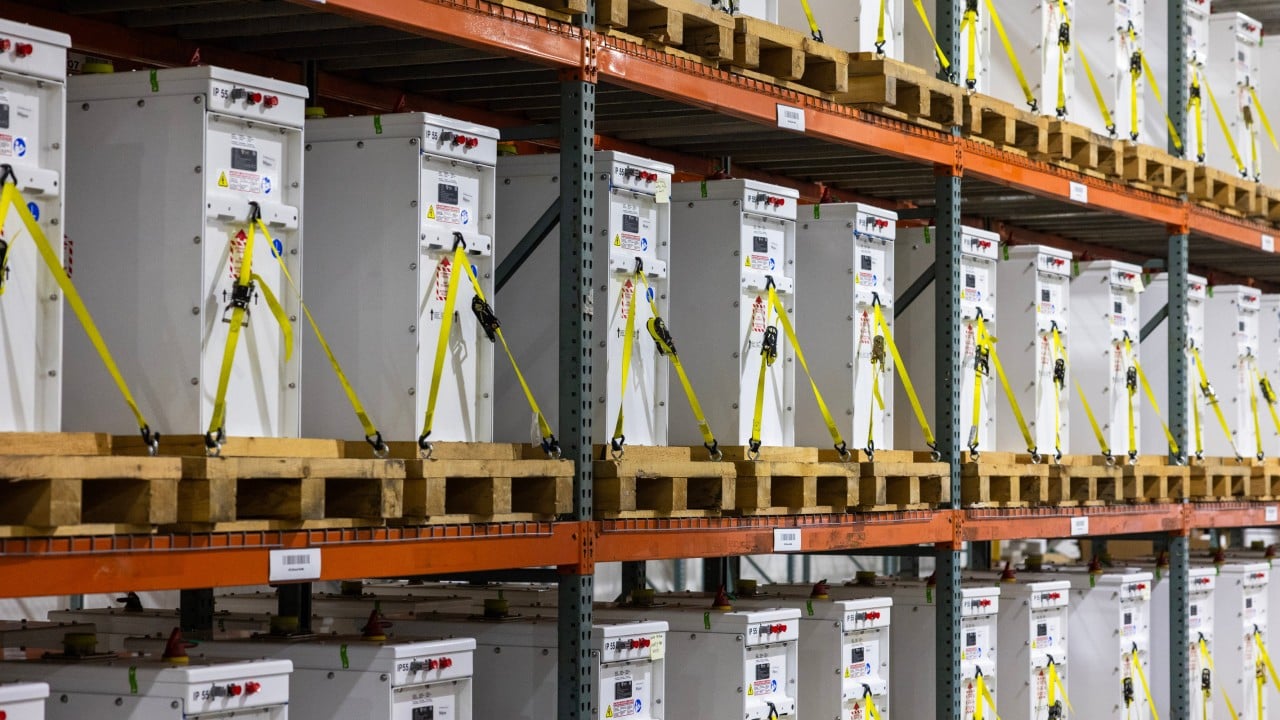
Price volatility in critical minerals, largely shaped by China’s market, is delaying or derailing nearly one in four energy-storage investments worldwide, according to a new report, highlighting the extent to which strategic materials have become a growing geopolitical flashpoint.
Some 23 per cent of investors, lenders, developers and producers said otherwise viable energy-storage projects had been deferred or scrapped because of unpredictable pricing, said a report published by law firm DLA Piper on Tuesday.
Pricing for critical minerals used in battery cells, including lithium, cobalt and graphite, was anchored to benchmark indices largely influenced by China’s domestic market, where processing was also heavily concentrated, the report said.
“For a lot of the niche critical minerals, there isn’t an index, so you can’t have index-based pricing,” said Oliver Wright, a partner specialising in energy and natural resources at DLA Piper. “And where indices do exist, they’re often influenced by China.”
The report noted that the price swings were exacerbated by the relatively low liquidity of many critical minerals markets compared with commodities such as energy, adding that some markets could be “manipulated” by major participants.
China is the world’s largest producer of critical minerals, leaving global pricing vulnerable to domestic market shifts, including changes in domestic demand and government policy.
Beijing’s grip on these materials – particularly rare earths – has become a crucial flashpoint in trade negotiations with the US and Europe.
On Monday, Beijing extended a suspension of export-control measures on strategic materials, including certain rare earth elements and lithium batteries, as part of its trade truce with Washington.
The DLA Piper report was based on a survey of 550 investors, lenders, developers and manufacturers from 15 countries across Europe, Asia, the Middle East and the Americas, conducted between late February and early March.
More than half of the respondents viewed volatility of mineral prices as either a major constraint or a deal breaker when considering investments in mining or processing projects, according to the report.
The impact varied sharply by region. In the United Kingdom and US, 72 per cent and 64 per cent of respondents, respectively, saw price volatility as a severe obstacle.
By contrast, fewer than one in 10 respondents in Germany considered it a major issue, while participants in Italy, China and Australia largely viewed price instability as a minor or secondary issue, the report showed.
To mitigate the risks of price volatility, companies were pursuing vertical integration – moving up the supply chain and investing in the mining and exploration of critical minerals – to secure greater control over supplies.
“We expect the industry to shift what contracts are priced against, whether that is component-linked pricing, price floors or hybrid structures,” Wright said, with the report adding that respondents were keen to find alternatives to Chinese benchmark pricing.
As investors looked for alternative processing hubs, Japan and South Korea were emerging as promising competitors, the report said. Both were “widely seen as second only to China in advanced battery chemistry and critical mineral processing capability” while remaining relatively cheap compared with markets like the US.
KioskNews shows a cleaned-up reading view extracted from the publisher’s page — the original always lives on their site, not ours.